2027 Private School Guide Feature: Connecting to Kuleana
From caring for the ‘āina to building an accessible surfboard, today’s students are diving into a diverse range of community service projects.
One team of students organized crafts and games at a local senior center while another created a guide for affordable mental health resources, and still others are tending a historic marsh near their school. We spoke to students and staff at four Hawai‘i private schools and learned how community service is woven throughout their academic journeys.
Preserving the ‘Āina
LE JARDIN ACADEMY
Four years ago, Chloe St. Clair, a recent graduate of Le Jardin Academy, began studying the environmental and cultural significance of neighboring Kawainui Marsh and ways to help restore and protect it.
Her work at the marsh is part of Le Jardin’s Impact Academies program, which provides students with time during the school day to engage in community-based projects. Le Jardin began connecting with community members involved with historic Kawainui Marsh in 2018, says Josh Masagatani, the school’s dean of experiential education and community partnerships. By 2021, a formal partnership began with the state Department of Land and Natural Resources to steward Kahanaiki, a 7-acre parcel across Kapa‘a Quarry Road from the Windward campus.
The project provides students with an outdoor classroom to learn more about ecosystems and our Islands’ cultural history, Masagatani says. “What makes this such a special project is that it reaffirms our kuleana, or our responsibility, to be able to live and go to school in this special place, that when you’re able to care for this place, you’re more vested in this place.”
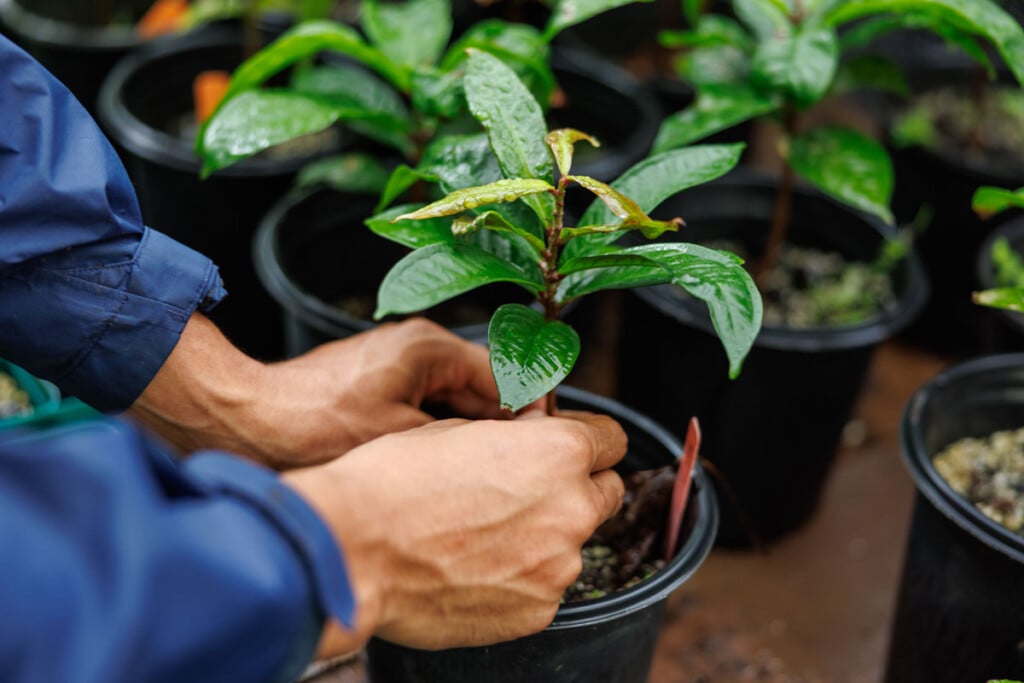
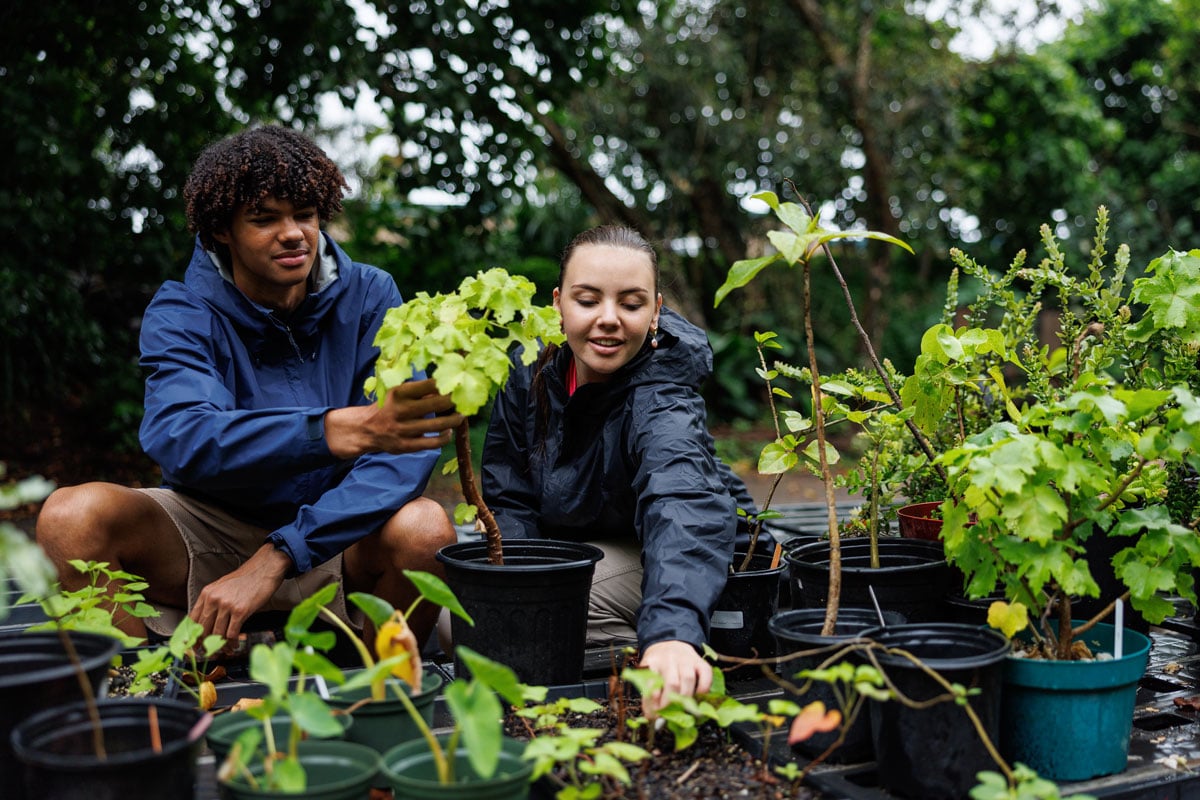
St. Clair says that work at Kawainui inspired her to help design, build and maintain a native plant nursery on campus that received a $20,000 grant from the Arbor Day Foundation.
The nursery flourished with the help of native seeds gathered in the marsh that students share with other schools to use for restoration. They also raise native fruit trees, with seeds from sources outside the marsh, which they sell at school events to help fund student scholarships. “We were able to bring it back to our school and really kind of continue the cycle of sustainability,” St. Clair says.
Eleventh grader Omari Harris says he signed up for the Kahanaiki project after realizing he was spending a lot of time staring at his phone, video games and devices. “I thought it was a way for me to disconnect and reconnect with the ‘āina and just to get in a good sweat and keep my body and my mind healthy,” he says.
Harris says physical tasks, like pulling invasive plants, identifying destructive pests and learning when to plant by moon phases, land differently than classroom study. And he learned something he didn’t expect: to value hard work and “to keep going until the job is finished.”
St. Clair, meanwhile, appreciates feeling a sense of purpose. “I think it’s really important that we have people taking the action to protect and preserve, and I think the fact that a lot of those actions are being taken by students is really powerful.”
Making Waves
PUNAHOU SCHOOL
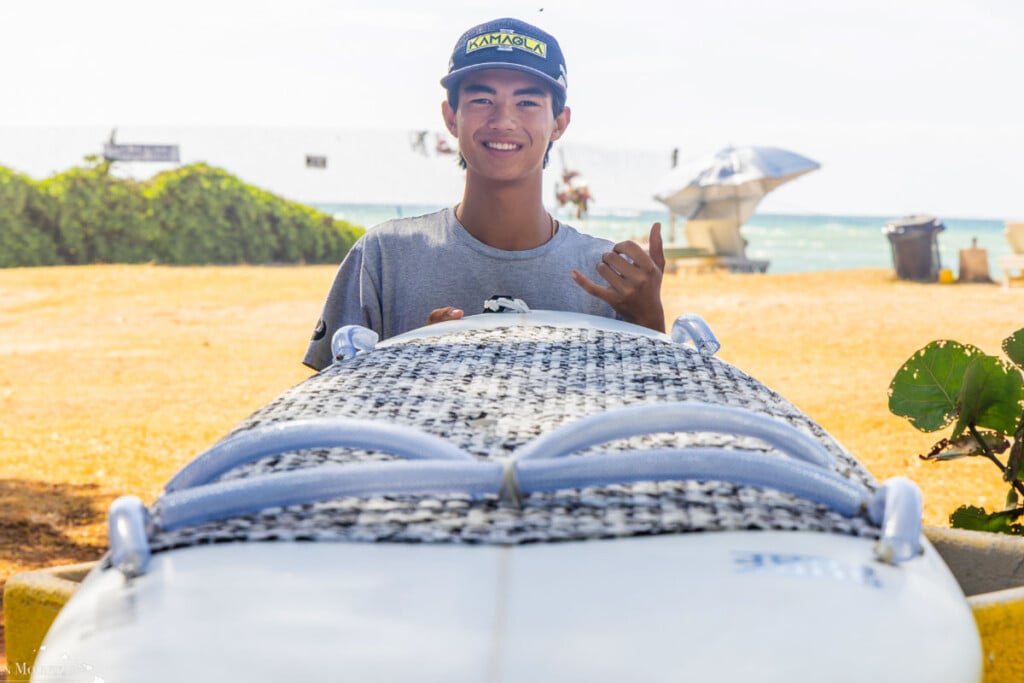
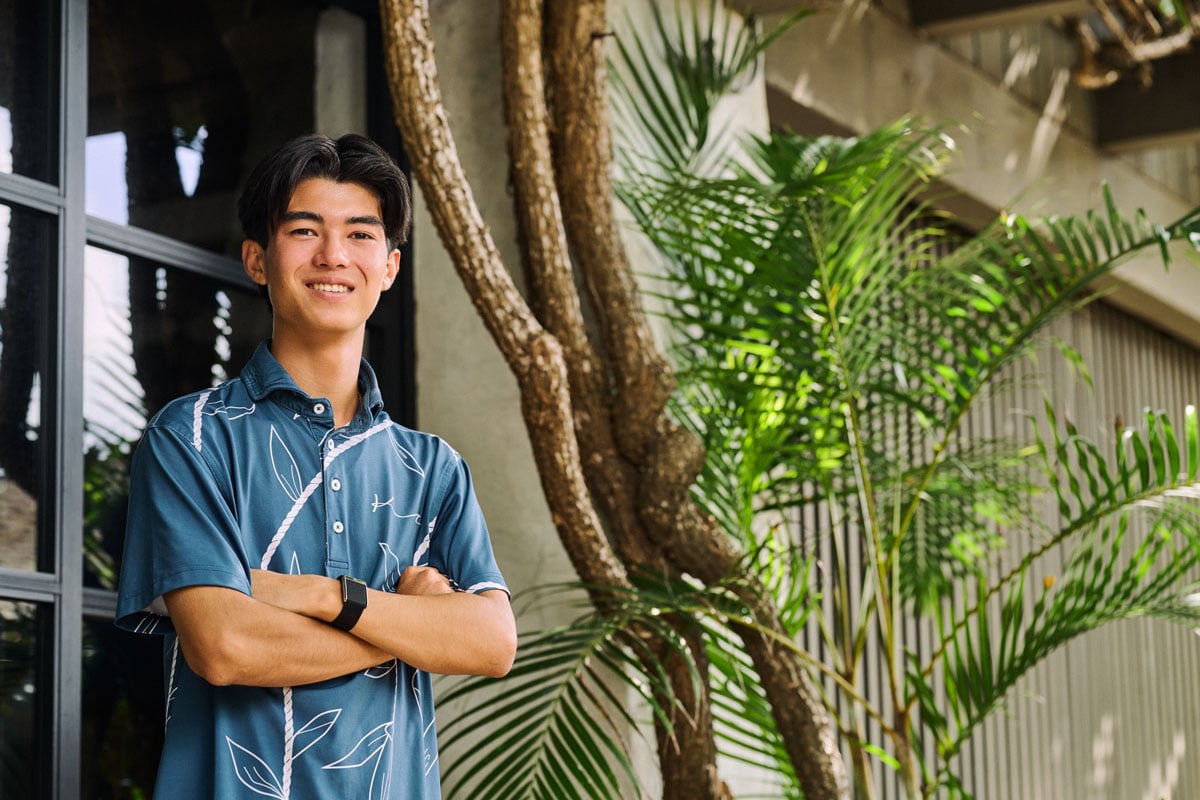
Kai Azama, a recent Punahou graduate, says volunteering with AccesSurf opened his eyes to how meaningful service work can be. As part of his time with AccessSurf, he caught waves alongside a man in his 30s. “He was just like the brightest soul out there and he was just so excited,” Azama says. “And every single time he would catch a wave, he would scream ‘yessuh, yessuh.’ He was the happiest guy out there.”
Azama started volunteering at AccessSurf in middle school, but it wasn’t until his outing with the cognitively impaired surfer as a junior that he truly understood the nonprofit’s impact. It also sparked an idea that became part of a service project he cultivated through Punahou’s Luke Center for Public Service.
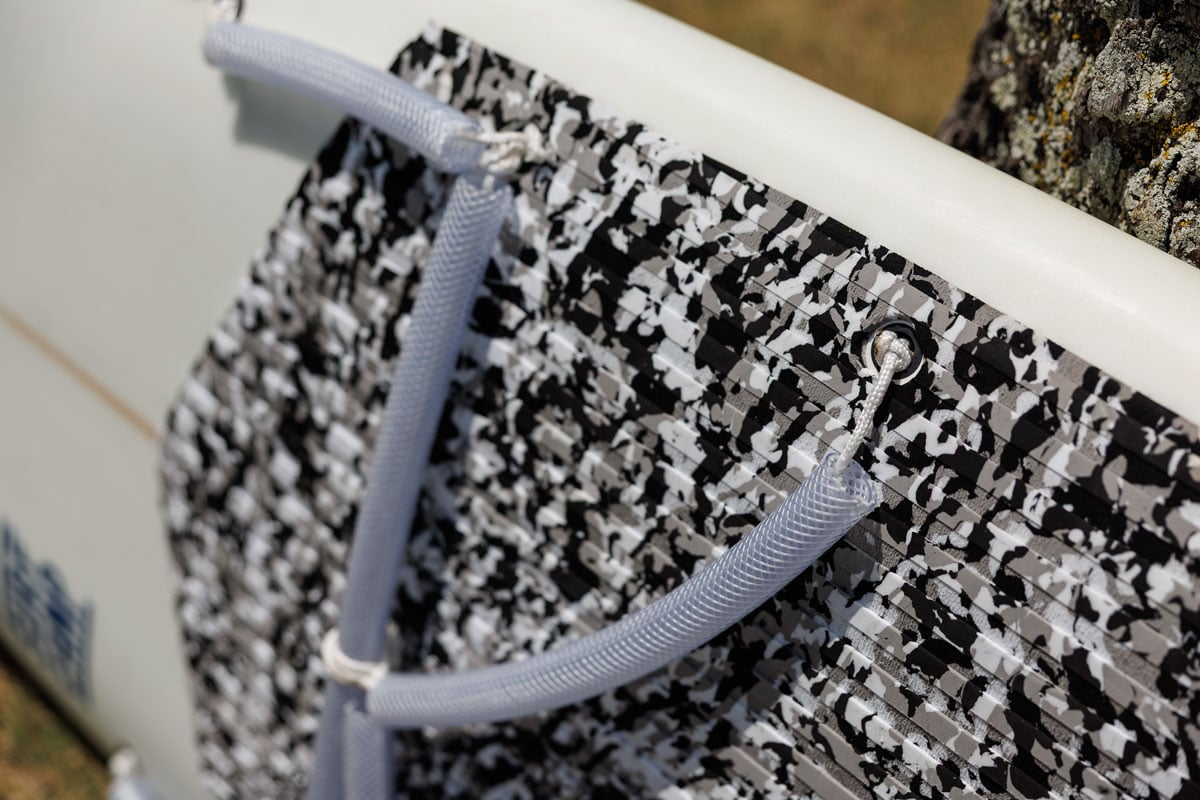
“I noticed that the surfboards could have been improved to better the experience of the participants, and I knew that I could attempt, or I wanted to try, to do something about it,” Azama says.
Dani Goddard, director of the Luke Center, says student projects such as Azama’s reflect the school’s commitment to the larger community. “When great privilege is given to you, great community expectations are required,” she says.
Azama, who attended Punahou since kindergarten, designed and helped build an accessible surfboard valued at more than $1,500, Goddard says. To make it happen, he contacted Tokoro Surfboards, where co-owner Kerry Tokoro donated his time to shape the board. Surf Camp, where Azama worked, donated a leash and fins, and another donor contributed $600 toward materials.
Since the board was donated to AccessSurf, Goddard says it’s won praise as a big improvement for those who surf lying down. And Azama says he would like to continue collaborating with the nonprofit by further improving the surfboard design and perhaps explore 3D printing options, which could be used to make more boards or further customize other accessible boards.
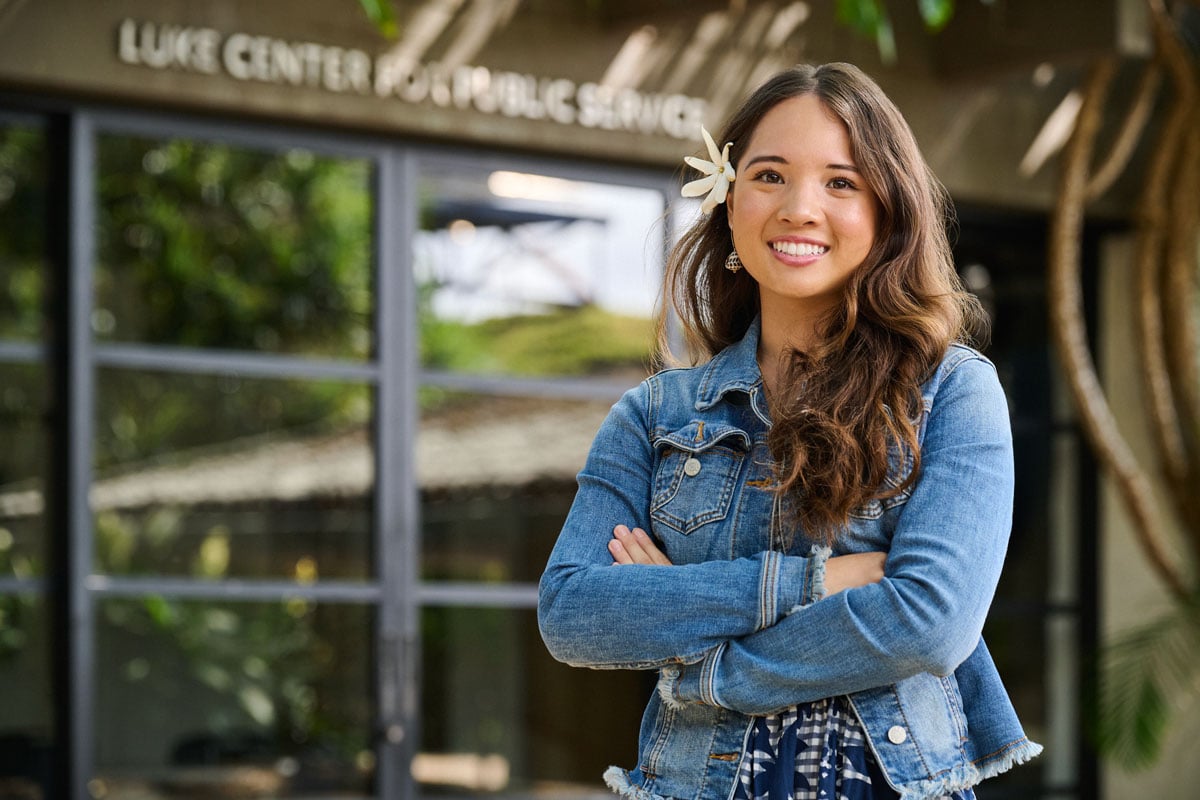
Azama earned Punahou’s “distinction in public service” for his community service, along with his classmate Ella Bosworth.
For her project, Bosworth focused on eliminating food waste on campus. She had taken sustainability courses and realized how much of the school’s cafeteria food was thrown out. Although solutions were more complicated than she initially realized, Bosworth’s efforts ultimately led to less frozen food being wasted and more local products being served in the cafeteria, Goddard says.
As an incubator for community service, Bosworth says the Luke Center plays a key role in providing students both resources and tools for their projects. “It allows us to learn how to be resourceful and use our privileges to our advantage in a way that you can give back to others,” she says.
Resourceful Outreach
ISLAND PACIFIC ACADEMY
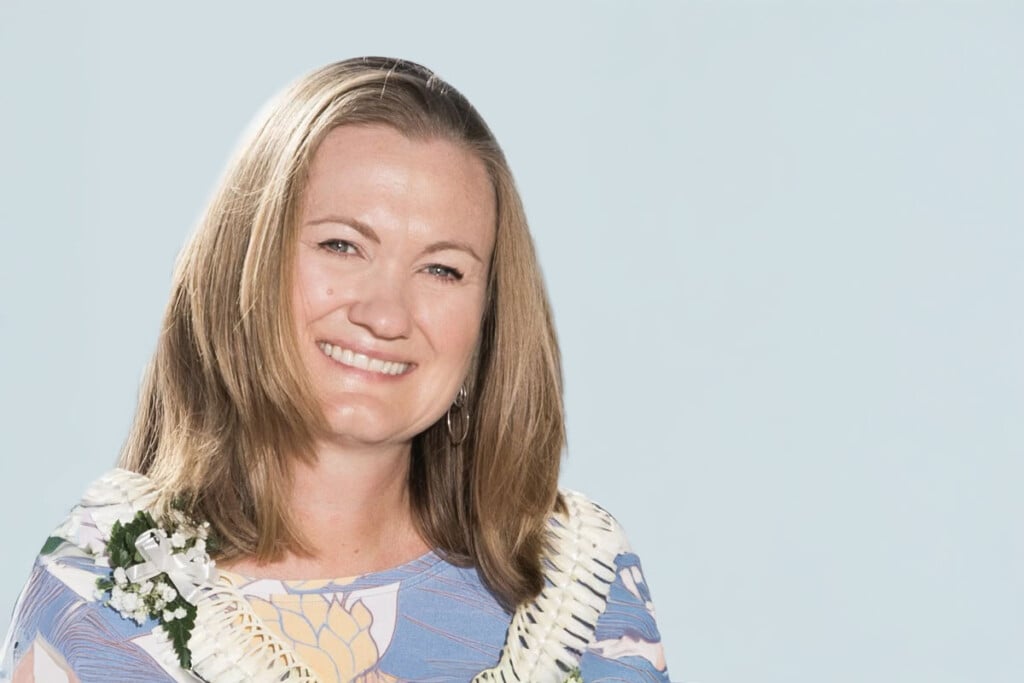
Island Pacific Academy, with more than 500 students from kindergarten through 12th grade, begins community service initiatives early, with fifth grade student action committees taking the lead. Last year, when families lost income during the government shutdown, students scheduled a food drive, partnering with local businesses and farms, says elementary principal Sa‘ofetalai Faulkner. “We were able to collect over 1,000 pounds of food that we were able to distribute into 200 bags, and we were able to distribute all 200 bags to the community,” she adds.
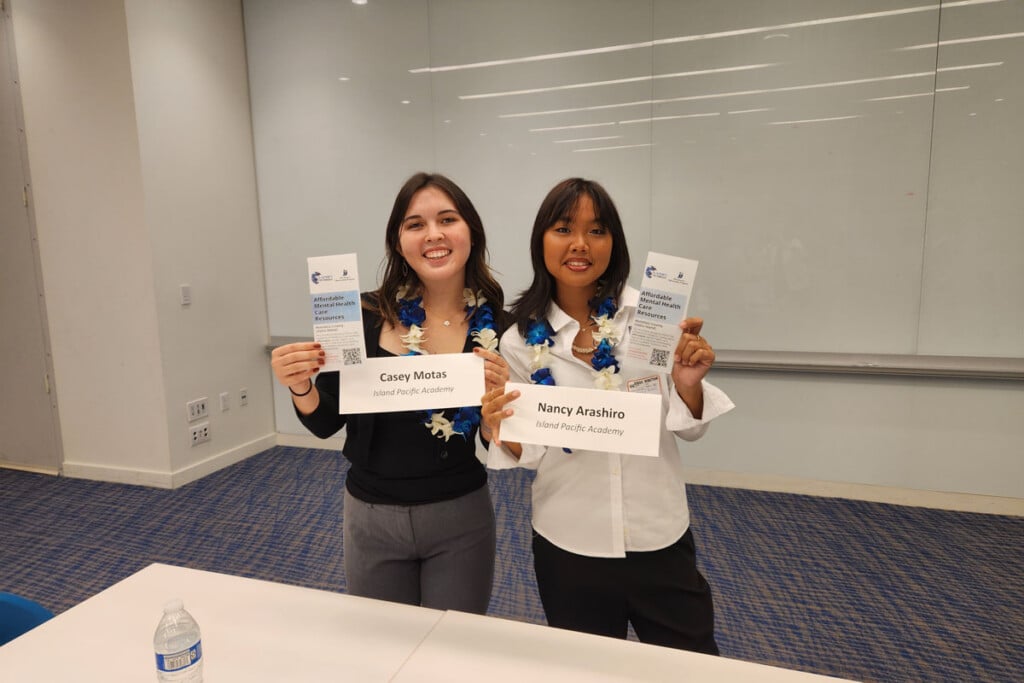
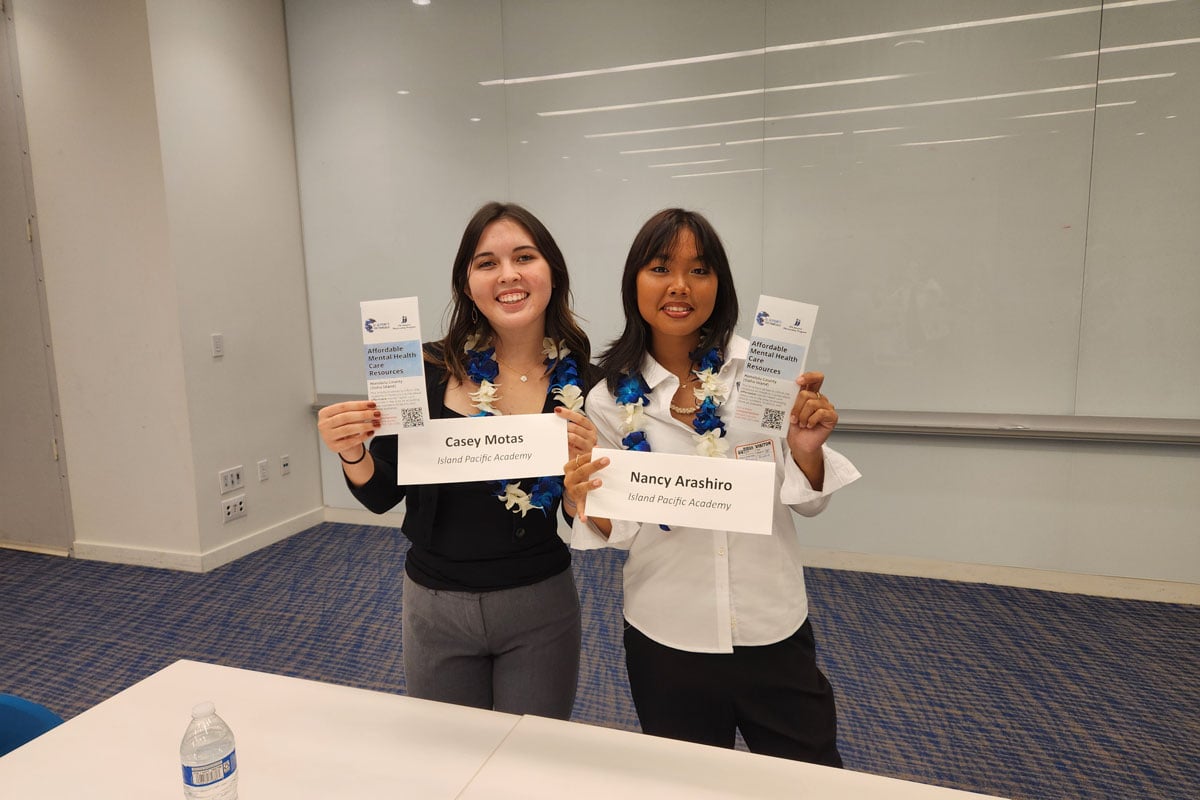
After learning of a critical need for affordable mental health services, Island Pacific Academy students Casey Motas and Nancy Arashiro created a guide to connect people to hotlines, shelters and health care resources. It began a year-and-a-half ago as a school assignment but quickly grew into a passion project that the now high school seniors hope to sustain after they graduate.
While doing their research, Arashiro says they realized how difficult it is for those struggling with housing and other life challenges to locate resources, especially with perceived stigma about mental health help.
“We wanted to create a mental health resource that underserved communities could access and afford,” Motas says. “We’ve distributed the guides to shelters across O‘ahu to reach these populations and ensure they get the help and professional guidance they need.”
Kim Uehisa, a graduate of the Kapolei school and now a board member and school volunteer, helped with the project by getting HMSA to distribute the students’ brochure. “I wanted to give back to the school and provide mentorship,” Uehisa says.
Every six months, Arashiro and Motas go through the listed resources, calling and checking online to ensure the information is still accurate. They’re also working on Neighbor Island editions, as well as translating the information to other languages. With their graduation looming next year, they’re trying to recruit younger students to keep the project going and growing.
Faulkner says projects such as these help students understand that “their voice matters, and that when we work together, we can make significant impact, positive impact, in the world or in our community.”
Kūpuna Connection
ST. JOSEPH SCHOOL
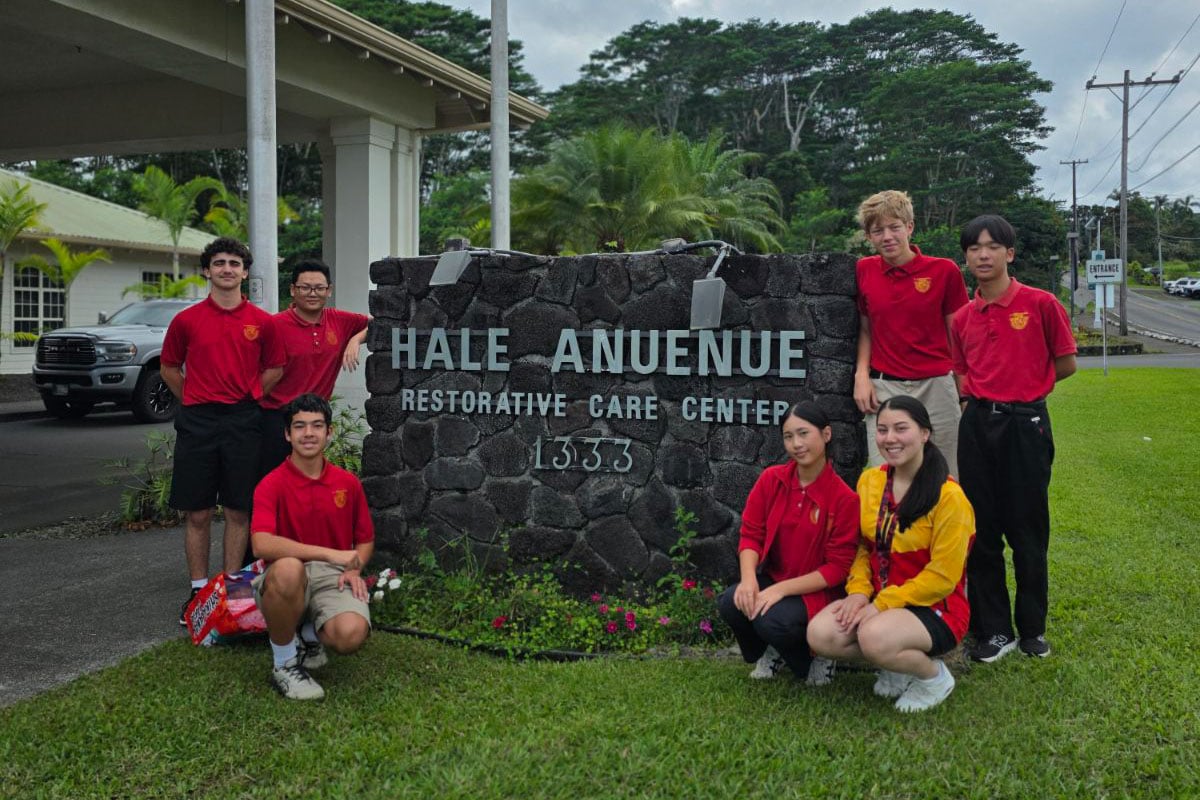
This past school year, sophomores at St. Joseph School in Hilo organized a series of visits to Hale Ānuenue, a nearby long-term care center where they spent time with kūpuna residents playing cards, doing crafts and talking story. Before coming up with the idea, some of the students were already spending time with their own elderly relatives, and they knew that without regular visitors, they could become isolated.
“We chose this project because the elders were kind of left out and feeling lonely at the time,” says Alex Tomono, one of the participating students. “We thought that by bringing ourselves to just spend time with them, we would comfort them and give them a sense of joy.”
Students also researched issues about aging to identify activities that kūpuna and students could do together. “They had to learn a little bit about basic gerontology care,” says Chrislyn Villena, dean of faculty and the school’s campus minister.
The students needed to provide supplies for painting and jewelry making and cards. “Everything that they came up with, either they paid for themselves out of their own wallets, or they solicited donations, or they pulled from their class funds, because every project is specifically started at zero,” Villena says.
For Uriah De Mello, working with the kūpuna gave students insight into the lives they led before the care center. “They were definitely happy we were there,” De Mello says. For one woman, painting with the students helped her open up. “She was very glad to do watercolors with us. And she was a very artsy person, and it brought that back to her.”
Villena says the service projects, which are part of the Catholic school’s theology-based initiatives for grades seven through 12, help students learn how to “recognize human dignity, respond to real needs, and take responsibility for their role in the community. Students identify a need, design a response, and carry the project through from planning to execution.”
Robbie Dingeman is a longtime Hawai‘i writer and editor.