Rediscovering Hawai‘i’s Soul TEDx Thimphu Talk
Duane Kurisu, founder of the Rediscovering Hawai‘i’s Soul movement, reflects on how his humble plantation upbringing shaped his values of caring for one another.
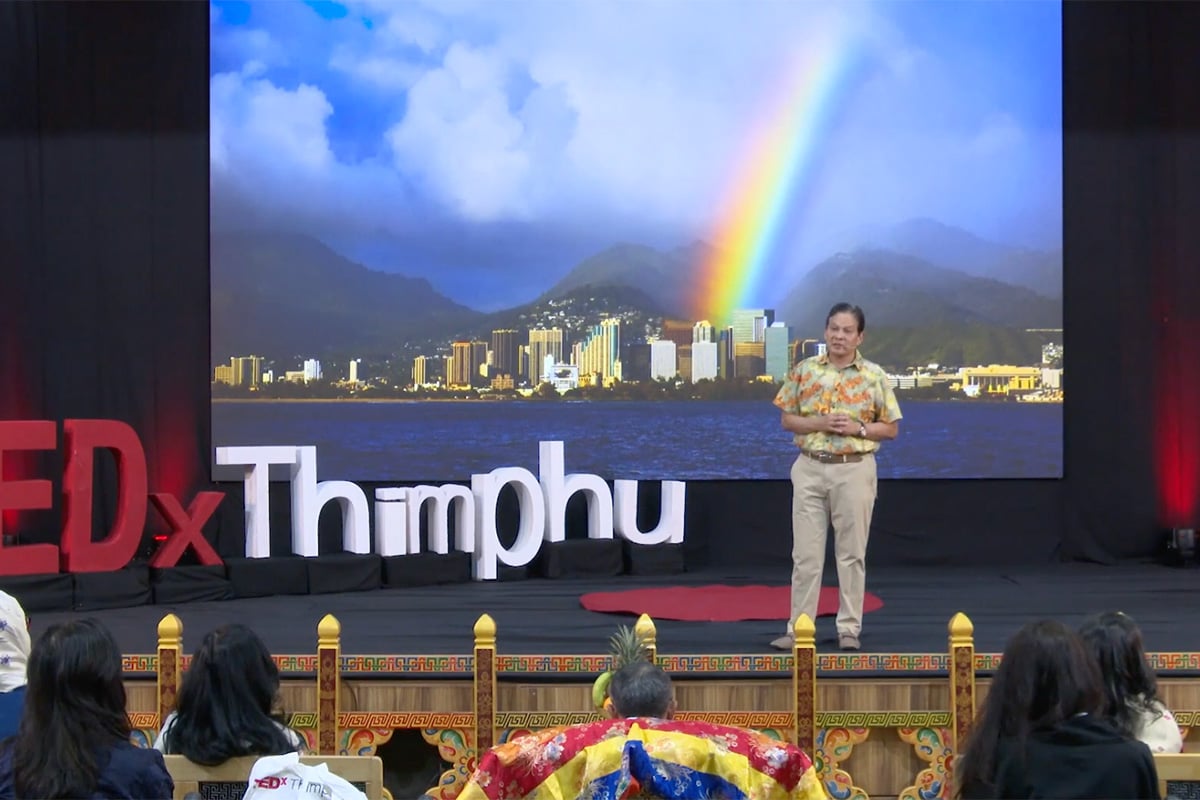
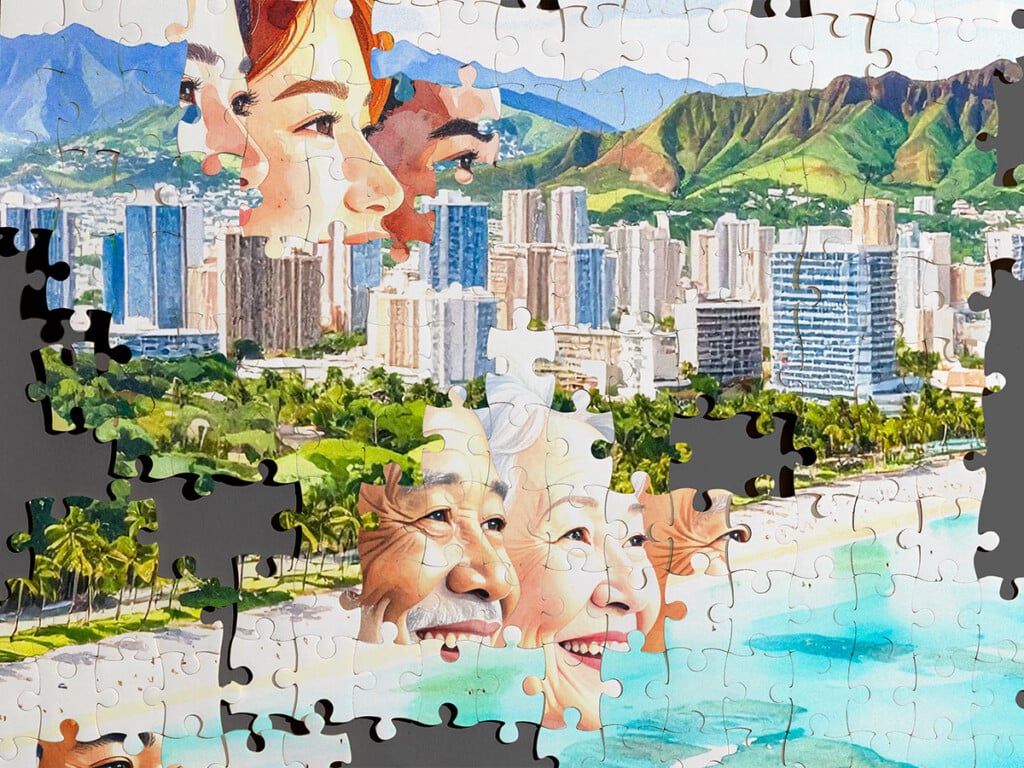
Duane Kurisu, chairman of aio, HONOLULU’s parent company, recently gave a deeply personal TEDx Talk in Thimphu, Bhutan, reflecting on how his humble plantation upbringing on Hawai‘i Island shaped his values of dignity and caring for one another. These values set the foundation for the Rediscovering Hawai‘i’s Soul movement, which he founded and is supported by many of Hawai‘i’s top business, government and community leaders.
In the March 20 talk, Kurisu shared stories of growing up feeling like a “third-rate person,” and how this inspired him to create Kahauiki Village, a community for homeless families on O‘ahu that opened in 2018. The soul of a place, Kurisu says, is revealed in how it treats its people, especially the ones who are most forgotten. “This is a story, not only about homelessness or building homes. This is a story about how character and community can become the invisible force to allow collaboration to happen,” Kurisu said. “This is a story about the magic of bringing good things to life, and it starts with aloha, love in and around us.”
The talk was given at a TEDx event using the TED conference format but independently organized.
Transcript
When you think about the soul of a place, they usually think about its beauty, but it’s something else. It’s something that runs much deeper. I believe that the true soul of the place is revealed by how it takes care of its people, and especially those who are usually forgotten.
My home is Hawai‘i. I live in a place that’s half the world away. From Bhutan, I bring to you the magic of the spirit of aloha. Yes, Hawai‘i is beautiful, but the Hawai‘i that shapes us is more than its beauty. It’s about our way of life. My father used to say that you get out of life what you put into it. But for people like me that grew up in the sugar plantation towns, we were lucky because we got more. I was born in a time and place in Hawai‘i when sugar was king. We’re poor, but we didn’t know that we were poor because we felt that we had everything that we needed.
We thrived as a community. When you caught two fish, you kept one for yourself and gave the other to your neighbor. When you harvested your garden, you kept enough for that evening and you gave everything else away. We weren’t inspired by the accumulation of money. Instead we aspire to be people of character, people who are fearless, where trust, generosity and friendship weren’t virtues that we strive for. They were a way of life.
You know, we’re all shaped by the way we grow. And for me, even if the days of the sugar plantations and sugar towns are long gone, the values of character and community still lives within me and shapes me in the way I live, in the ways I lead, and even in the companies that are built as values-driven companies.
But outside of our town, things were not always so kind. When we went on outings, my mother and father with five children in total were sometimes ridiculed for the way we dressed. Me with cut-off jeans and a hand-me-down T-shirt, and in the way we spoke in country-style, Creolized English. I remember being ashamed and feeling like I was a third-rate person as a child.
And today, I cannot imagine how my mother and father must have felt. And those feelings still live within me. So when I see the faces of people on the street, people in public places, people who are marginalized and feel that their lives don’t count, I know that feeling. I know that look. These are not throwaway people, so when homelessness became a large issue in Hawai‘i, I naturally felt that the long-term solution for homelessness was about building community, and not only about building shelter. So that was a genesis of the creation of Kahauiki Village, a community for homeless families, designed for dignity in a place to rebuild people’s lives.
But getting Kahauiki Village off the ground wasn’t easy because when we started, I didn’t know how we were going to build it or where the money was going to come from. But the need was overwhelming, and the vision was clear. I don’t know where the year 2017 went. I put my all into that year, every ounce of energy, in every waking moment, to work on completing Kahauiki Village. And I was lucky to have an incredible group of friends who were all known to be the top in their industry, who showed up with the same passion and commitment to help fulfill that vision. Together, we created this environment of trust, unprecedented, because millions of dollars in construction was done on a handshake. There were no written agreements. Our word was our bond. And for me, holding together this ecosystem of government and public trust, finance and fundraising, construction, social service, volunteerism, public speaking, and giving tours was a big challenge. But all the while, the view of the finish line never faded, even if I carried with me this feeling of inadequacy, because I’m not a developer.
I tell you, it was a lonely and scary time. But miracles showed up in many places. When I went to see suppliers and distributors for help, not one person said no. Resources showed up unexpectedly, and volunteerism blossomed. As thousands of people came to put up walls, plant trees, paint houses and furnish units, together, we built 144 homes, bathrooms and kitchens, and support buildings typical of a plantation town, child care center, preschool, post office, community store, recreation center. And we even built our own power system. They made the village the first community in the world to be completely off the grid.
When we finished our first 30 homes, we had a welcoming event for the first 30 families to get their keys. And I saw this mother and child and I instinctively reached out to this child and asked him to come to Uncle, an endearing term for an elder. I held him in my arms, I looked in his eyes, and I saw brothers and sisters, my mother and father, my friends and all the people we grew up with in these plantation towns, because now this boy has hope and he had a chance to dream.
Over the years, there are so many people that came to visit Kahauiki Village. And they almost always will say, “there’s really something special about this place. I see smiling faces. I hear laughing children.” And this is what I tell them. What you feel is the soul of Kahauiki Village. And the soul of Kahauiki Village is a cumulative soul for all the people who made it happen. This is a story, not only about homelessness or building homes. This is a story about how character and community can become the invisible force to allow collaboration to happen.
This is a story about the magic of bringing good things to life, and it starts with aloha, love in and around us. And when our souls exude aloha, it allows us the freedom to express life as authentic human beings. And that authenticity can be contagious in moving the souls of people to find shared purpose. So I ask you this question. It’s a question that I ask myself quite often. How do I make my life make a difference? And that’s the deepest purpose for Rediscovering Hawai‘i’s Soul.
And it’s a journey that’s not confined by Hawai‘i. It’s not confined by geography or culture because the soul of a place does not live in buildings. It lives in how we see each other and how we feel about each other in choosing love over fear, community over isolation, and shared humanity over indifference.
So when I held that child in my arms at Kahauiki Village and looked in his eyes, I knew that what we’re doing was not only about building buildings. It was about restoring dignity. It was about restoring belonging. It was about restoring hope. And that is the means for rediscovering the soul of a place, for that matter, any place. And it begins when you start to care for one another. It grows when building trust, and it lives on with every person knows that they belong.