Pursuits: Ben Lillibridge Is Wild About Mushrooms
Ben Lillibridge believes they can save the world—and he’s devoted himself to helping make that happen.
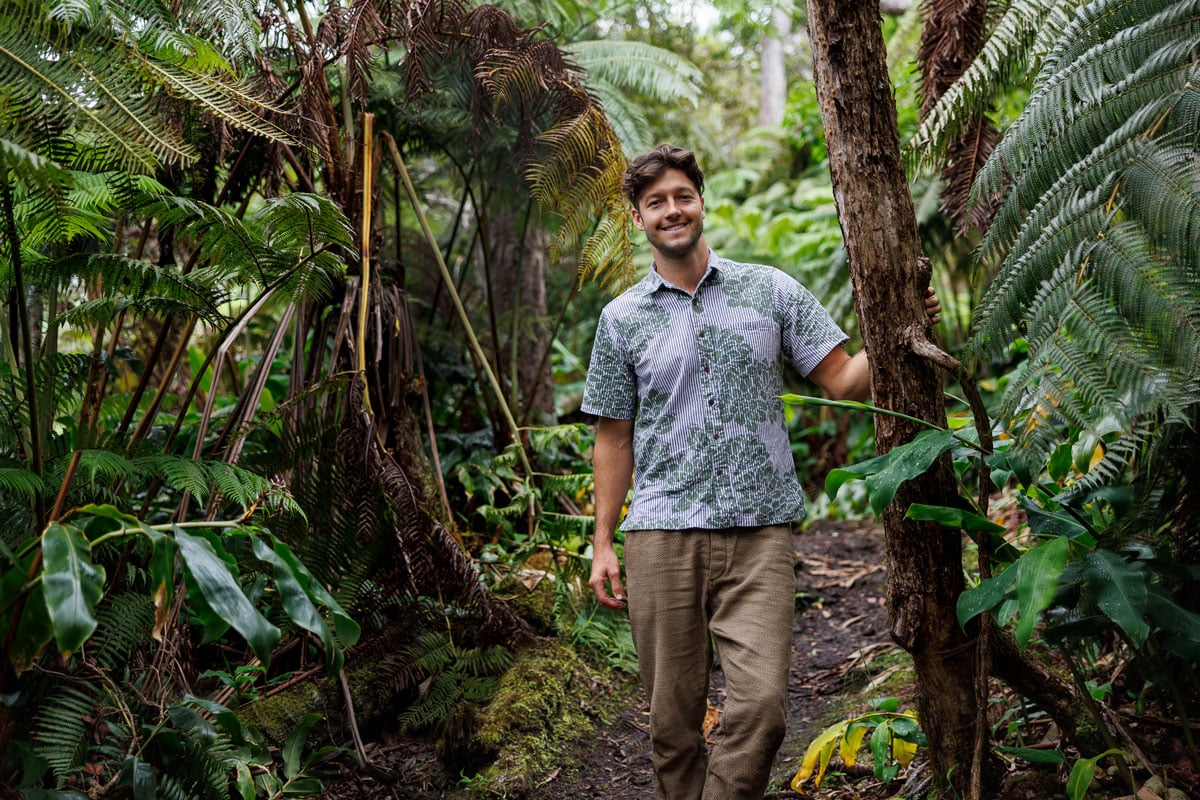
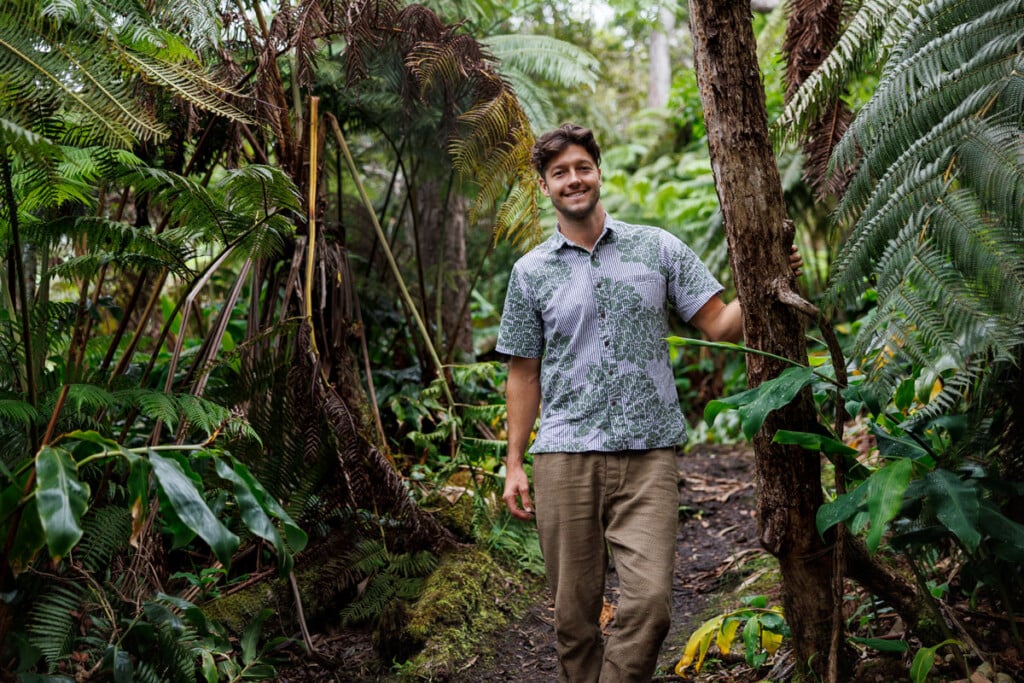
Ben Lillibridge zeroes in on a white speck, no larger than a pinhead, on a Kona trail. He bends down and lightly touches it. “That’s a mushroom,” he says. Upon close examination, its miniscule cap appears.
“I can’t believe you saw that,” I tell him.
“I’m always looking,” he says.
Lillibridge is always looking for mushrooms—and championing them. It’s not exaggeration to say he’s their most devoted ambassador. “Mushrooms are going to save the world one way or another, either by curing people of ailments or breaking down environmental contaminants and saving the world through micro-remediation,” he says. “If we have strong natural fungus in the ecosystem, it’s gonna save all the plants.”
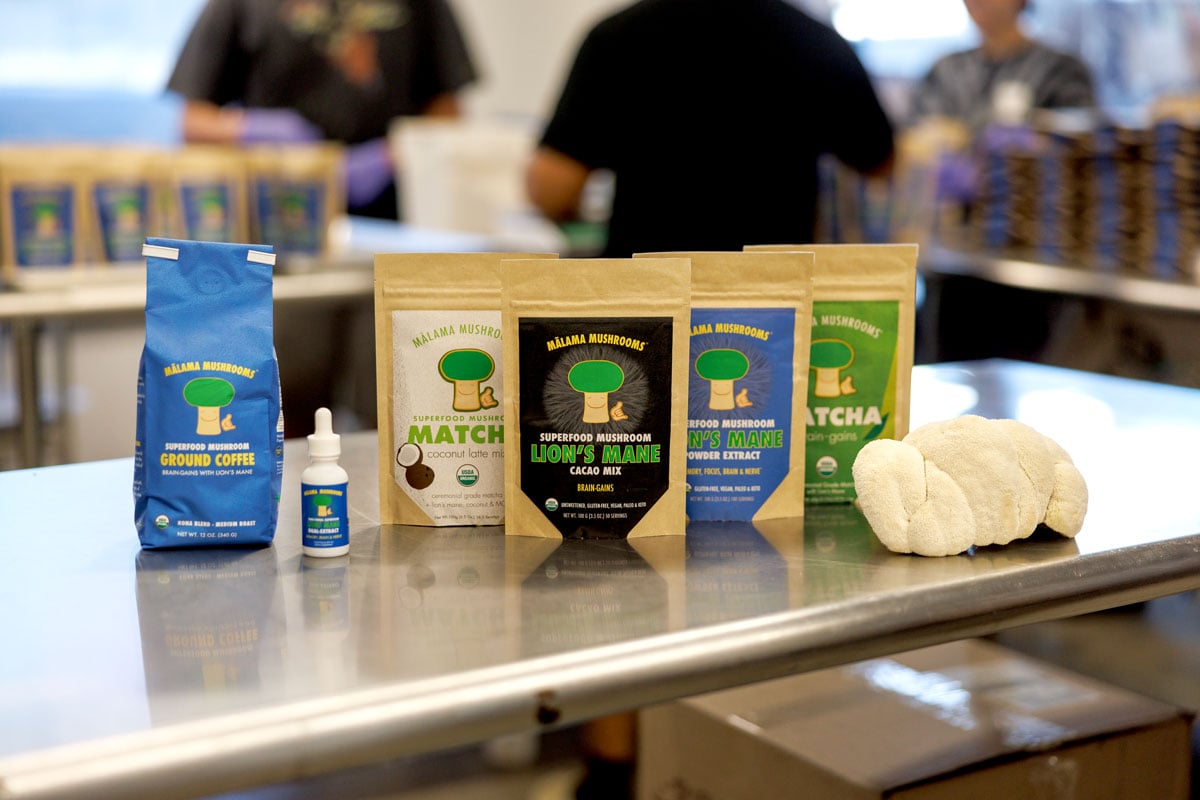
I learned about Lillibridge after trying his reishi mushroom cacao mix. I loved its calming effects and ordered more. Soon, I started receiving emails from him about his Mālama Mushrooms products, but also about the wondrous benefits of what he refers to as “fung-tional superfood mushrooms.” Marketing, sure, but I could tell there was more.
So I met him in Kona, where we visited his warehouse and a farm where he sources lion’s mane mushrooms. We then went searching for wild mushrooms. During our outing, he recounted how his mushroom-centric life came to be.
Originally from Wisconsin, he made his way to Hawai‘i Island 11 years ago, after studying environmental science and agriculture in college. His fungi fascination was sparked by the TED Talk “Six Ways Mushrooms Can Save the World” by mycologist Paul Stamets. In it, Stamets makes a compelling case of how mushrooms can help restore our ecosystem. An ardent conservationist, Lillibridge was enthralled.
He moved to Kona to deepen his understanding and took a job growing lettuce on a farm, where he got permission to grow fungi in an empty lava tube. He started selling those small batches at local farmers markets, then in 2015, launched Mālama Mushrooms. His mixes are now sold at some 700 stores across the country, including Foodland and Down to Earth. To get into stores initially, Lillibridge drove along the California coast, pitching his products at independent health food places. “I was essentially a door-to-door salesman, living in a truck,” he says.
When the pandemic hit, there was a “shroom boom,” Lillibridge explains, and businesses like his grew exponentially. Although he was well positioned to scale up, he refused venture capital out of fear Mālama Mushrooms would lose integrity. He wanted to stay rooted in his mission—to advance mushrooms’ role in restoring our ecosystem and making people healthier.
“Mushrooms are going to save the world one way or another …”
—Ben Lillibridge
So what’s so great about mushrooms?
“Some of the most important medicines in our society are derived from fungus, including penicillin,” Lillibridge says. There are more than 600 current studies on mushrooms, he adds, including on how different mushrooms can help those with PTSD, anxiety, cancer, depression and many other conditions and diseases.
Mālama Mushrooms now sells several varieties, including reishi, which has been found to help with stress, fatigue and anxiety; chaga for immunity and skin; and lion’s mane for brain health. Turkey tail, meanwhile, can be used for immune system support, and cordyceps for energy and vitality.
For his mixes, Lillibridge sources high-quality mushrooms from farmers around the world, and sends samples for lab testing to confirm beneficial compounds and the absence of harmful microbes, heavy metals and pesticides. Over the years, lots of customers have told him how his products have helped them. For instance, those with insomnia say because of his reishi, they can now sleep, while others with brain fog say they’re much more alert because of his lion’s mane. “It keeps me going,” Lillibridge says.
Simultaneously, research on how mushrooms can help restore our planet’s ecosystem is continuing to advance, and Lillibridge is part of that movement. “We’re creating all this plastic, motor oil and environmental toxins, and mushrooms are the grand disassemblers and can break down contaminants in the ocean and soil,” Lillibridge says.
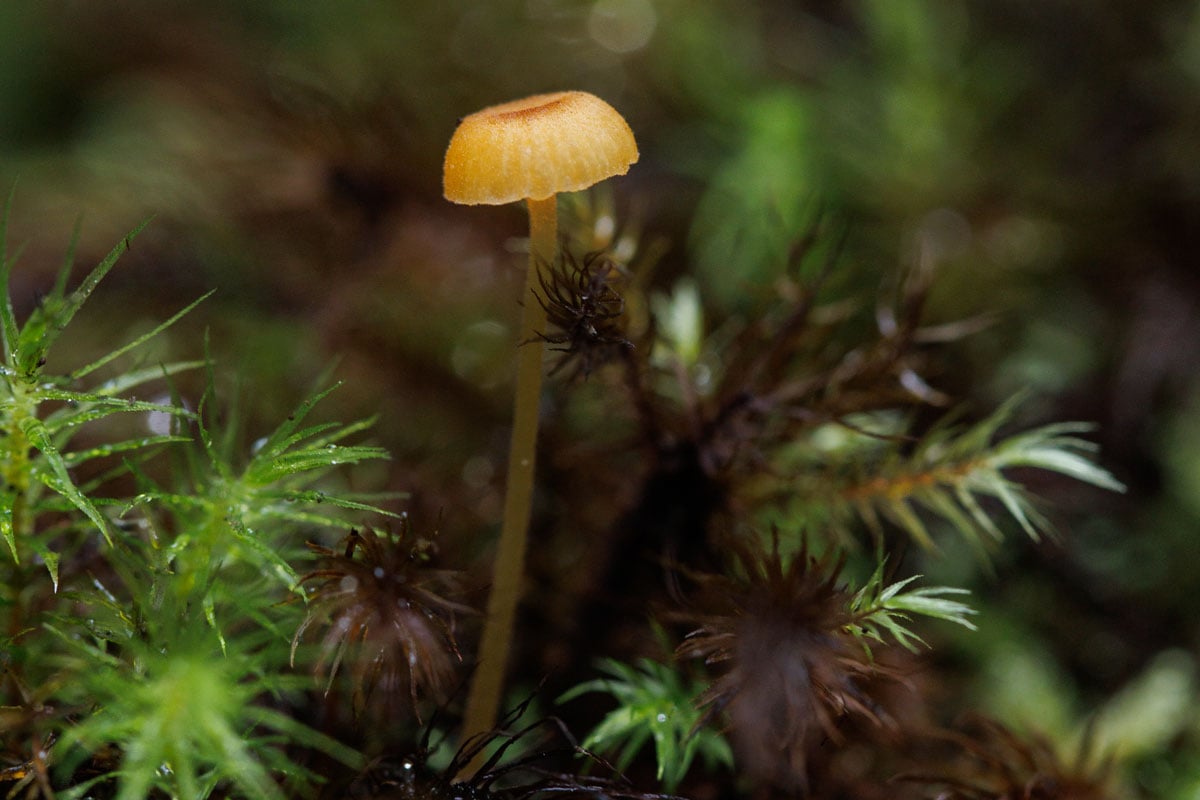
Yet with so many unknowns about mushrooms, Lillibridge and mycologist Jeff Stallman formed a nonprofit, Hawai‘i Fungi Project, to preserve endangered and unidentified native mushrooms by finding them and documenting their roots and uses. There are almost 2,000 varieties that grow in the Islands and about 60 are only found here; some don’t even have names, Lillibridge says. “There are some crazy ones that just started popping up here recently, and there’s no mycologist here working on the mushrooms of Hawai‘i.”
Lillibridge’s efforts have drawn him into the academic realm of mycology. He’s been a guest lecturer at UH Mānoa, and Hawai‘i Fungi Project is now partnered with ‘Iolani School, where students are genetically mapping native and rare mushrooms. Although he’s thought about furthering his education, he says he’s probably most impactful in the private sector as a quasi-spokesperson for the cause.
“I really love talking about mushrooms, educating people about them and discovering new species. That’s where my passion lies,” he says. “And I’m a good connector, the guy to connect people and push things forward.”
Diane Seo is the editorial director of HONOLULU Magazine.