Pursuits: Ichthyologists Richard Pyle and Brian Greene Dive Deep
Richard Pyle and Brian Greene have devoted their careers to discovering and documenting marine life in the ocean’s depths.
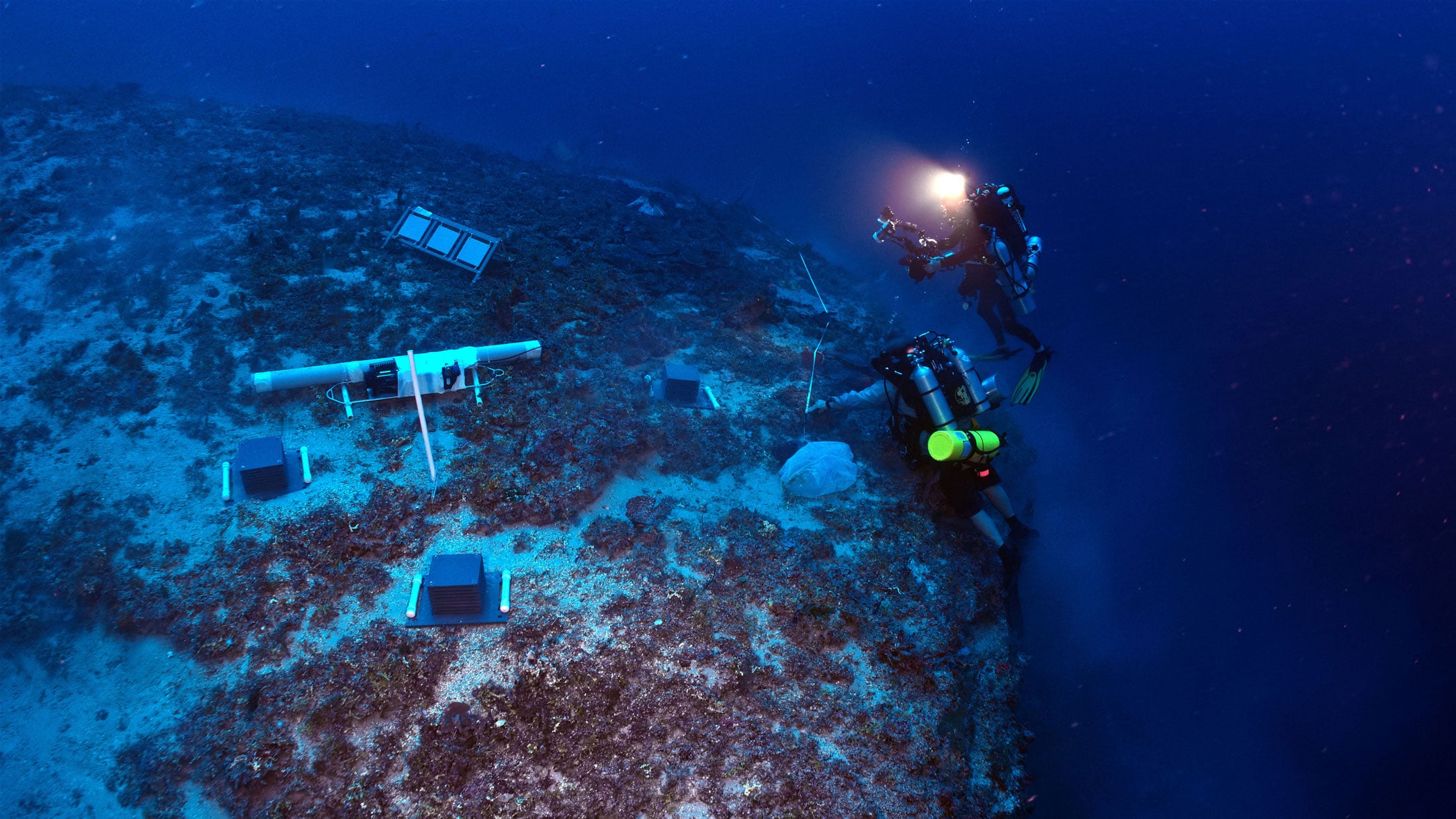
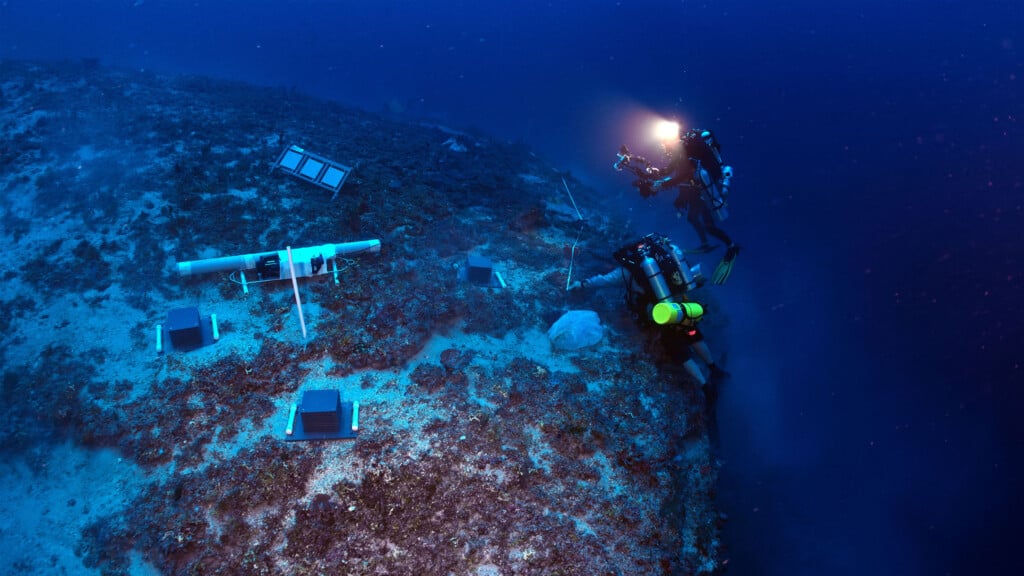
Richard Pyle and Brian Greene literally go where humans have not gone before, diving 500 feet into pristine indigo water to discover and document marine life around coral reefs. As ichthyologists—marine biologists who study fish (or “fish nerds” as they call themselves)—they’ve dedicated their lives to exploring reefs in oceans across the Indo-Pacific to collect information about our planet’s biodiversity.
“What gets me excited is when I come around a corner on a deep coral reef and see a fish I know no human has ever seen. That thrill is indescribable; it’s a raw discovery,” says Pyle, Bishop Museum’s interim director of natural science.
With climate change, there’s urgency in their work. Research shows that species are going extinct about a thousand times faster than they did before the Industrial Revolution, Pyle says. Adds Greene: “My motivation is my 5-year-old son. I want to document as much as possible, so he’ll be able to see what I’ve seen.”
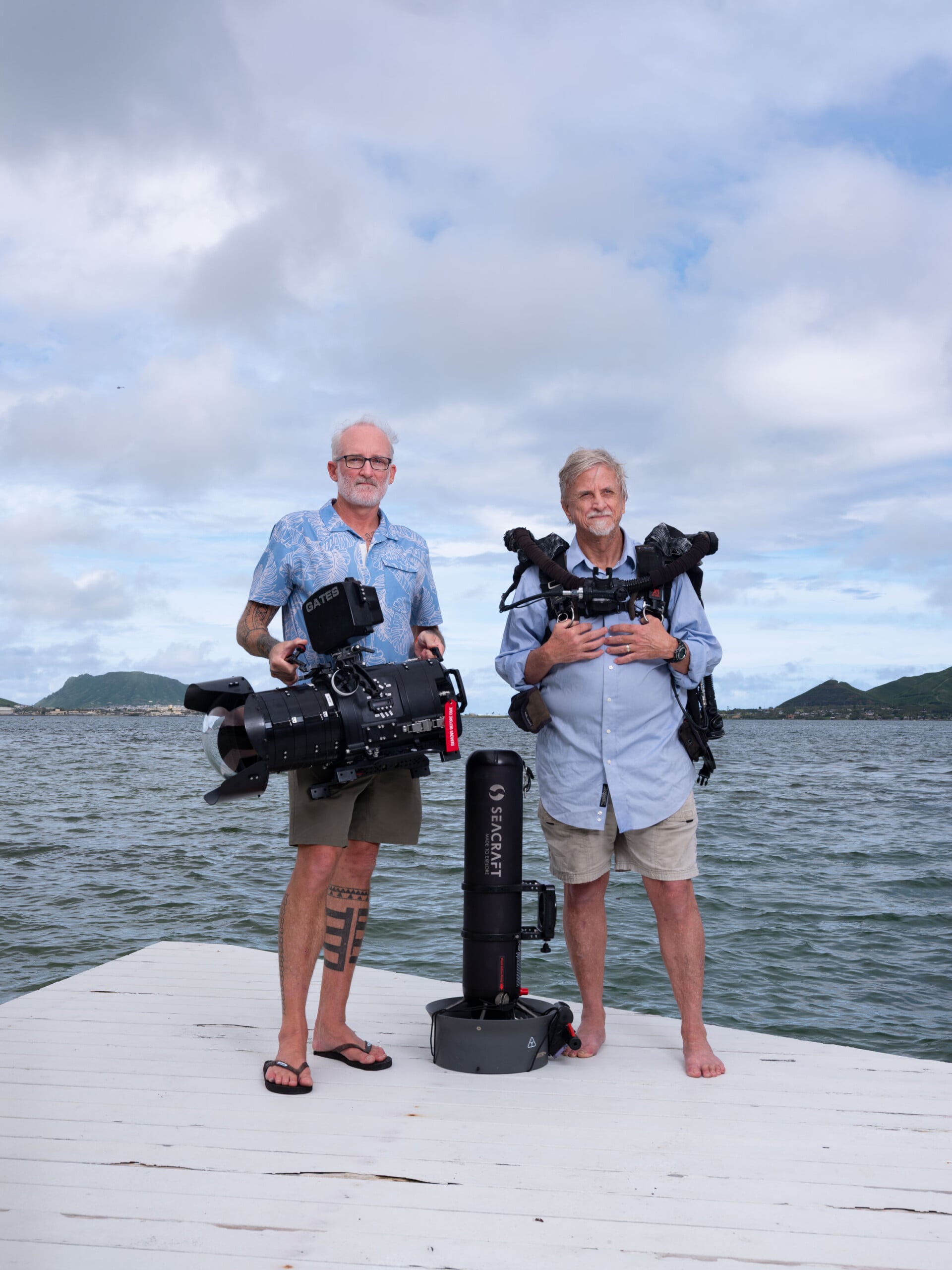
Like their mentor, late Bishop Museum scientist Jack Randall, whom Pyle calls “the greatest ichthyologist in all of history,” Pyle and Greene are building a library of knowledge at the museum’s Center for the Exploration of Coral Reef Ecosystems. They’re also working through EXCORE to share information, photos and videos captured during their dives. “We’ve been living this for 40 years, but because we’re nerds and introverts, we’ve been keeping it to ourselves,” Pyle says. “But we’re now getting encouragement from museum leadership to get the word out.”
The duo’s passion for deep-sea diving started early, and not even a traumatic accident would detour Pyle from his destined path. As a 19-year-old, while diving in Palau, his equipment malfunctioned, and he was paralyzed. While he eventually regained mobility, to this day, he has lingering limitations like poor balance. “I was told by doctors I’d never go diving again, but I had already decided it was my life’s calling,” Pyle says.
The experience got him fixated on how he could leverage technology to make dives safer. He spent years studying military and commercial divers, who use advanced equipment and special gas mixtures including helium, to go much deeper than scuba divers. Pyle adopted similar practices and became a chief beta tester for a diving equipment manufacturer. “I’ve been involved in developing the technology I use, and it’s been getting better, smaller, more efficient and more reliable,” he says.
He and Greene now head into what they refer to as the “twilight zone,” the area below where scuba divers typically go, but shallower than where submarines venture, generally around 500 or 600 feet. During their explorations in the Indian and Pacific oceans, they’ve discovered many new species of fish, including previously unknown kinds of damselfishes, wrasses, butterfly fishes and angelfishes, Pyle says. To document their findings, Greene operates what arguably is the world’s best underwater camera, the kind of digital camera used by Hollywood cinematographers.
Even today, with decades of explorations behind them, the pair regard every expedition as a privilege. “It wouldn’t be overstating to say it’s like what Neil Armstrong felt like stepping on the moon,” Pyle says. “Sometimes, we find enormous caves or giant schools of sharks, stuff completely unknown to humans, and that’s where the excitement comes from—discovering a new frontier.”
SEE ALSO: Pursuits: Matty Wong Is the Reel Deal
Diane Seo is the editorial director of HONOLULU Magazine.