Korean Dishes You Probably Don’t Know (But Should)
How well do you know Korean food? These traditional dishes go well beyond the familiarity of mandoo and kim chee.
Honolulu loves Korean food—full stop. The first Korean restaurants opened more than 50 years ago with hearty, fulsome fare that’s remained largely intact, a testament to its widespread appeal. From kalbi and kim chee to sizzling jjigae stews and icy naengmyeon, Korean cuisine is integral to the city’s food scene—even as newcomers flash the latest food trends from Seoul.
But how well do most diners know Korean food? For guidance, we turned to two local Koreans who frequent many of Honolulu’s Korean restaurants. Gina Kim Nakamura is president of the Hawai‘i Korean Chamber of Commerce, and David Suh heads the United Korean Association of Hawai‘i. The dishes they recommend come from all over the Korean peninsula, with a fuller range of flavors than the fiery, salty, sesame-nutty profiles most of us know. Try them if you’re curious to explore.
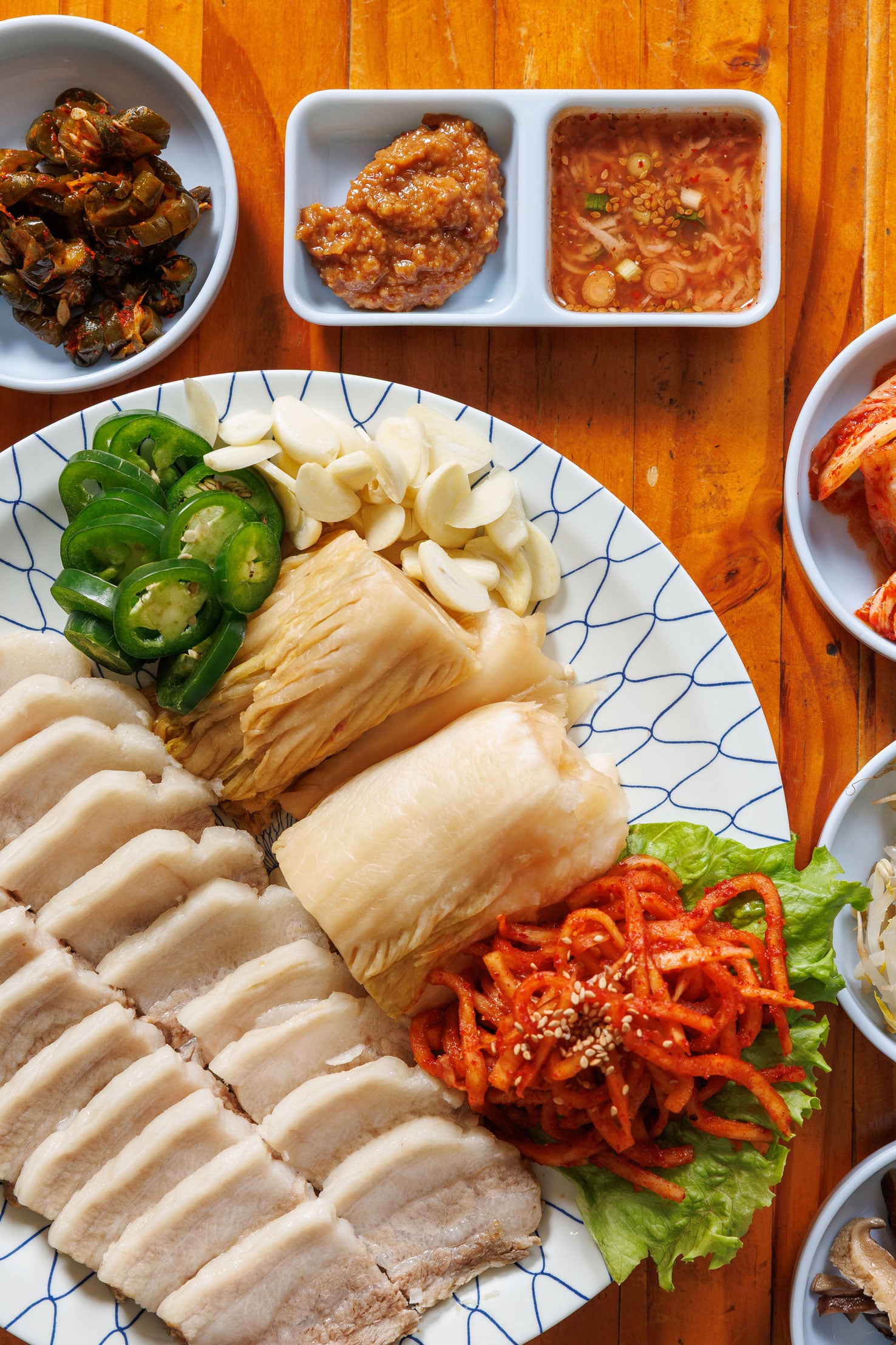
Bossam 보쌈
boiled pork belly in cabbage wraps
“Earthy” is how Suh describes Frog House’s bossam, a homey palette of boiled pork belly, dried radish kim chee, jalapeños and raw garlic. Tucked in between are the wrappers—not the fresh lettuce or lightly brined cabbage of other restaurants, but mugeunji or aged kim chee, rinsed of its spicy red coating. Layer the juicy pork and radish kim chee onto a leaf, smear with sauce, fold the leaf over and eat in one crunchy, tender, salty, spicy, nutty bite. Garlic and chiles are optional.
1604 Kalākaua Ave., Mō‘ili‘ili
Hobakjuk 호박죽
pumpkin porridge
“Hobakjuk? That’s country food,” says my hairstylist, who’s from Seoul. That jibes—a friend from a farm outside Daegu taught me how to make the velvety, mildly sweet soup. Cut, deseed, peel and boil a kabocha pumpkin, mash it with water, mix in chapssal garu or mochiko rice flour, finish with salt and cooked red beans. Eat hot or chilled with fresh kim chee. In Honolulu, you’ll find fresh hobakjuk on the prepared foods table at Pālama Supermarket.
Multiple locations, palamamarket.com, @palamasupermarket
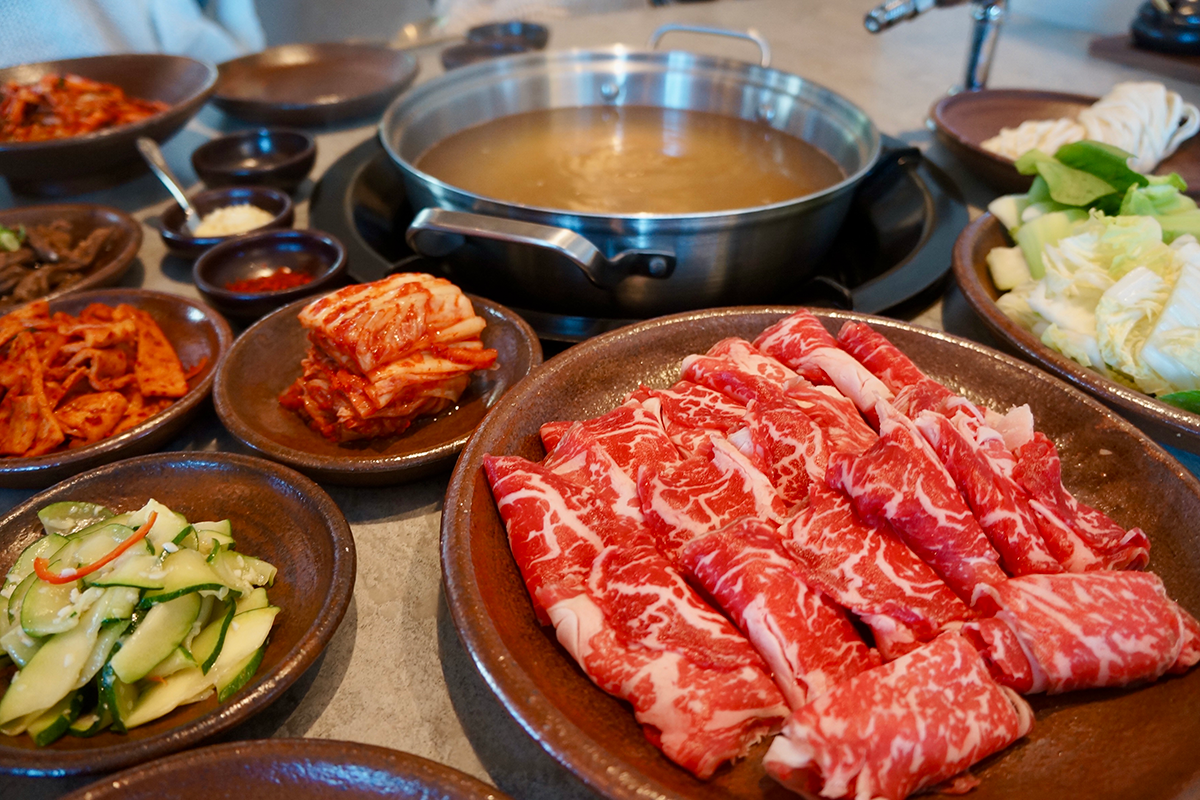
Guksu jeon-gol 국수 전골
hot pot with noodles
Honolulu’s only DIY guksu jeon-gol is a lunch item at Onkee Korean Grill House, where the deep umami of an anchovy-based broth gives rib-eye, fresh shiitake and leafy greens a buttery accent. Cook the ingredients at your own pace; at the end, hand-cut noodles go into the soup as a finishing touch.
1000 Auahi St., Unit 220, Kaka‘ako, onkeehi.com, @onkeehawaii
Kongbiji jjigae 콩비지 찌개
puréed soybean stew
A savory porridge tinged with pork and aged kim chee, kongbiji jjigae features soaked soybeans ground to a soft pulp. Many restaurants use a powder instead, but at Yakiniku Seoul, Nakamura says, “They grind the beans—the actual beans—they don’t buy powder. So it’s very good.”
1521 S King St., Suite 101, Ala Moana, yakinikuseoulhi.com, @yakinikuseoul
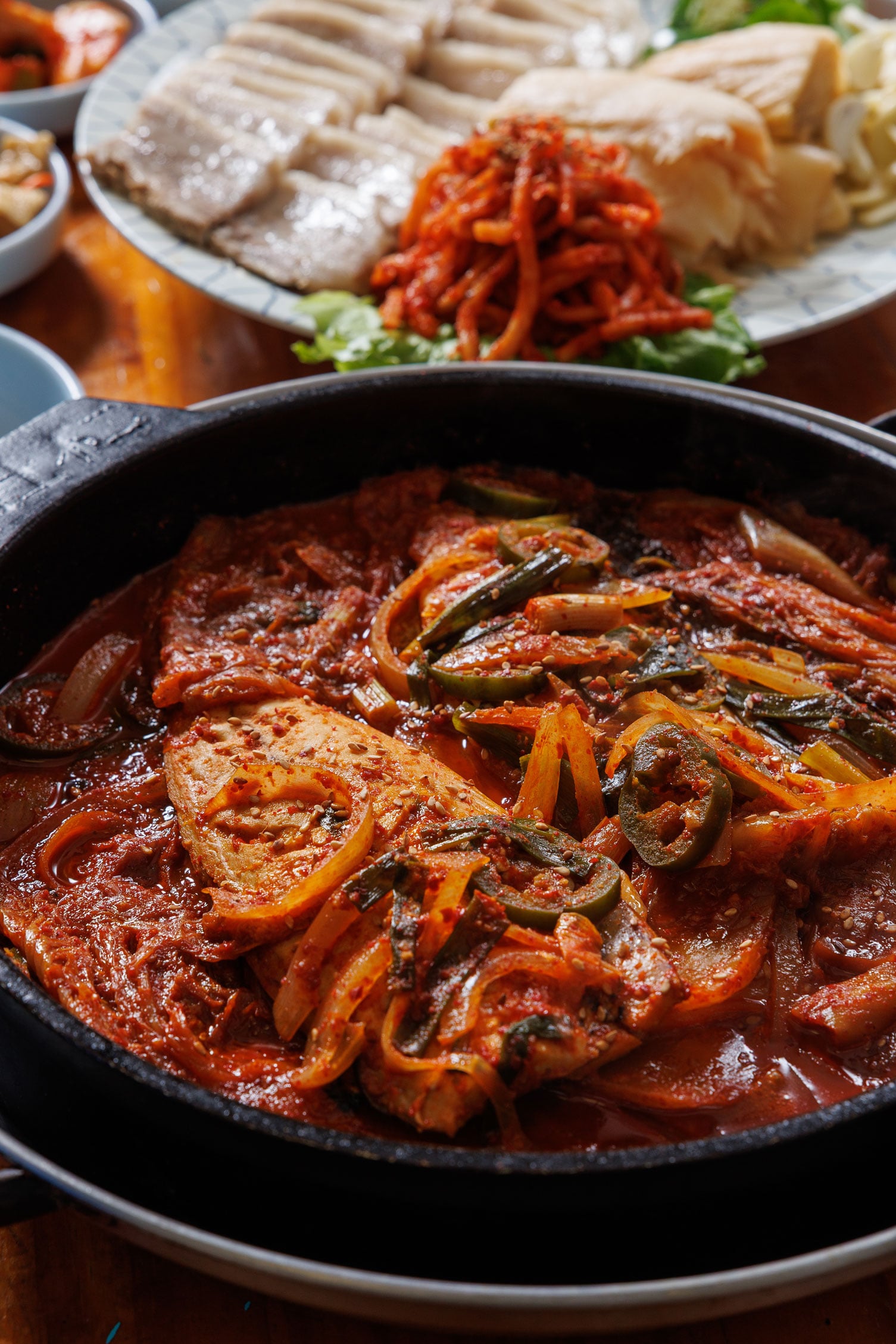
Mugeunji godeungeo jorim 묵은지 고등어 조림
aged kim chee with steamed, braised mackerel
Heady with tang, umami and the redolence of mackerel, this stir-fry of the fish with aged kim chee is a rice-chaser. Steaming and braising tamps down the strong nuances of the fish, but this is still a must-order for those (like me) who love fishy, oily mackerel.
Ojingeo bokkeum 오징어 볶음
stir-fried squid and vegetables
“It’s a whole bunch of squid with stir-fried mixed vegetables, and it’s not that spicy, it’s kind of sweet spicy,” Nakamura says of this homestyle favorite tossed in a gochujang sauce with red pepper flakes. “Afterward, you mix the rice with the leftover sauce, and it’s so good.”
Samgyetang 삼계탕
ginseng chicken soup
Equal parts comfort and health food, samgyetang presents a whole young chicken stuffed with rice, ginseng, jujubes and garlic and served in a boiling broth with ginger. The chicken is fall-apart tender and the thick broth plain—season it to your liking with salt and pepper and eat between bites of kim chee.
A New Age of Trend
Newcomers to Honolulu’s Korean food scene are anything but traditional.
What’s the tie that binds Honolulu’s newest Korean eateries? That’s what I’m wondering at Okdongsik, a sunbathed strip of golden wood and gleaming metal near Ala Moana Center. Spartan and modernist, Okdongsik opened last summer as Hawai‘i’s sole specialist in dweji gomtang, or pork rice soup—and that’s the conundrum. We’ll always have our mainstays (I hope)—the Korean barbecue houses of traditional fare and apron-clad ajumma, and neighborhood mom-and-pops where kalbi and meat jun plates rule. But after a flurry of Korean fried chicken openings that now outnumber tonkatsu shops, newcomers of late have almost all been one-offs.
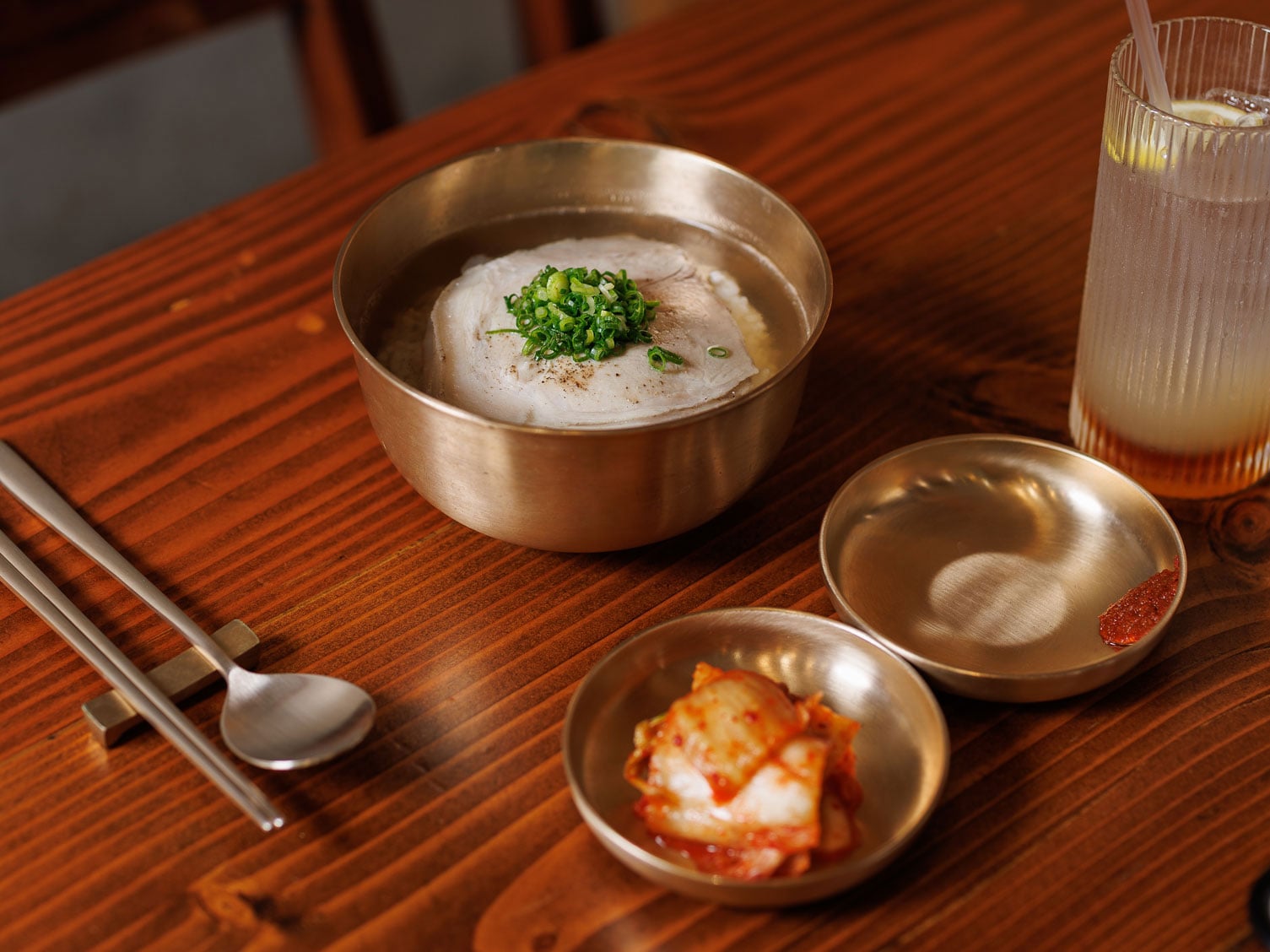
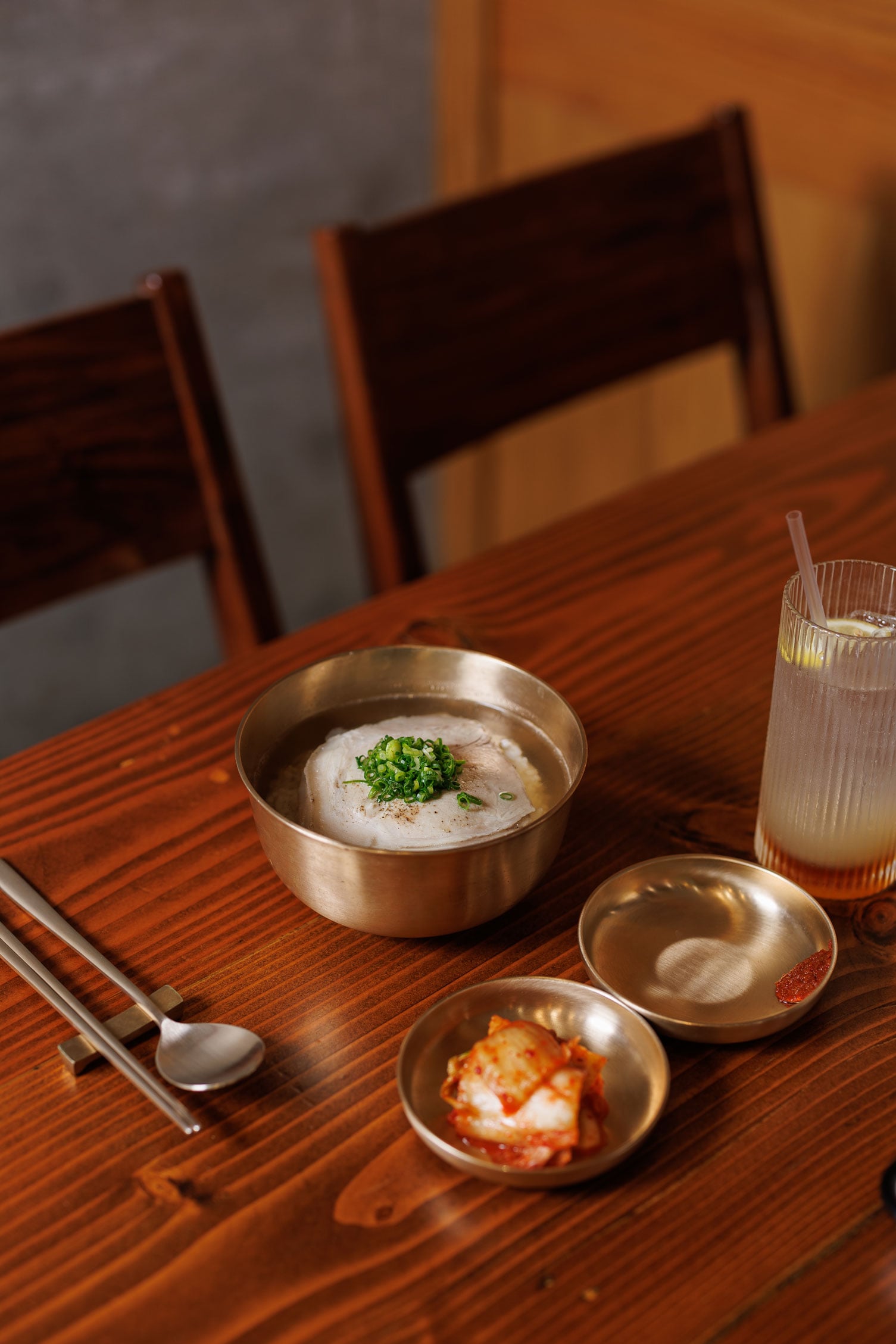
At Okdongsik, I watch a worker aim an infrared thermometer gun into a pot of broth. The eatery rose to Michelin Bib Gourmand status in New York City on a deceptively simple dish of rice in a clear pork broth layered with sheets of slow-simmered pork shoulder. This is why the show of rinsing the rice in steaming broth, ladling both into gold-toned bowls and fanning the meat across the surface takes place in full view of a 20-seat counter that’s often packed.
“What temperature are you looking for?” I ask the worker.
“One hundred sixty-nine to 170 degrees,” he says, and nearly repeats himself when I ask about the rice: “One hundred sixty-eight to 170 degrees.”
The harmonized temperatures bring to the lips a clean, savory, deeply porky soup at a heat that showcases the flavors and melts a soul. Is that the common thread? Are new players applying craft approaches to Korean food?
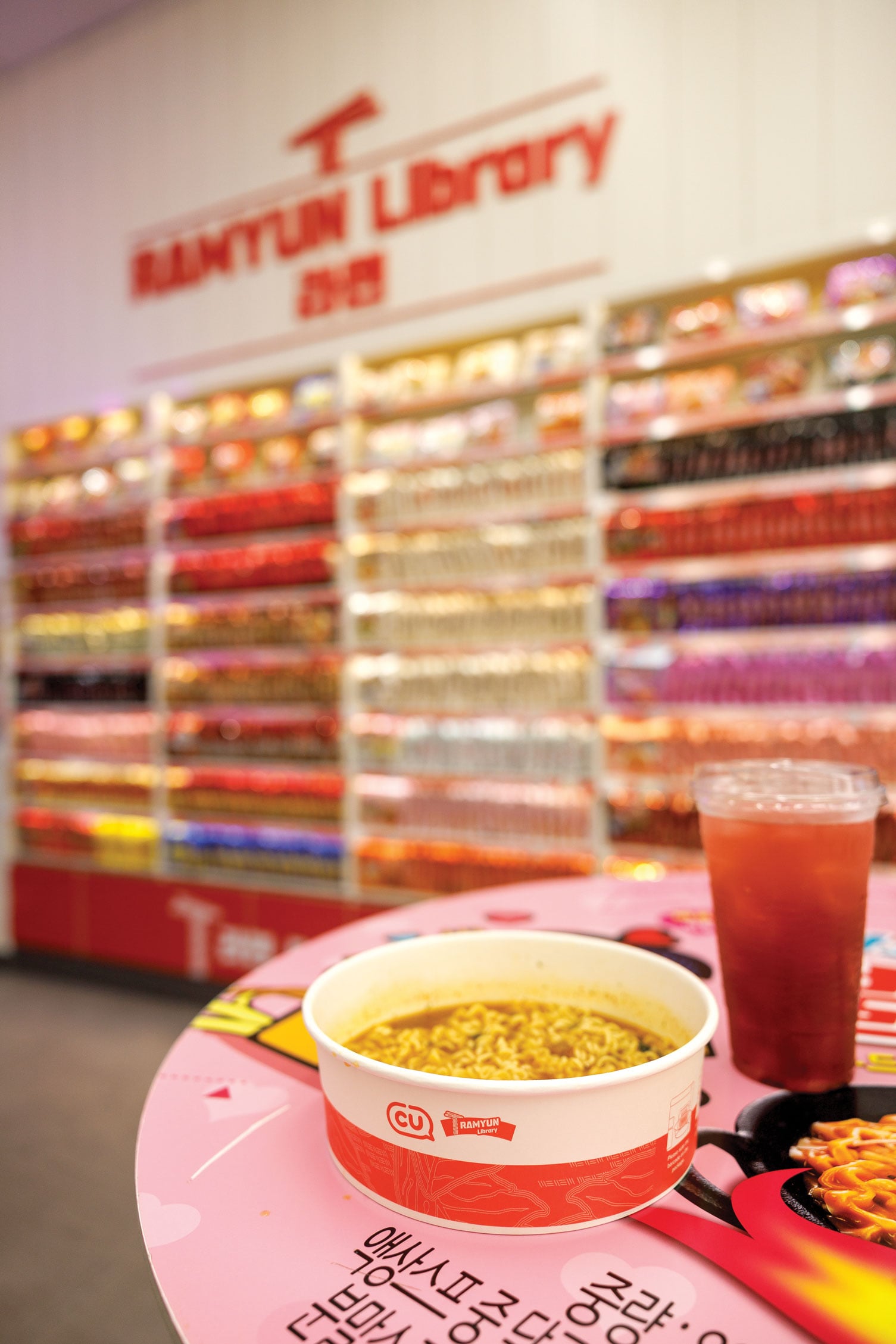
The answer becomes clear as I stand in front of the wall of instant ramyeon at Downtown Honolulu’s CU, among the latest of the Seoul-based chain’s 700-plus stores worldwide, plus another 18,500 in South Korea. Billed as Hawai‘i’s first Korean convenience store, CU overwhelmingly sells food—which you can heat in-store and eat at tables shaped like instant ramen cups.
“We love how often the ramen tables are filled, and we have ongoing requests for more seating,” says Gina Haverly, president of CU Hawai‘i. “Our community has a strong affinity for Korean culture and food, and we were early fans of Korean trends.”
Trends—that’s the thread that runs through the tumble of newcomers. Honolulu is hungry to taste the Korea of the moment. All that ramyeon, and those packaged drinks poured into ice cups. Lines were long at Tous les Jours, Honolulu’s second Korean bakery chain, when it opened in January—just like the line that wrapped from Bishop Street onto South King Street when Paris Baguette, our first Korean bakery chain, debuted in 2024.
What we line up to buy is often not traditional Korean food. Nor is it always from a restaurant. Tous les Jours is known for its cream-filled cloud cakes. Paris Baguette’s top sellers include fruit bite tarts—and its 4,000 stores set a Guinness World Record for most roll cakes sold. It’s no wonder that in Honolulu, the dividing line between Korean food past and present is such that eaters familiar with dishes at old-school eateries haven’t been to the new places, and few of those flocking to the new places have tasted Korean dishes beyond naengmyeon and seafood-and-chive pancakes.
It doesn’t end here, of course. At Salt at Our Kaka‘ako, I find Lani Sot, which specializes in sot bap, literally “pot rice”—the meat- and vegetable-topped stone pot rice bowls trending in South Korea. CU opened a second Honolulu location in February, with at least two more in the works. Tous les Jours is reportedly planning another two stores; Paris Baguette is looking for locations. And randomly, I stumble across Rice Burger & Café, a takeout counter in Kaimukī that sells trendy bap burgers—with fillings sandwiched between patties of grilled rice—and cup bap. Like sot bap! What’s next?