Pursuits: Lifeguard Joey Cadiz’s New Calling Brings Him Full Circle
His instincts kicked in when he raced to rescue North Shore families during the Kona low floods. Now, that’s opened a new chapter.
To understand Joey Cadiz’s trajectory, let’s rewind to 2013, with him pursuing a master’s degree at UH Mānoa in public health. For his capstone project, he taught kids how to surf to help root them to Hawaiian culture and the ‘āina and keep them healthy.
As a longtime surfer, he was comfortable in rough ocean water but didn’t have lifeguarding experience, so he decided to get certified to help keep students safe. While going through training, he says he “fell in love with what we were doing as far as public safety and educating the public.” He wound up working full time as a lifeguard, assigned to Waimea Bay on the North Shore.
Over the years, rescues became a way of life for Cadiz. He made many of them, including saving a snorkeler struggling in 20-foot surf. Another time, a surfer at the 2023 Eddie Aikau Big Wave Invitational returned to the beach after severely slicing her thigh on her board. Cadiz, who was also competing at the event, sprang into action and got her to the hospital in time for her leg to be saved.
His motivation for doing what he does? “I love knowing people are going home safely to their families at the end of the day. I consider myself a protector.”
Fast forward to March 20, 2026, as a severe Kona low storm battered O‘ahu. Cadiz was at home in Mililani, hearing about the rapidly deteriorating conditions on the North Shore. “I started getting frantic calls around midnight that the water was not letting up,” he recalls. “My lifeguarding instincts snapped into action, and I decided to get there as quickly as possible.”
He grabbed whatever would float—surfboards, a stand-up paddleboard, a kayak.
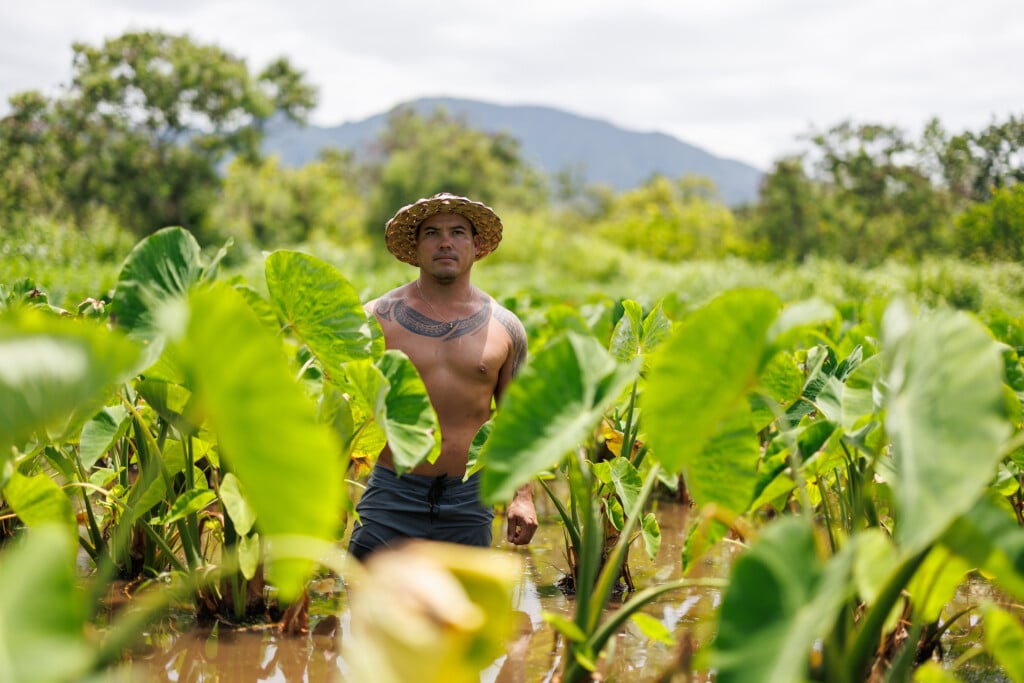
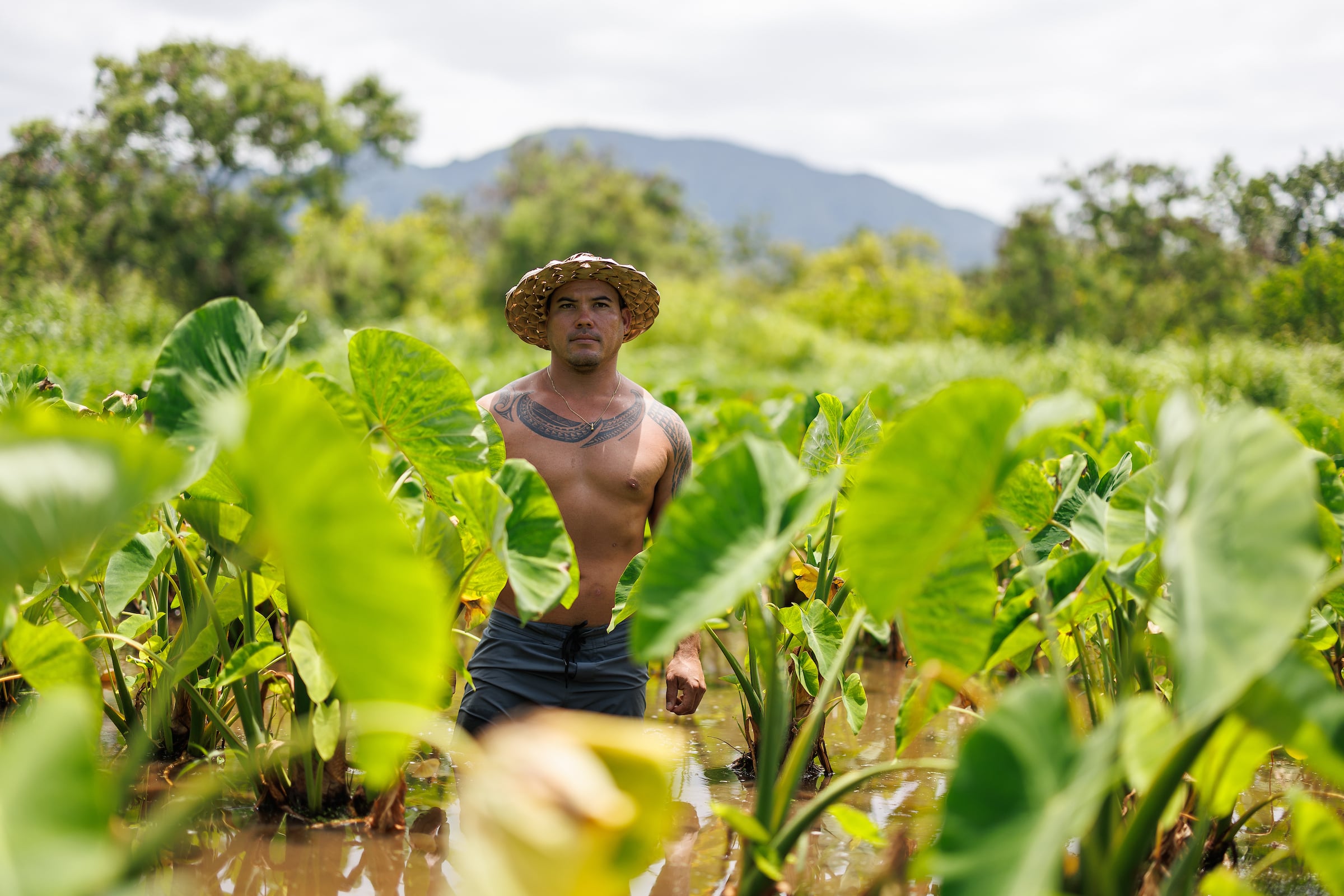
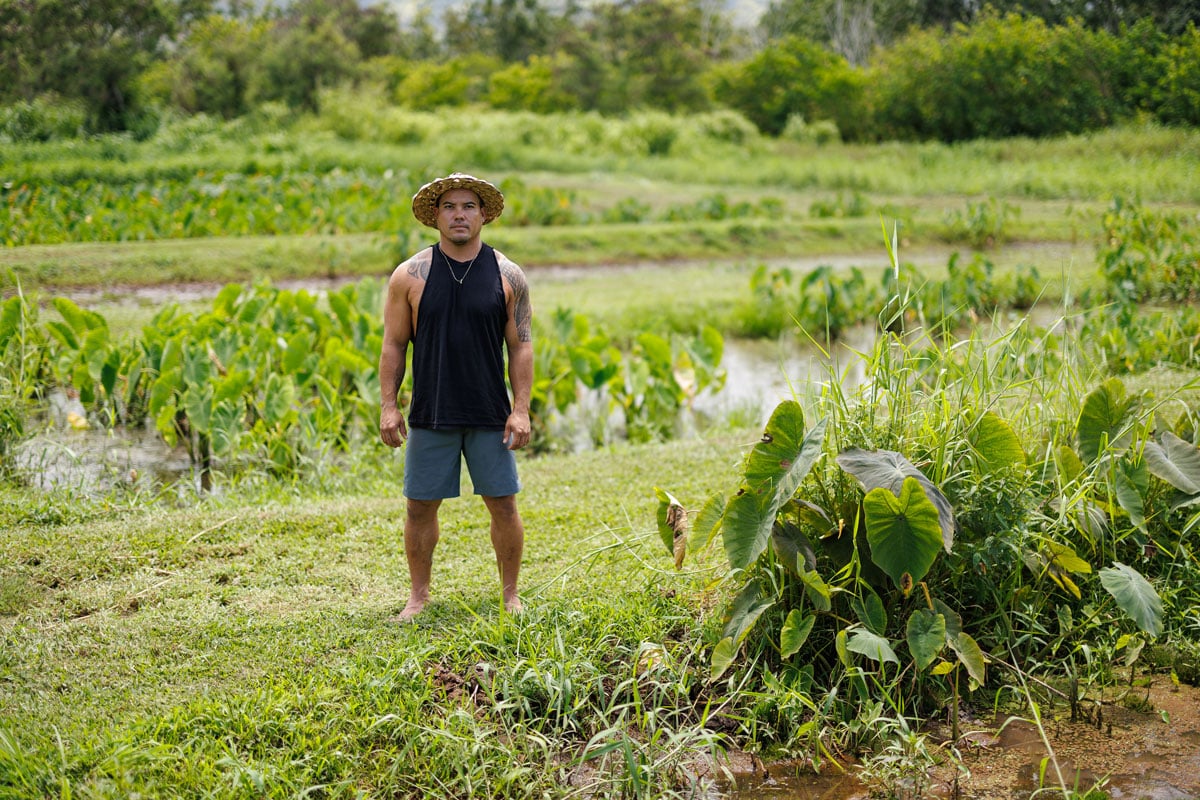
When he got to Waialua, where he owns a taro farm, the flooding had already stranded families in their homes, with some forced to flee to their roofs. “It was mind-blowing,” says Cadiz, whose farm was heavily damaged in the storm. “But as a lifeguard, I’m able to deal with a high amount of stress, especially during big surf and those kinds of things.”
“I consider myself a protector.”
There were guys on tractors nearby, also trying to help, so Cadiz teamed with them. “We had no idea what we were paddling through. Telephone poles were down, and gasoline was all over the place. It was like something you couldn’t even imagine,” Cadiz says. “Fancy tools and Jet Skis weren’t going to work. We needed to get into the water, paddle and get people on a board and to higher ground.”
Over several hours, Cadiz estimates they rescued about 100 people. Heroes, for sure.
But Cadiz’s involvement wasn’t over. Over the next several weeks, he became a key point person for storm recovery. He fed his Instagram with a stream of information about how people could get help. He was at distribution hubs, laying sandbags when more rain threatened, and doing whatever he could for the community, day and night. Instead of resuming his work as a lifeguard, his employer, the City and County of Honolulu, gave him a special assignment to help with recovery in whatever way he could, including serving as a liaison with government officials.
After two months, he returned to his lifeguarding duties, but the experience forever changed him. He was offered a job with the Hawai‘i Emergency Management Agency, but he declined, believing he could accomplish more without being attached to a state agency. He had earned the community’s trust, something he holds sacred. “My love for different parts of the North Shore has expanded because of the floods, and my connections deepened,” he says.
Only about 3 acres of Cadiz’s 13-acre farm are open—the rest is still damaged from the storm. He’s now considering working full time not just restoring his land, but expanding it and turning it into a place of learning. Over the years, many schools had asked if they could bring students to the farm on field trips—and now, he wants to welcome them.
And that’s how things have come full circle, with Cadiz once again focused on Hawai‘i’s youth. He thinks back to the capstone project and how he’s returning to a similar goal. “This is now my approach at preventative health and reconnecting kids to the land,” he says. “Essentially, I consider this like lifeguarding from the land.”