Lahaina Is Still Healing Three Years After the Wildfires
A Buddhist priest, a Hawaiian cultural practitioner and husband-and-wife restaurateurs reflect on what has happened since the Maui fires.
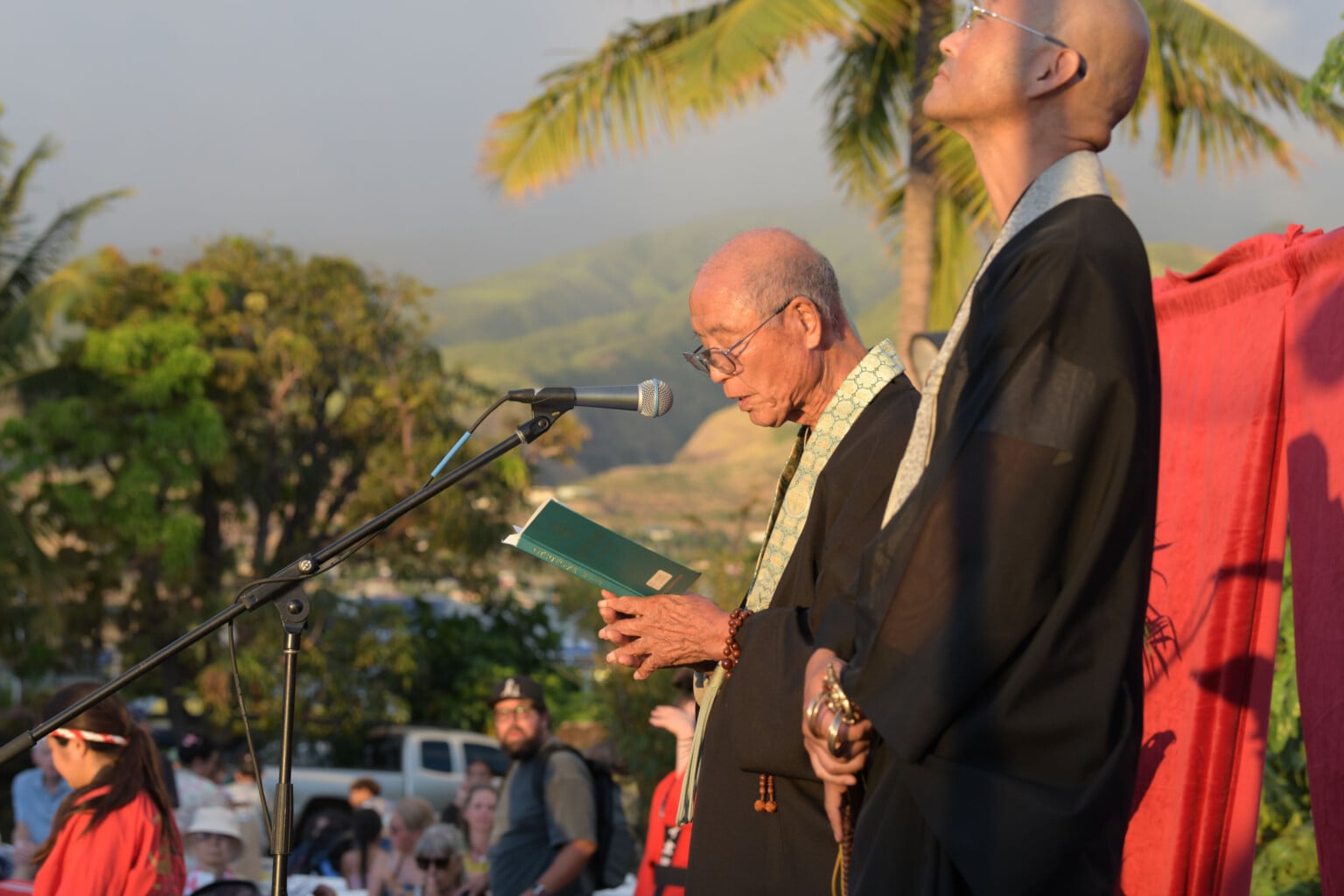

Photo: Courtesy of Ai Iwane
The Rev. Gensho Hara
Two weeks after the Rev. Gensho Hara escaped the blaze that destroyed Lahaina Jodo Mission, he was an evacuee in his daughter Maya Hara’s house in Wailuku. For visitors, he brought out a framed drawing—the only physical likeness left of his 114-year-old beachside temple. Everyone survived, he told us, and wept.
Three years later, 90-year-old Hara and his wife are back on the temple grounds in a tiny home. Since fainting after holding services last year, he jokes about becoming a battery-powered human, thanks to a pacemaker. The path to rebuilding is long—at least five more years, Maya guesses—and with heavy site restoration, master planning and the carpentry skills of traditional temple builders from Japan, the Haras will need at least double the $10 million allotted by FEMA. It’s become Maya’s full-time job to coordinate everything and secure government approvals, which sometimes spawn the need for more approvals.
Her efforts freed the reverend to focus on the bon dance this past August. As the smoke cleared in 2023, he learned that four members of his small, elderly congregation had perished. The bon dance, he told us on its eve, would honor the spirits of all who died—and celebrate tomorrow’s Lahaina. “On these ruined grounds where we lost so much, it’s a strange feeling, but every day I look at the beautiful sunset and forget my sense of loss,” he says. “We’ll gather together and rejoice in being alive.” —Mari Taketa

Photo: Courtesy of Ai Iwane
SEE ALSO: The Way Back: “This Will Be My Answer”
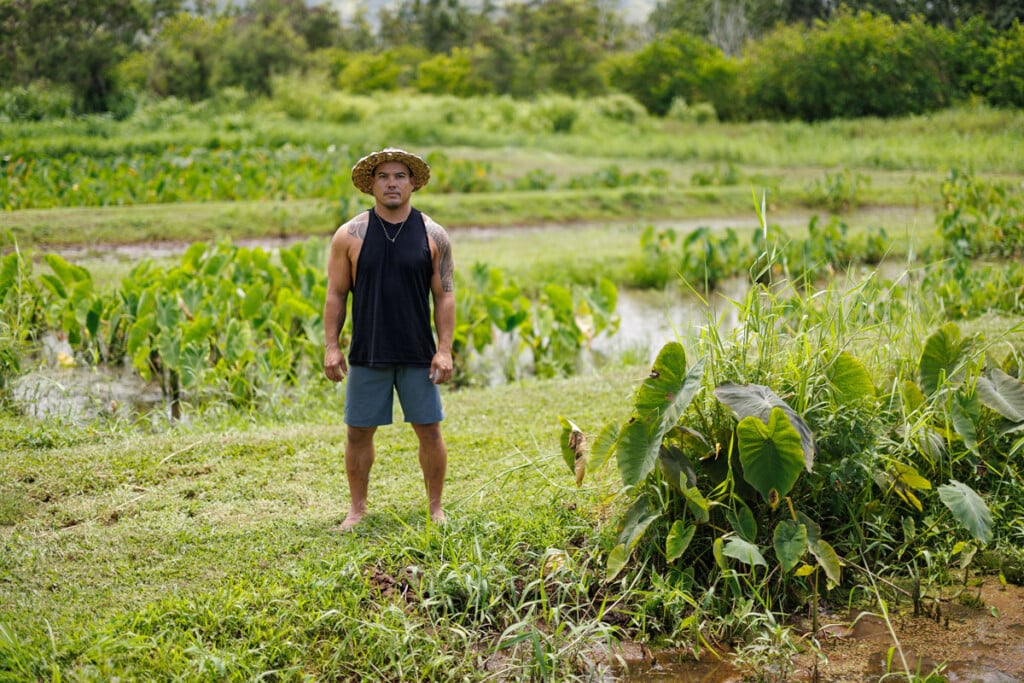
Namea Hoshino
Native Hawaiian cultural practitioner Namea Hoshino has yet to rebuild his family’s home, which was destroyed in the fires. While he says Lahaina’s community has remained strong, recovery over the past three years has been slower than expected. But he’s optimistic. “All in due time,” he says.
Hoshino worries that commercial recovery is moving faster than residential rebuilding. The reopening of Front Street, he says, raises questions about the priorities shaping Lahaina’s future. “You’re going to rebuild first, before I do?” he asks.
These concerns echo what Hoshino shared with HONOLULU Magazine in 2023, when he worried Native Hawaiian voices would be left out of rebuilding decisions. Three years later, those fears remain. “We still want to be heard,” he says. “If we’re not at the table, then somebody else is controlling the narrative.”
Despite the challenges, Hoshino draws on his cultural practice to help strengthen connections within the community. He encourages families to reconnect with ‘āina-based practices and cultural knowledge passed down through generations.
“Lahaina’s still healing,” Hoshino says. “We’re all still healing.” —Kayla Luke Colon
SEE ALSO: The Way Back: “We Got It”
Qiana and Michele di Bari
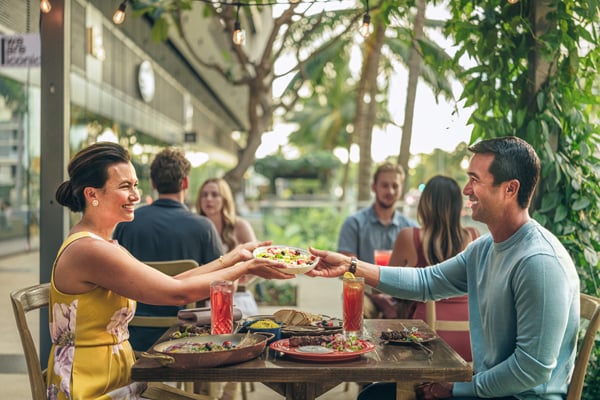
Three years after the wildfires, Qiana and Michele di Bari are still rebuilding their restaurant, but with a renewed sense of stability and hope.
“We’re home,” Qiana says. They reopened Sale Pepe Pizzeria e Cucina in March 2025 at Lahaina’s Emerald Plaza Center and expanded four months later with Via! by Sale Pepe at Whalers Village in Kā‘anapali, which has since closed. They say their businesses and team have momentum—and the continued support of the community.
For Qiana, one of the most meaningful parts of the journey has been watching their employees return and launch a new chapter for Sale Pepe. Michele’s recognition as a semifinalist for the 2026 James Beard Awards was another milestone, highlighting not only his work as a chef but also the resilience of the Lahaina community.
Still, recovery remains complicated. Many local businesses still face challenges, from high operating costs to worker shortages. And Qiana says business owners who are rebuilding in Lahaina need more support, which she says is critical for Maui’s long-term recovery.
“The people,” Qiana says, give her and Michele hope. —Kayla Luke Colon
SEE ALSO:
The Way Back: “The Only Way Out Is to Go Back In”
The Maui Wildfires, A Year Later: Part 1
The Maui Wildfires, A Year Later: Part 2
Mari Taketa is the dining editor of HONOLULU Magazine and editor of Frolic Hawai‘i.
Kayla Luke Colon, the 2026 summer editorial intern for HONOLULU Magazine, is a journalism student at UC Irvine.