Welcome to B+HARI Brain Class
Attendance has grown steadily as kūpuna, business executives and others aim to improve their cognitive functioning and stave off dementia, including Alzheimer’s disease.
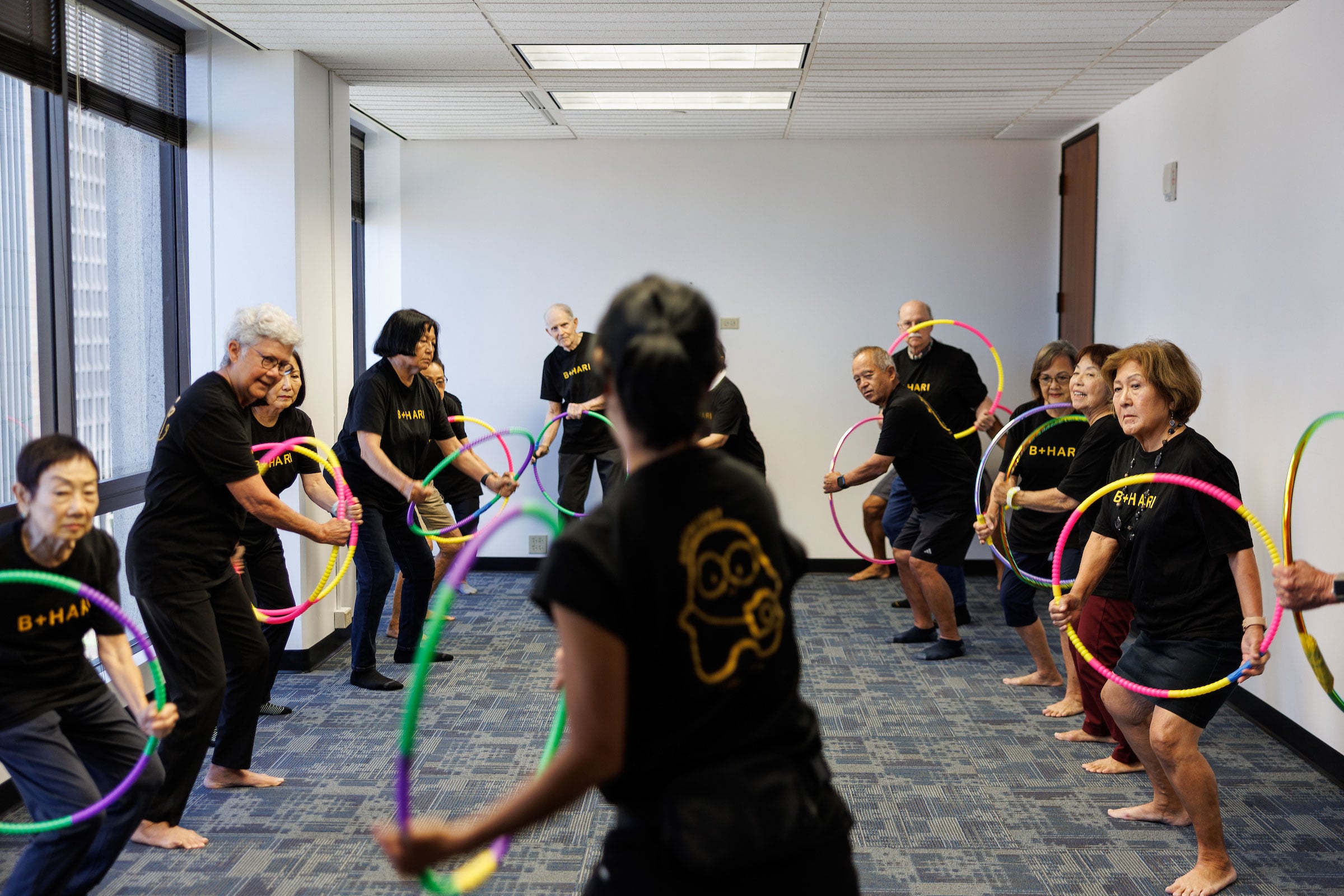
We’re standing like storks in a Downtown office space, balancing on one leg. About 20 of us—mostly kūpuna, but some business folks too—are then instructed to close our eyes, which brings on wobbling. “We welcome the wobbles,” our teacher, Ma Ry Kim, tells us enthusiastically.
She turns to an older woman who’s holding steady, unlike most of us. “You’ve been practicing,” Kim says. “The fact that you can do it that good, and just a few months ago you couldn’t, means you literally grew your brain and reduced your chance of getting Alzheimer’s and dementia. That’s neuroplasticity!”
Welcome to B+HARI brain class.
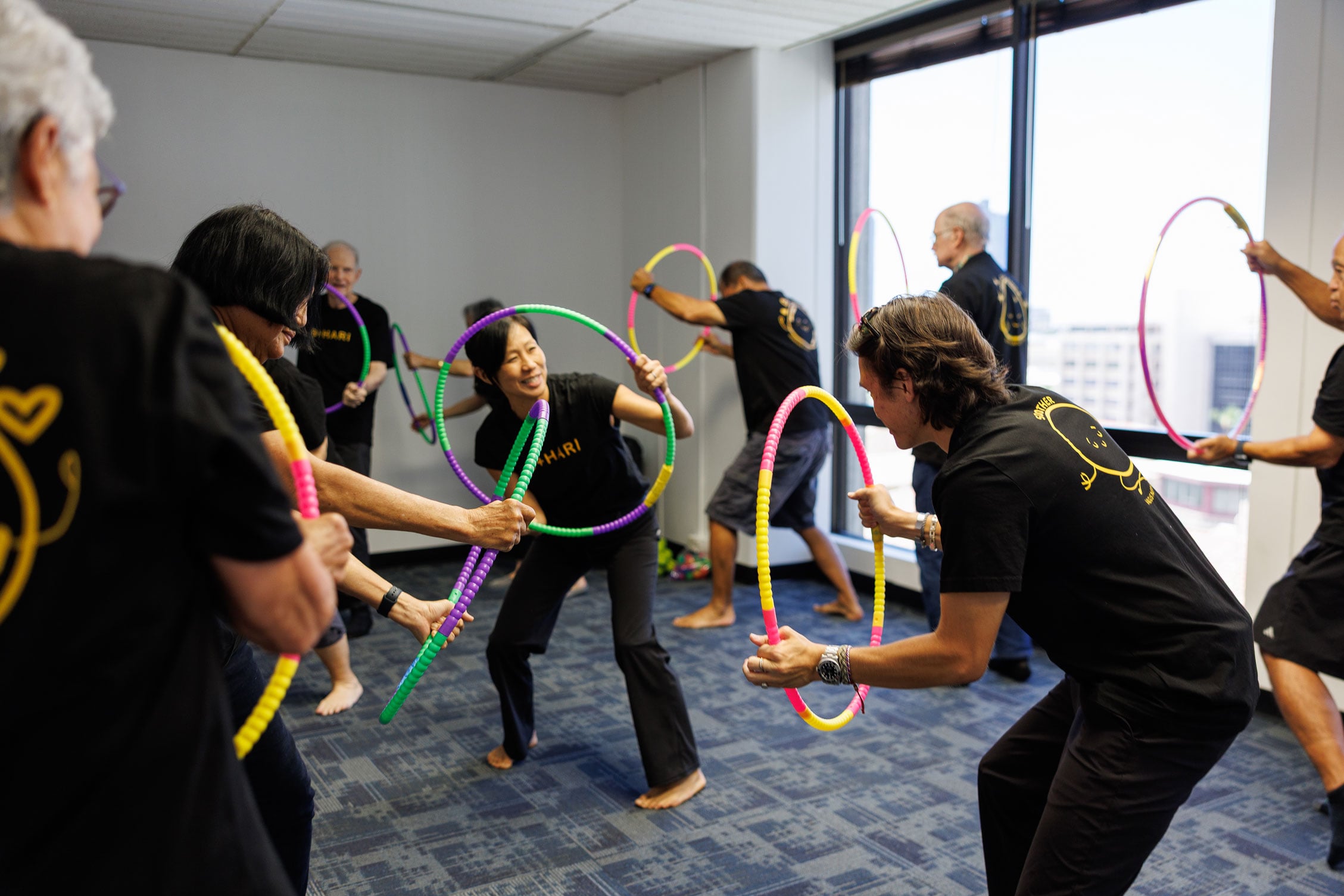
For the past year and a half, instruction has been taking place mostly at Topa Financial Center and the Ritz-Carlton Waikīkī. The program organized by B+HARI—aka the Brain Health Applied Research Institute—began in June 2025 with just a dozen people. Since then, attendance has grown steadily through word of mouth. There are now multiple classes a week at the two sites, and the list of those who have attended at least one session has grown to more than 500.
B+HARI’s curriculum is a mixture of cognitive-centric activities and brain health lectures by doctors and others. The activities include dance, movement, music and visual arts components, along with meditation and breathwork. Here’s a glimpse of a recent class: We take a few Lion’s Breaths, exhaling forcefully and loudly to release tension in our bodies. Along with “the stork” exercise, we stand on a piece of tape, marching in place with our eyes closed. “Frankenstein arms up and march, march, march. Don’t move,” Kim tells us.
After 45 steps, we open our eyes and see to our surprise that we have traveled off the tape; some have even turned around completely. “If we’re perfectly balanced in our brains and body, when we walk in place with our eyes closed, you should stay in place. But we all have our micro imbalances that’s pulling us in one direction,” Kim says. The goal, she explains, is to balance our brains through practice.
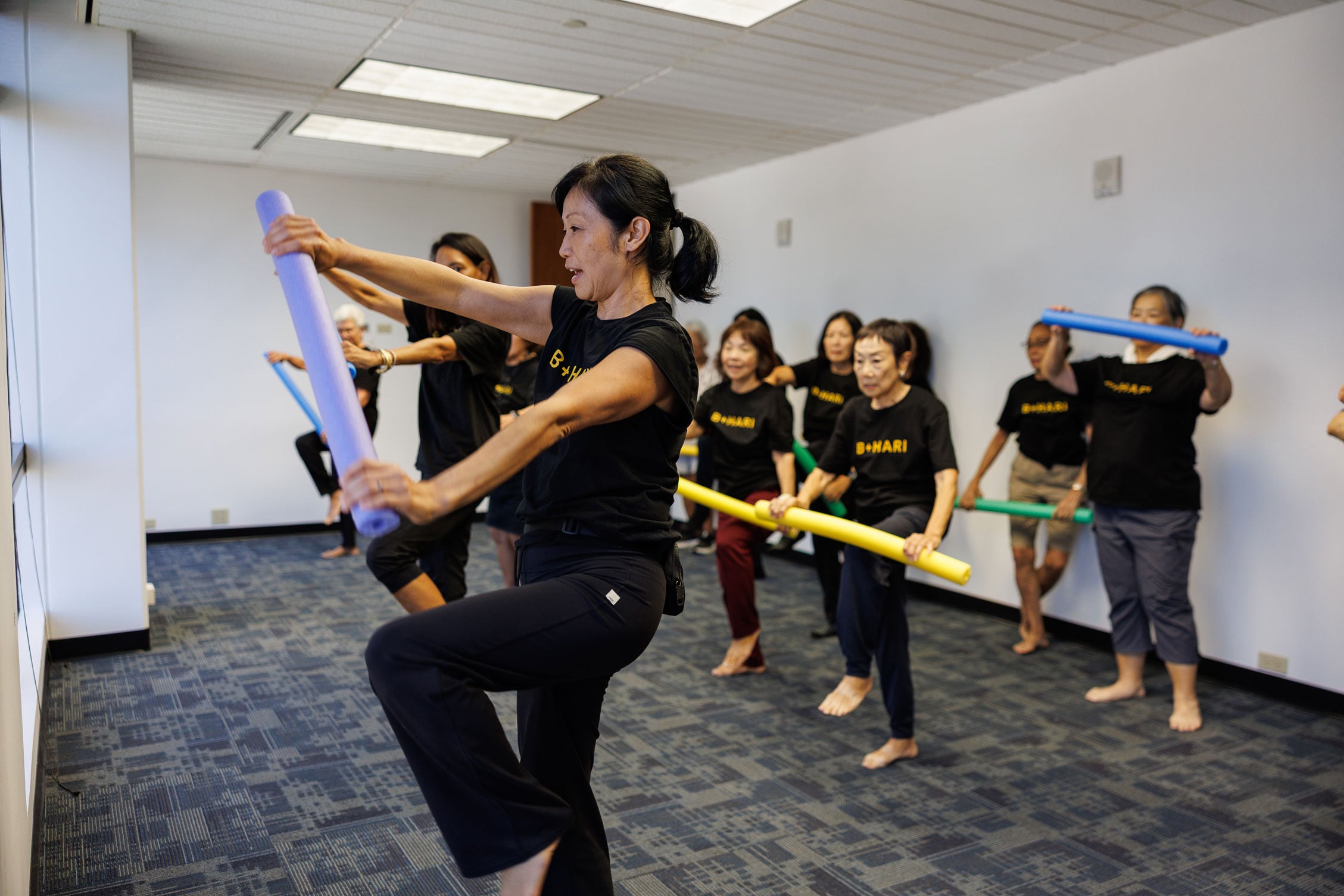
We also repeat dance steps, led by an ‘Iolani School dance instructor, which apparently is great for the brain, and we use swimming pool noodles as drumsticks, listening first to a pattern, then drumming to the same beat. During a drawing exercise, we hold a hand mirror above a sheet of paper showing a maze. We’re told to only look in the mirror and try to trace the maze with a pen. I’m emphasizing the word “try,” because it’s much more challenging than it sounds. We’re assured, however, with practice, our brains will learn how to do it.
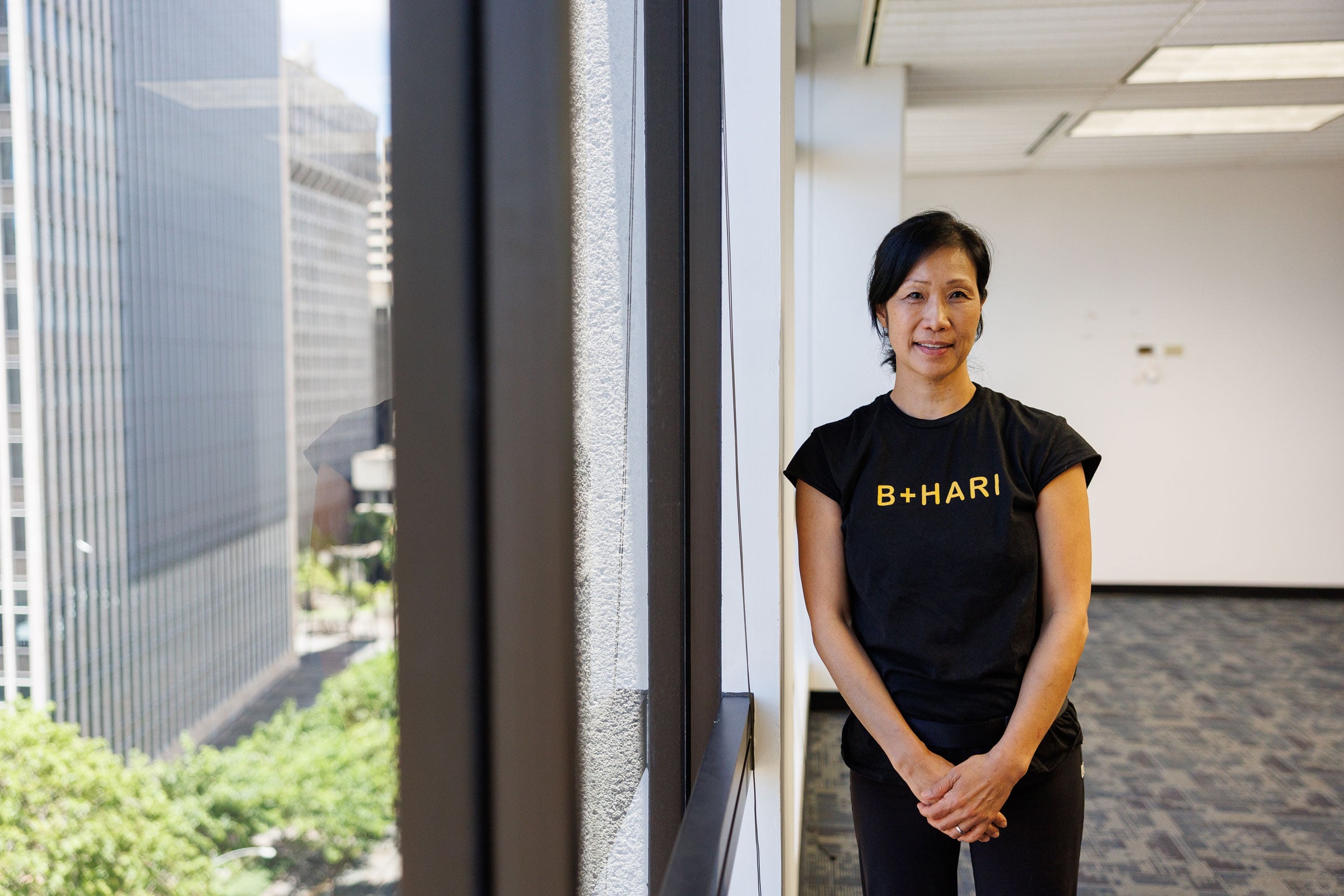
While the class vibe is welcoming, lighthearted and fun, B+HARI’s aim is more serious. The goal, according to Kim—B+HARI’s CEO and co-founder—is to help people in Hawai‘i boost their cognitive functioning and stave off Alzheimer’s and other forms of dementia. “We want to make a dent in brain disease in our community,” she says.
The nonprofit also wants to track its own work and share its findings. By observing students’ progress at the community sessions, B+HARI is essentially gathering evidence on the effectiveness of its curriculum. “We want Hawai‘i to produce this revolutionary program that can be replicated with the rest of the world,” Kim says.
It may seem strange for a prom-inent architect like Kim (she is the CEO of I-ON Group, a design and development firm) to be devoting herself to community brain health. But while not a scientist or doctor, she became enthralled in the mysterious workings of the brain and plunged into the world of neuroscience after family members, including her father (who had a massive stroke) and son (a twin, whose umbilical cord broke in utero), experienced remarkable brain recoveries. She now sits on the inaugural advisory council of the Global Brain Care Coalition, established at Harvard Medical School and Massachusetts General Hospital. “Our job as a group of scientists is to, by 2050, reduce Alzheimer’s disease, dementia, depression and stroke by 30% in the world,” she says.
The other co-founder of B+HARI is Dr. Kazuma Nakagawa, who leads the Neuroscience Institute at The Queen’s Medical Center and is division chief of neurology at the John A. Burns School of Medicine. The first time Kim met Nakagawa, she remembers him saying: “Hawai‘i has a pandemic of brain disease coming, and it’s going to bankrupt our health care system during the next generation.”
Kim and Nakagawa are confident the B+HARI method can improve cognitive functioning and curb brain degeneration, even among those who may have genetic links to Alzheimer’s. She describes the curriculum, which she, Nakagawa and their team of B+HARI instructors continue to develop, as cutting edge. “I would confidently say that there’s nothing like B+HARI in the world.”
Recent published studies show that lifestyle interventions can reduce a person’s chances of getting Alzheimer’s disease by almost half, Kim says. And if you already have cognitive decline, researchers have learned you can make functional improvements, she adds.
Janene Willener started coming to the classes last year and encouraged both her mother and 23-year-old daughter to attend sessions with her. Willener is now part of the B+HARI team, assisting others in class. “There are kūpuna I started with, and when they first came, they needed walkers. I’m in class with them now and see how they’ve made incredible progress. They can balance and do all kinds of things. I’ve also seen improvements in my mom,” she says. “If they can figure out a way to implement this into the community in a big way, it’s going to make a huge difference.”
Willener says she’s at the age now where lots of her friends’ parents are struggling with brain degeneration. “It’s a conversation everybody’s having,” she says. “And I feel if we can make the activities we’re learning part of our day-to-day, that can change.”
Classes are $100 a month for individual memberships and $160 for married couples. B+HARI members can attend unlimited sessions. See bhari.org for more information and the current schedule.