2027 College Guide: Getting Ahead
In a challenging job market, it’s critical for students to seek internships and other work opportunities, along with on-campus experiences, throughout their college years.

For college students the path from graduation to career can feel daunting. A degree is hardly enough to guarantee employment, and employers increasingly expect graduates to have substantive work experience, professional skills and connections as they vie for positions in an extra-tough job market.
Even those with stellar GPAs are struggling to land jobs in their chosen professions. Roughly 41.5% of recent college graduates are underemployed, working in jobs that typically do not require bachelor’s degrees, according to a 2026 report by The Federal Reserve Bank of New York.
As such, students are seeking experiences to expand their skill sets early on in college. “For students, internships have always been important,” says Allison Keller, director of Career Education at the University of California, Irvine. “But I feel like they are more important than ever.”
On average, 62% of interns are hired on full time by the companies they intern for, according to a 2025 report by the National Association of Colleges and Employers. While the percentage has declined in recent years, it still reflects how internships can lead to jobs.
Experience Beyond the Classroom
For Keller, internships aren’t just résumé builders; they’re opportunities for students to explore careers, gain confidence and discover their passions. “There’s so much learning that’s going on in the classroom, but to be able to take those skills and apply them in a real setting—and see what you like or maybe don’t love—is incredibly valuable,” she says.
Rather than viewing an internship as simply a requirement for getting hired, Keller encourages students to see it as a “test drive” for their future. “You might think you want to do one thing and then you get into the experience and realize, ‘Actually, this isn’t for me.’ That’s still a successful outcome because you learned something about yourself.”
Wendy Sora, director of the career center at UH Mānoa, describes internships as a “dating period” where both students and employers can determine whether they’re a good match. While students can explore an industry before committing to it full time, employers gain insight into a student’s work ethic, initiative and ability to contribute, she says.

So How Do You Get Internships?
The competition for internships and entry-level jobs can be fierce, especially in competitive industries. Even unpaid internships can be difficult to get if they offer valuable experiences.
To stand out as an applicant, college advisers say students should focus more attention on their résumés. It’s no longer just a summary of experiences, and it’s important to nail the details. For instance, formatting matters because many employers now use applicant tracking systems that scan résumés before they ever reach a hiring manager. Clear organization and relevant keywords can help ensure a student’s experience is accurately interpreted, says Cathy Lee Chong, spokesperson for Chaminade University.
UH’s Sora believes every résumé should reflect the individual behind it rather than being a template generated by artificial intelligence. What you put in the résumé is your story, she says. And this authenticity becomes especially important during interviews, when employers ask about the experiences listed on the page. “Once you sit in front of that employer, the student has to really believe and represent whatever they said in their résumé.”
Sora also emphasizes that students shouldn’t just focus on the number of achievements, and that employers want students to have experiential-based opportunities that they can refer to and talk about.
While these experiences can come from internships, advisers encourage students to also pursue research opportunities, volunteer work and leadership positions that can help boost their confidence and give them better understandings of which careers align with their interests. On-campus jobs and federal work-study opportunities are also valuable.
“For incoming students, we really encourage them to make connections to the campus and build their experiences while they’re going through college,” Sora says. This allows students to develop professional skills while becoming more connected to the university community. Students often don’t think of those positions as part of their career preparation, but they are building communication skills, teamwork skills and professionalism that employers are looking for, she adds.
Take Advantage of Career Centers
Nearly every college offers career resources, and whether students are searching for an internship or seeking their first full-time job, career centers present a wealth of resources for students long before graduation. In addition to having their résumés reviewed, students can seek career counseling, internship assistance, networking opportunities and graduate school advising. Sora says advisers can help students evaluate online resources, distinguish legitimate opportunities and utilize a growing number of career tools.
Career fairs also remain one of the most valuable ways for students to connect with employers face-to-face. While virtual recruiting expanded during the pandemic, and remains normal today, Sora believes in-person conversations and interviews are still important for employers and students, allowing them both to make “real connections” beyond what can be sieved from an online application.
It’s Not About How Many Jobs You Apply For
One of the most common mistakes UCI’s Keller sees is students prioritizing quantity over quality during their job searches. “We do see a lot of students saying, ‘I’ve applied to hundreds of jobs and I’m not hearing back,’” she says. “Then we’ll probe a little more—what kinds of jobs, what are the documents you’re submitting and how are you following up? Sometimes, having too broad a search and using the same résumé for everything, not having a cover letter and not having any networking doesn’t always yield the best results.”
Instead, Keller encourages students to take a more intentional approach. “I’d rather see a student apply to fewer places and do a higher-quality search, having customized documents, a résumé and cover letter, and to network, reach out to a person if you can.”
Start Early and Be Prepared
So while the current job market can be intimidating, career advisers say students should not approach graduation feeling defeated. Instead, they should focus on the steps they can take—gaining experience, building relationships and learning how to communicate their skills.
“It takes work and effort, but I do feel like we’re hearing a lot of success stories,” Keller says.
Her advice for students is to begin as early as possible. Talk with professionals, meet with career advisers, reach out to alumni, she says. “Those conversations can make all the difference.”
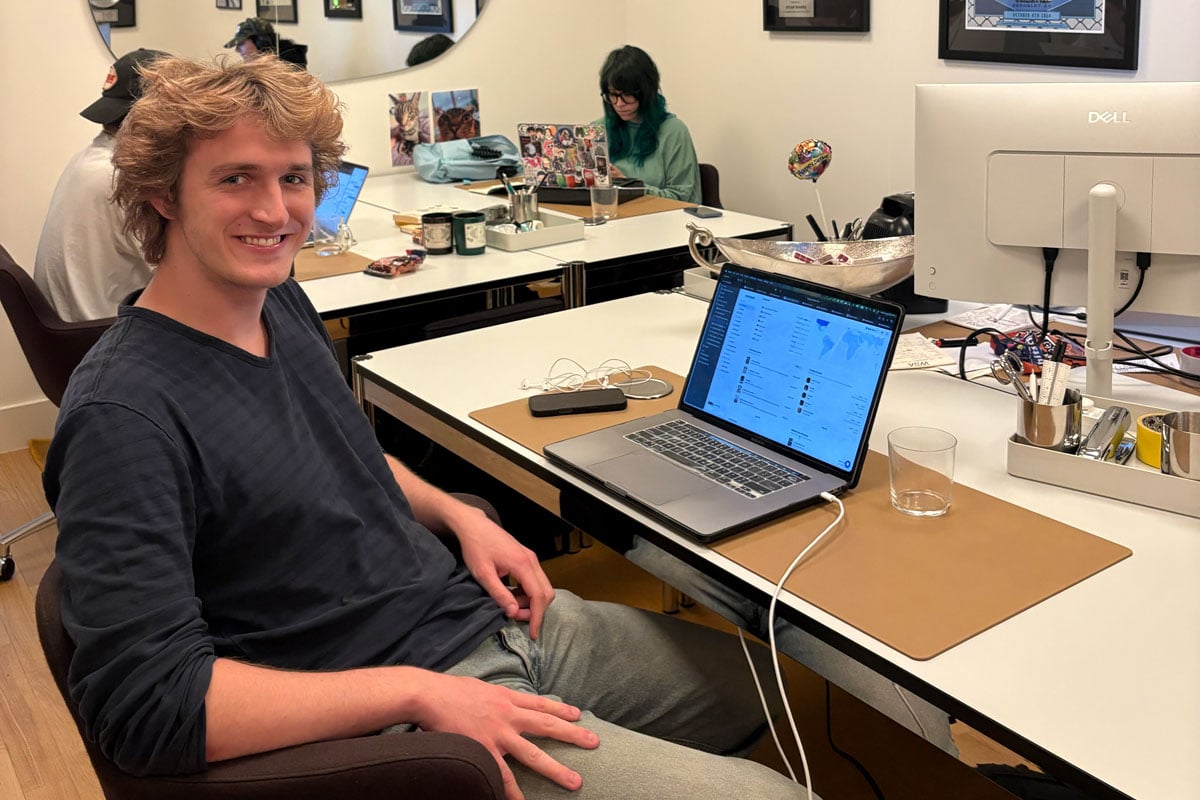
Gus Ralston
Junior, New York University
Gus Ralston applied for 15 internships and cold-emailed roughly 20 contacts before landing a digital marketing gig this past summer at Open Door Music NY, an artist management company and record label in New York City. He discovered the unpaid opportunity through an NYU email sent out to students.
During his internship, he was tasked with creating social media content, researching marketing trends, and helping promote artists behind the scenes. While he enjoyed gaining industry experience, the 9-to-5 desk job made him realize digital marketing is not what he wants to pursue. “It’s really made it clear to me that making art is what I actually care about,” he says.
The internship also introduced Ralston to the realities of working in a competitive field. This was his third unpaid position in music, which meant he had to work two other paid jobs.
Despite the heavy workload, Ralston believes the experience was valuable for the connections, knowledge and most importantly, the perspective.
Advice: Don’t become discouraged by rejection or place too much importance on a single opportunity.
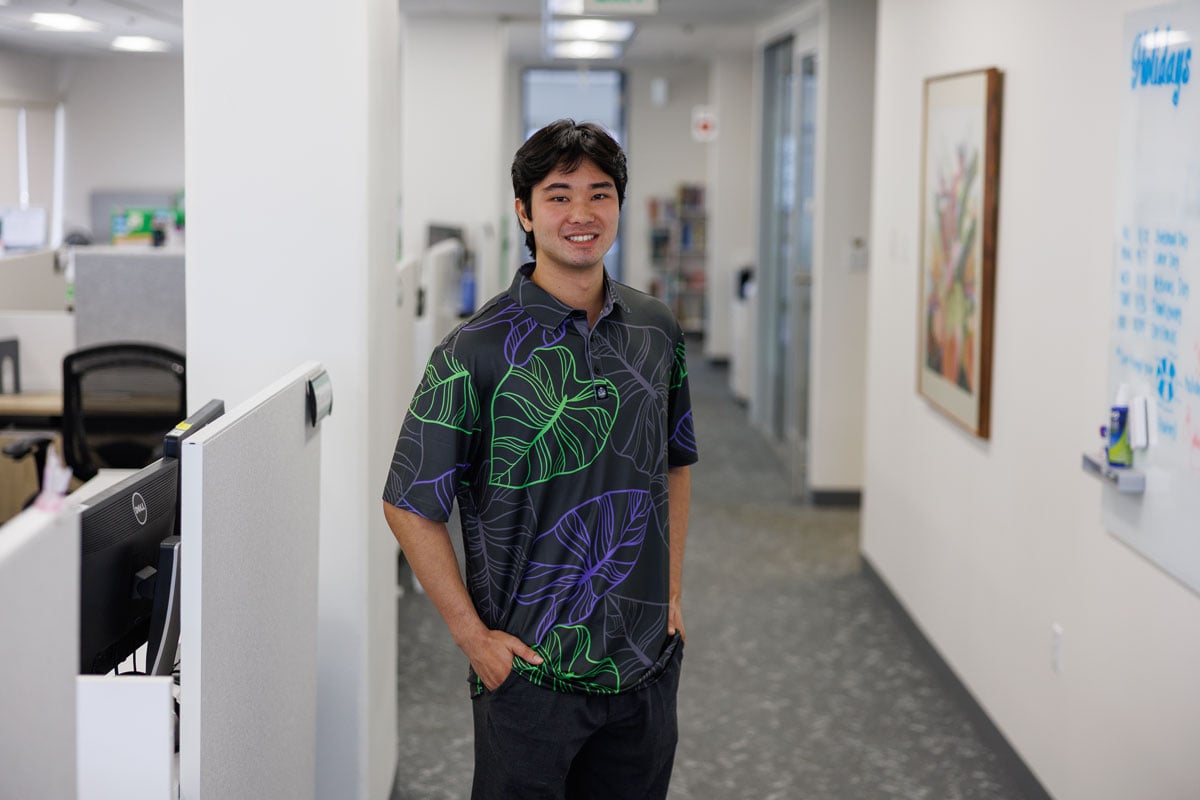
Anthony Ahu–Fisher
Senior, Chapman University
After applying for a summer internship with Hawai‘i Dental Service on LinkedIn, Anthony Ahu-Fisher reached out directly to a member of the organization’s human resources team to introduce himself and express his interest. That conversation turned into an email exchange and ultimately led to a job there.
“Honestly, a lot of my internships that I would get interviews for, I would have to reach out to their HR on LinkedIn,” he says. “That would really help get the ball rolling.”
While interning in the HDS sales department, Ahu-Fisher prepared materials for community events, assisted with administrative projects, and learned about underwriting and how insurance rates are calculated. “It feels like I’m really helping their team, and I’m learning things that I would never learn otherwise,” he says.
The previous summer, Ahu-Fisher had completed an internship in business banking at American Savings Bank. He intentionally chose a different industry this past summer to broaden his understanding of the business world. He says internships provide something classes cannot: a chance to work in a professional setting while learning directly from others. “I think working in the actual field, you learn way more than just from the textbook,” he says.
Throughout both of his internships he met colleagues across different departments, asked questions about their careers, and gained a clearer understanding of potential opportunities after graduation.
Advice: Be proactive, apply early, and don’t be afraid to reach out to recruiters and hiring managers.

Ella Loo-Lockhart
Junior, Santa Clara University
Before Ella Loo-Lockhart landed her recent summer internship at Kai Hawai‘i, she reached out to a friend’s former boss who works at the engineering firm to learn more about the profession. That conversation eventually led to the internship, where she got a chance to explore structural engineering to see if it’s what she will pursue.
Loo-Lockhart says her time at the firm confirmed that path and connected her to mentors who went through the same graduate engineering program she plans to attend. Her co-workers at Kai Hawai‘i helped her navigate everything—from which classes to take to how to prepare for graduate school—while also sharing their professional experiences. “They’re not just giving me work to get done. They’re giving me opportunities to learn and get ahead on concepts I haven’t even learned in school,” she says.
Loo-Lockhart learned that being a successful structural engineer requires more than just technical skills. You need to build relationships, especially in Hawai‘i, where professional networks are formed through personal connections. “It’s about your values, your ability to be personable, and being a kind person,” Loo-Lockhart says.
For students searching for internships, Loo-Lockhart says it’s important to be authentic. Rather than trying to impress potential employers with a carefully crafted persona, she recommends being honest about your interests and asking genuine questions.
Advice: Don’t fake your passion. Pursue internships that truly interest you, not just ones that look impressive
on paper.
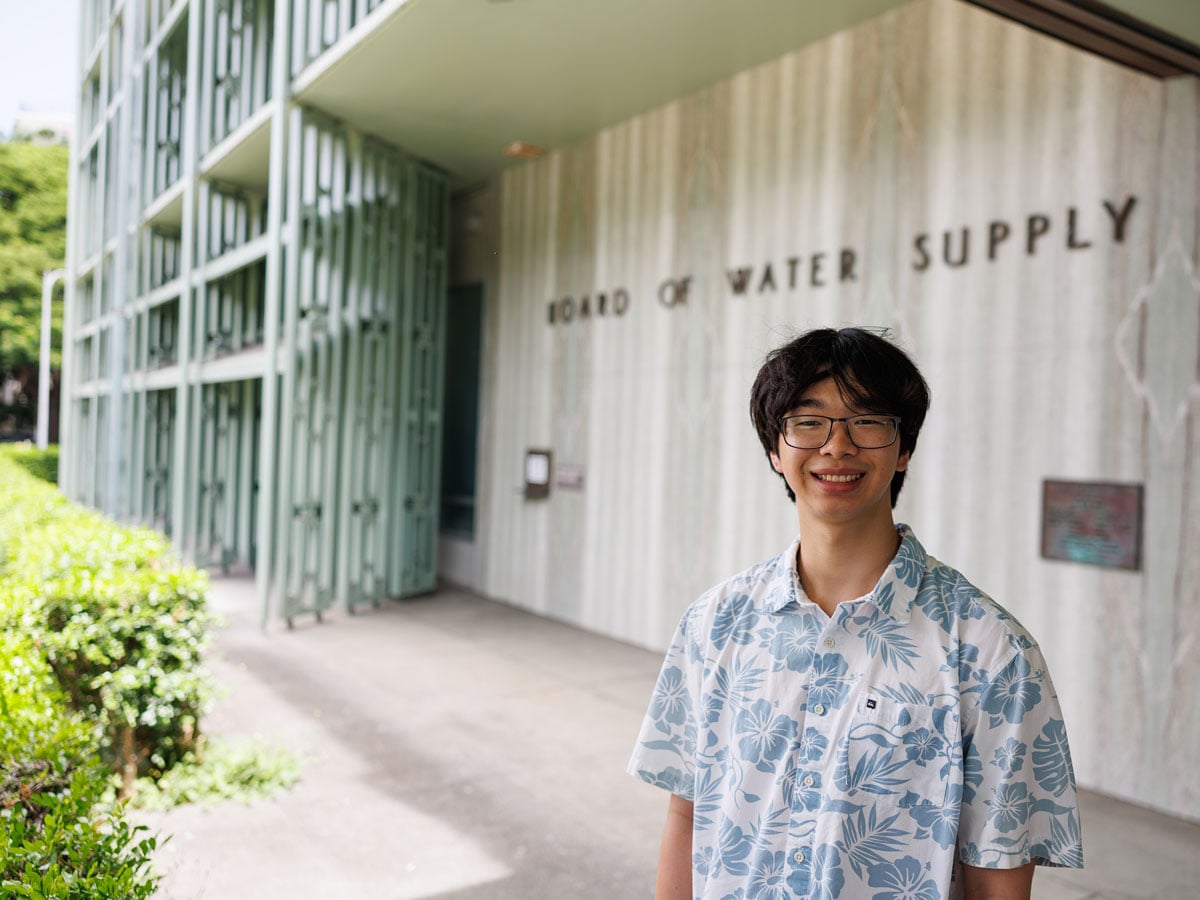
Kyle Siu
Junior, Purdue University
For Purdue junior Kyle Siu, an internship was more than a chance to add experience to his résumé; it was an opportunity to explore the possibilities within engineering.
Siu spent the past summer working as a student aide with the Honolulu Board of Water Supply, where he worked alongside civil engineers and learned how O‘ahu’s water infrastructure operates.
Siu applied for eight internships before landing his position with the Board of Water Supply. “Even if you get to the interview and don’t pass, it’s OK,” he says. “Adapt, see what went wrong and do better next time.”
Through the internship, Siu visited reservoirs and well stations and worked on an individual project analyzing electricity usage at a reservoir station in Kunia. His project focused on understanding why the station’s electricity usage has not decreased despite the addition of solar panels. “I kind of wanted to get out there and learn how things work,” Siu says. “How does the Board of Water Supply get water from the ground to everybody’s homes?”
The experience expanded the realm of what his future career could look like. Although he originally planned to pursue opportunities in electrical engineering, the internship introduced him to possibilities in public utilities and civil engineering. “It definitely showed me a different path I could take for my career,” he says.
While Siu doesn’t regard internships as essential to landing a job after college, he says “it’s one of those experiences you probably shouldn’t miss out on.”
Advice: The more experiences you try in college, the easier it becomes to figure out what you want to do after.
Kayla Luke Colon, the 2026 summer editorial intern for HONOLULU Magazine, is a journalism student at UC Irvine.