A New Coffee Culture
As coffee trends more scientific and sustainable worldwide, new cafés and carts in Honolulu are turning the drink fun and personal. Here’s a taste of our coffee world today.
If it seems like coffee is popping up everywhere lately, it’s because it is. Coffee and snack shops in Hawai‘i have been opening at triple the rate of other types of eateries, market researcher IBISWorld says. And while the state’s craft coffee community explores next-level techniques of processing, roasting and brewing, some newcomers are taking a more populist approach: They’re using coffee menus to express personal themes, with offerings that are often fun and high quality.
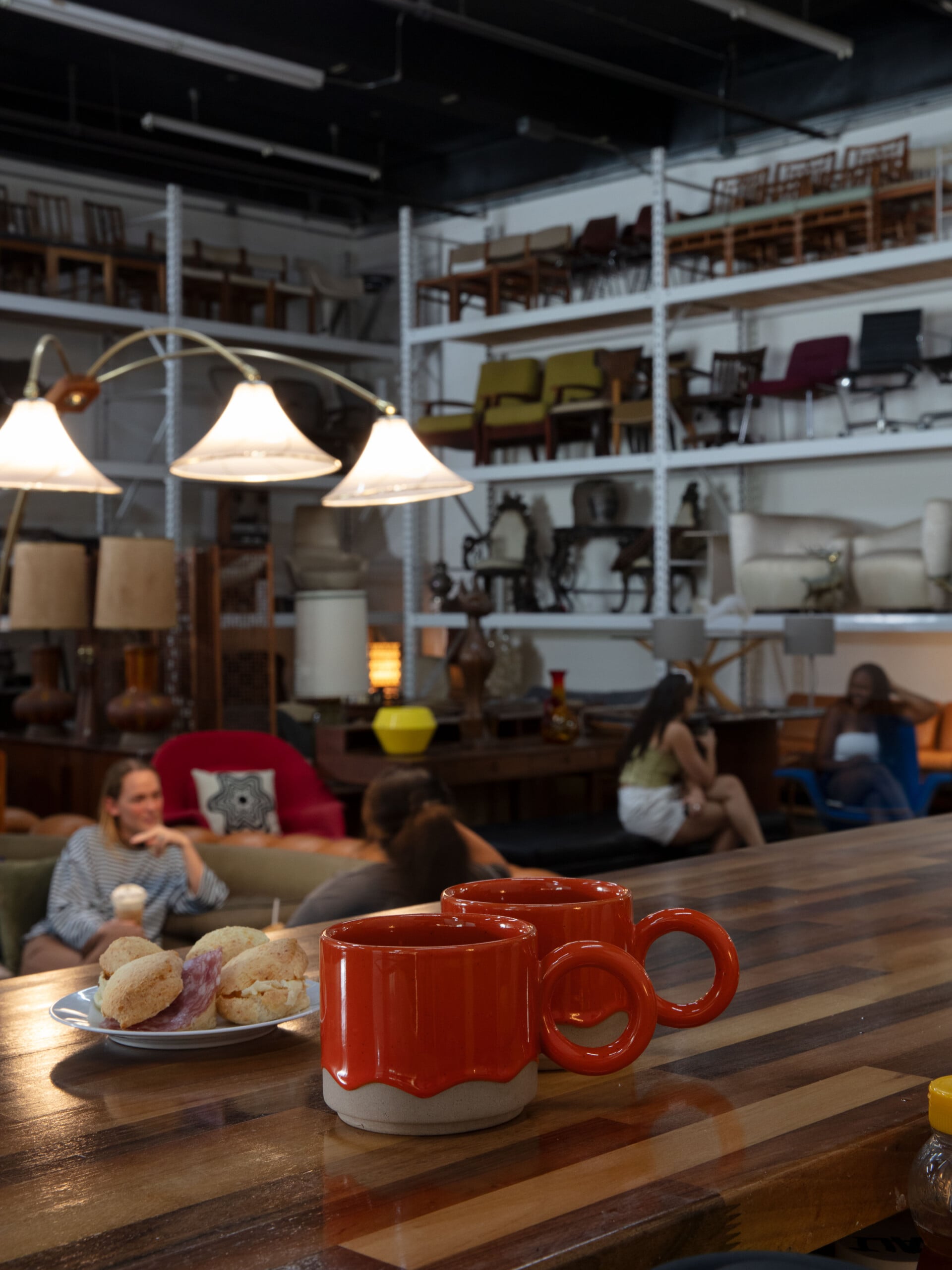
Take Café Vntg. Alexandro Viriato brings a bit of his hometown São Paolo to Kaka‘ako’s warehouse district—specifically, to a bustling corner inside the vintage furniture warehouse store he opened last spring. Specialty drinks combine Brazilian tastes, especially for sweetened condensed milk, with beans from Kailua’s Tradition Coffee Roasters. Suco de Milho, a traditional Brazilian drink made from corn, sugar and milk, is an occasional special. Café Cremoso, a double shot of espresso blended with sweetened condensed milk, is served over milk and ice. You can get it with doce de leite (caramel) or, for a local twist, chocolate haupia.
At UH Mānoa, Kooks Coffee operates out of a surfer-themed trailer owned by a former corporate manager. Dani Mitchell quit her job to combine a love of the ocean with a passion for making syrups for her coffee. Using beans from Honolulu Coffee, she offers drinks like Dawn Patrol, whose syrup combines Lā‘ie Vanilla Co. vanilla and toasted macadamia nuts from Hawai‘i Island; and Nanner Bread, with banana milk made with organic Sun Farm bananas from Hawai‘i Kai. Kooks’ second trailer opened this year in Kaka‘ako.
Panday Coffee, a pop-up at markets and fairs, is the dream of nurse-turned-barista Brian Bigornia. Latte flavors like his Monkey Coffee—made with the equivalent of two bananas a glass—and Biko, whose coconutty rice milk Bigornia makes himself, reflect his Filipino culture.
All this adds dimension to an increasingly full-bodied coffee scene. Whether you’re looking for an unfamiliar new creation or a meticulously sourced, expertly nuanced cup from a barista who can tell you how the beans were grown, processed and roasted, your choices are getting richer. Here’s what’s percolating around Honolulu.
How We Wake Up Now
Drip coffee reigns supreme among surveyed home brewers.
Preparation Methods
Drip Coffee Maker: 38%
Single-Cup Brewer: 23%
Ready-to-Drink: 19%
Cold Brewing: 17%
Espresso Machine: 11%
Instant Coffee: 9%
Bean-to-Cup Brewer: 6%
People surveyed were allowed to pick more than one method. Source: National Coffee Data Trends Fall 2025 Edition by the National Coffee Association USA
Coffee World
◊ ◊ ◊
From Hanoi-style egg coffee to cubanitos, O‘ahu restaurants are serving traditional coffee drinks from across the globe.
Turkish Coffee, Turkey
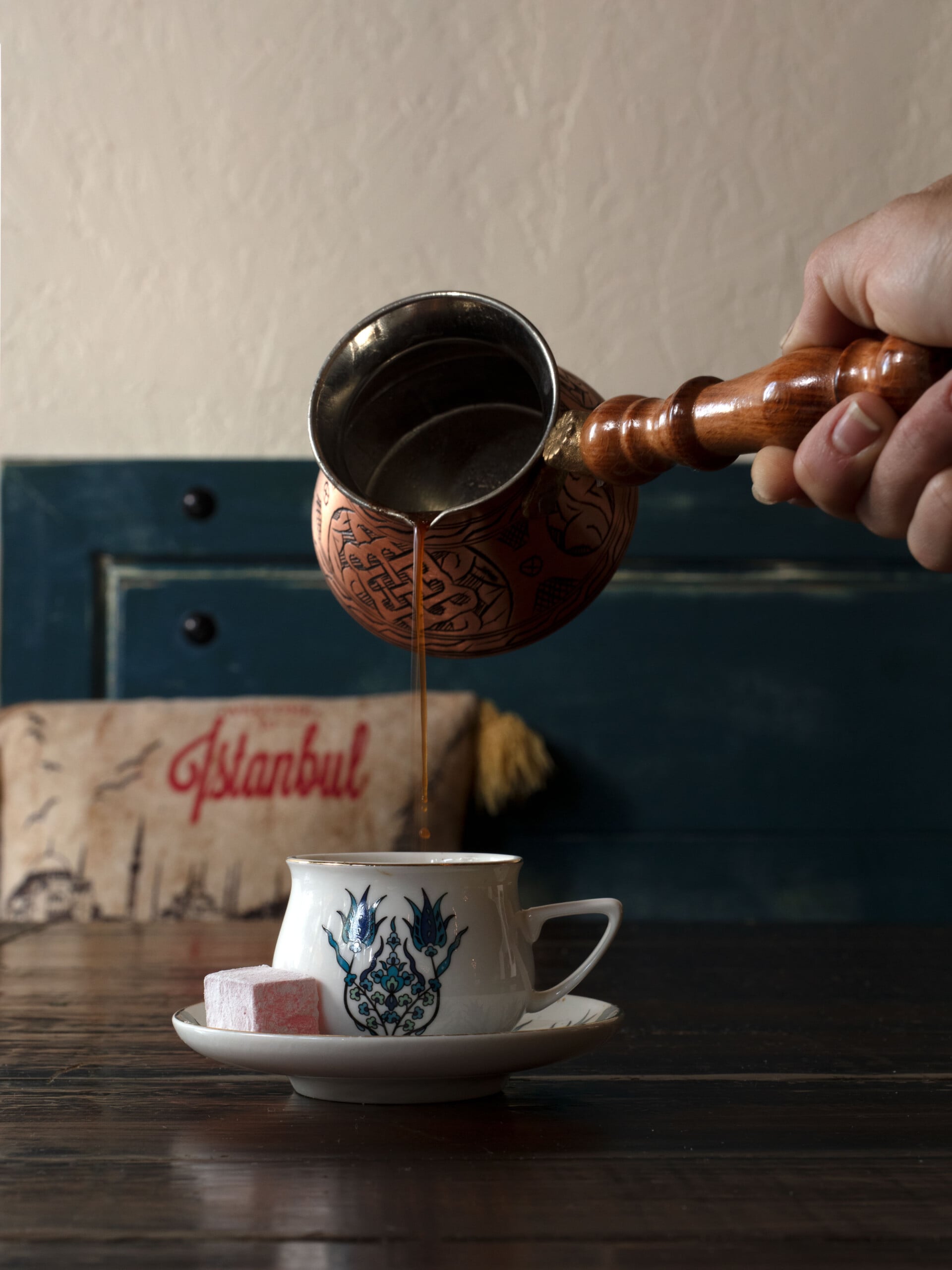
Popular across the Middle East, Turkish coffee is listed as a UNESCO intangible cultural heritage for its centuries-long contribution to coffee culture. Traditionally, very finely ground arabica beans are slowly brewed with water in a small copper pot called a cezve until a thick foam forms. The grounds are not filtered before serving.
“This fine grind is essential, as the grounds are meant to settle naturally in the cup and contribute to the coffee’s body and texture,” Istanbul Hawai‘i chef-owner Ahu Hettema says. Nothing is added to Istanbul’s Turkish coffee, which is served in small ceramic cups along with a piece of Turkish delight. Hettema also recommends pairing it with baklava, whose sweetness balances the bitterness of the coffee. “For us, Turkish coffee is a pause at the end of the meal,” she says, “a moment of reflection that brings the table back together.”
1108 Auahi St., Suite 152, Kaka‘ako, istanbulhawaii.com, @istanbulhawaii
Kopi, Singapore
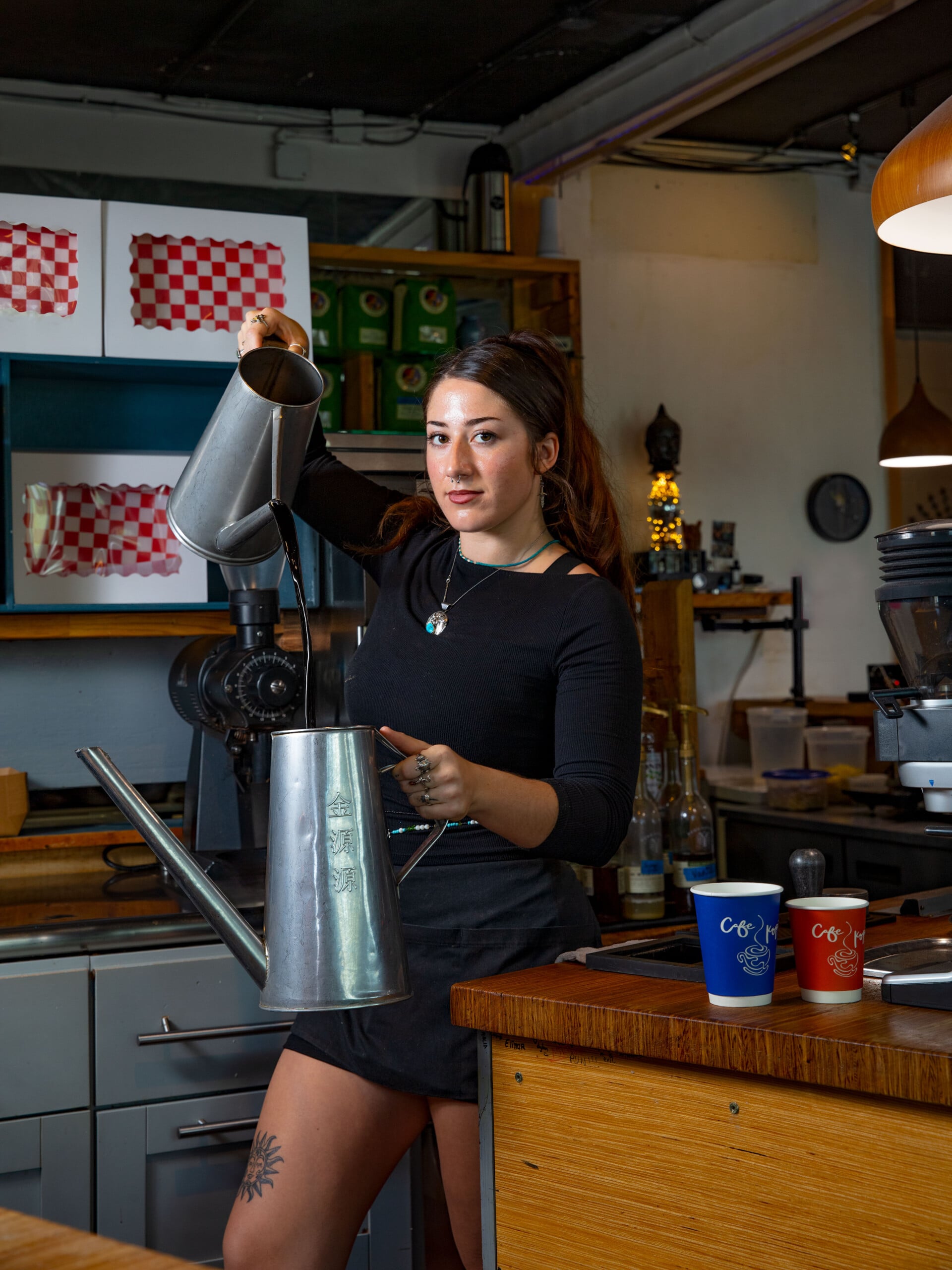
Traditional kopi is a sweet, strong coffee brewed with robusta beans that have been roasted with butter and sugar, then served with condensed milk. At Café Kopi in Kailua, variations include without milk or sugar (Kopi O Kosong), with evaporated milk (Kopi C), and iced (Kopi Peng). Owner Ernest Shih says the café gets its robusta blend from one of the largest suppliers of kopitiam, or coffee shops, in Singapore. It’s brewed by putting the coffee in one flask, adding hot water and waiting a few minutes before pouring it into another flask, then back into the first flask, over and over. The grounds are strained through a cloth filter bag.
“I believe we are the only ones in Hawai‘i serving this,” says Shih, who uses traditional glass mugs from Singapore. Try it with kaya toast for breakfast, or with Café Kopi’s weekend-only laksa.
45 Kīhāpai St., Kailua, cafekopihawaii.com, @cafekopihawaii
Egg Coffee, Vietnam
While you can get good Vietnamese iced coffee all over town, the lesser known Hanoi-style egg coffee, cà phê trú ng, is a treat worth seeking out. The Pig & The Lady chef Andrew Le discovered the drink in Hanoi, his mother’s hometown, at a café that whipped the topping using a regular home fan outfitted with a whisk instead of blades. “When we tasted it, it was like, wow!” he says. “This is like Saigon-style iced coffee with condensed milk, but it’s with eggs”—because it was created during a wartime dairy shortage.
Back home, Le and his team developed a version for their new spot, Piggy Smalls. Through that restaurant’s closure and Pig’s move to Kaimukī, the egg coffee has remained, made with beans sourced from Hanoi, egg yolks, sugar and vanilla bean. You won’t find it on the menu—it was recently replaced by a cocktail version—but you can still ask for the original. Tell them I sent you.
3650 Wai‘alae Ave., Kaimukī, thepigandthelady.com, @pigandthelady
Café Cubano, Cuba
Cuban coffee sets itself apart with sugar and dark roast beans. At Castro’s in Waikīkī, espresso from Maui ‘Oma is pulled over a blend of white and Demerara sugar, giving it a more complex sweetness. It’s then whisked to combine, giving the drink a foamy cap called espumita. Get it as a straightforward cubanito with no milk, with a splash of milk in a cortadito, or as a café con leche, more akin to a latte.
2113 Kalākaua Ave., Waikīkī, @castroswaikiki
Café de Olla, Mexico
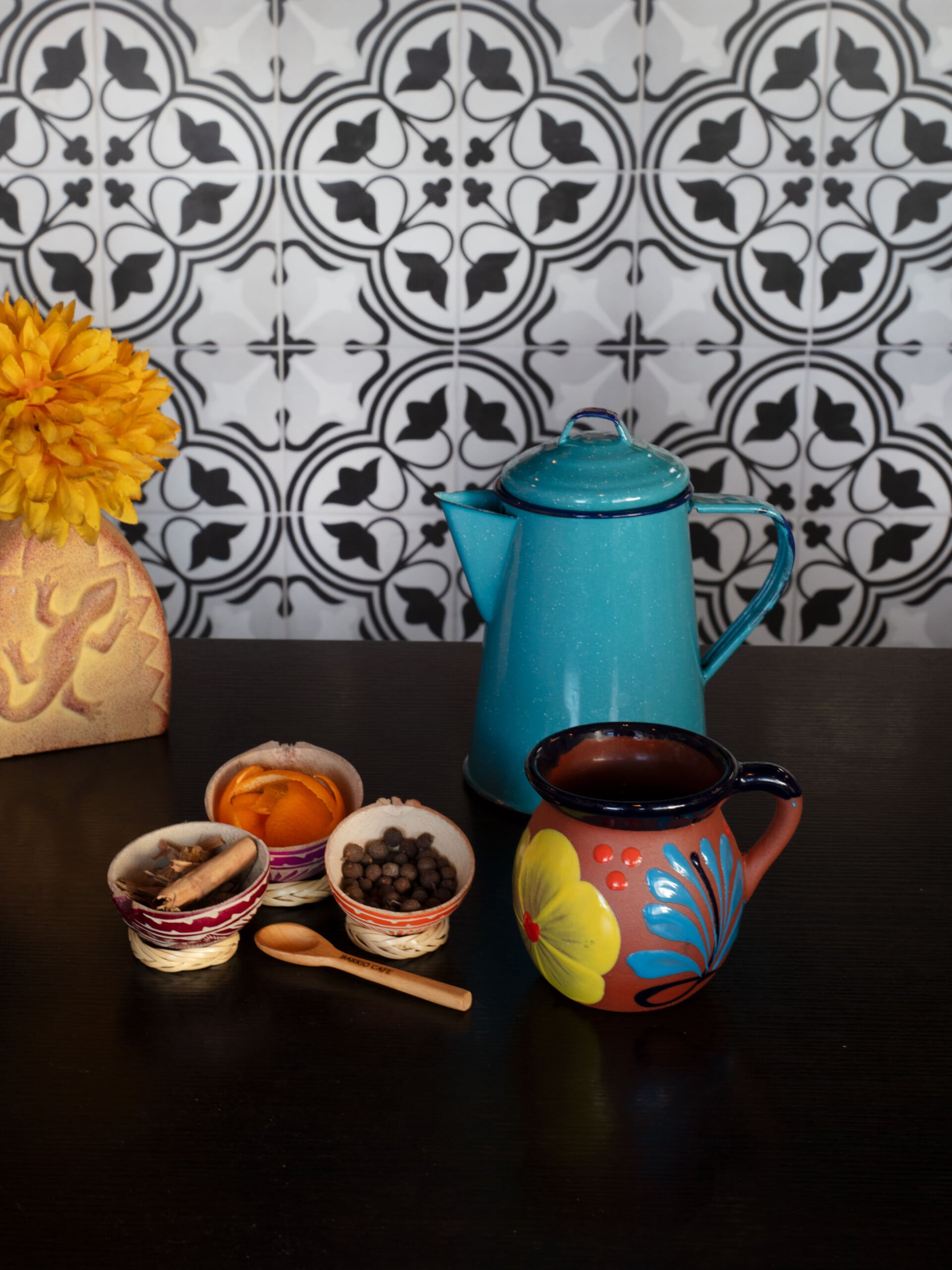
Mexican coffee gets its distinct flavor from spices and piloncillo, or unrefined whole cane sugar. At Barrio Café in Wahiawā, café de olla is brewed fresh each morning with cinnamon, orange peel and allspice.
“We toast the dried spices to bring out the aromatics, then place it in a clay pot,” says chef-owner Miriam Olivas. Traditional clay mugs “honor the ritual and warmth of the experience,” and skipping the piloncillo lets customers “enjoy the full depth of flavor without added sweetness.” Olivas does include piloncillo for special events, such as a recent Café de Olla & Bolero Brunch in collaboration with Aloha Star, a farm that only sells 100% Kona coffee.
672 Kīlani Ave., Wahiawā, barriocafe808.com, @barriocafe808

How High Will Prices Go?
The average price of a pound of ground coffee in the U.S. has trended higher since late 2019, according to data from the U.S. Bureau of Labor Statistics. It peaked at $9.26 a pound in November 2025. But as the world’s top producers struggle with climate change, tariffs and supply chain issues, the effects on prices are still trickling down to consumers. So even though slow price declines historically follow sharp increases and 2025-26 world coffee production is forecast to hit a record, it may be a while before we start paying less for our morning jolt.
A Budding Coffee Community
◊ ◊ ◊
Sippers are more curious than ever about what’s in their cup.
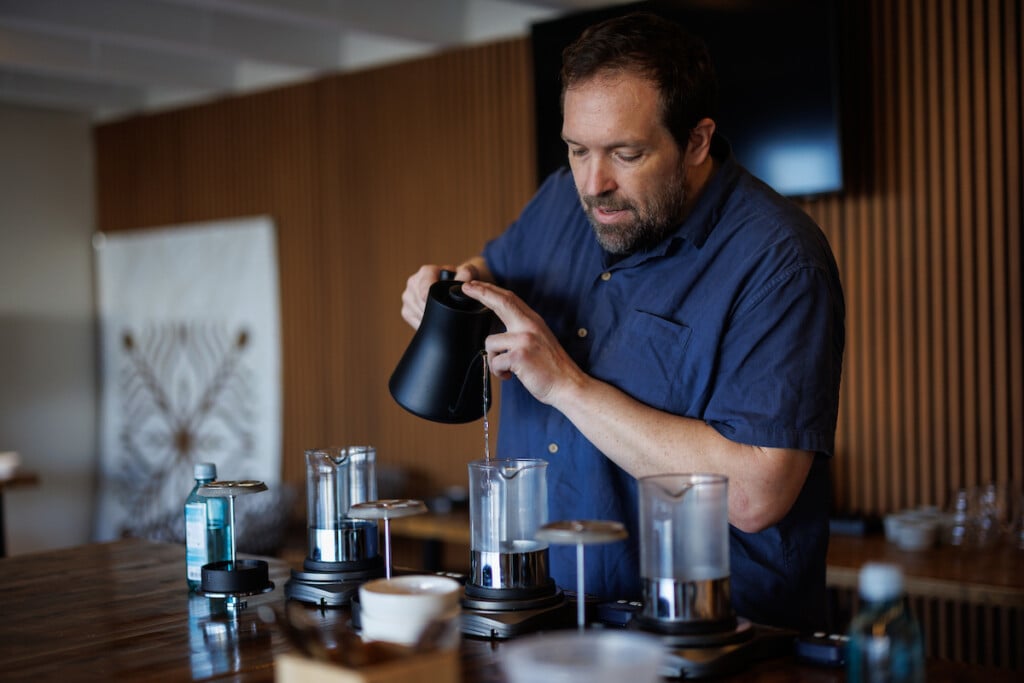
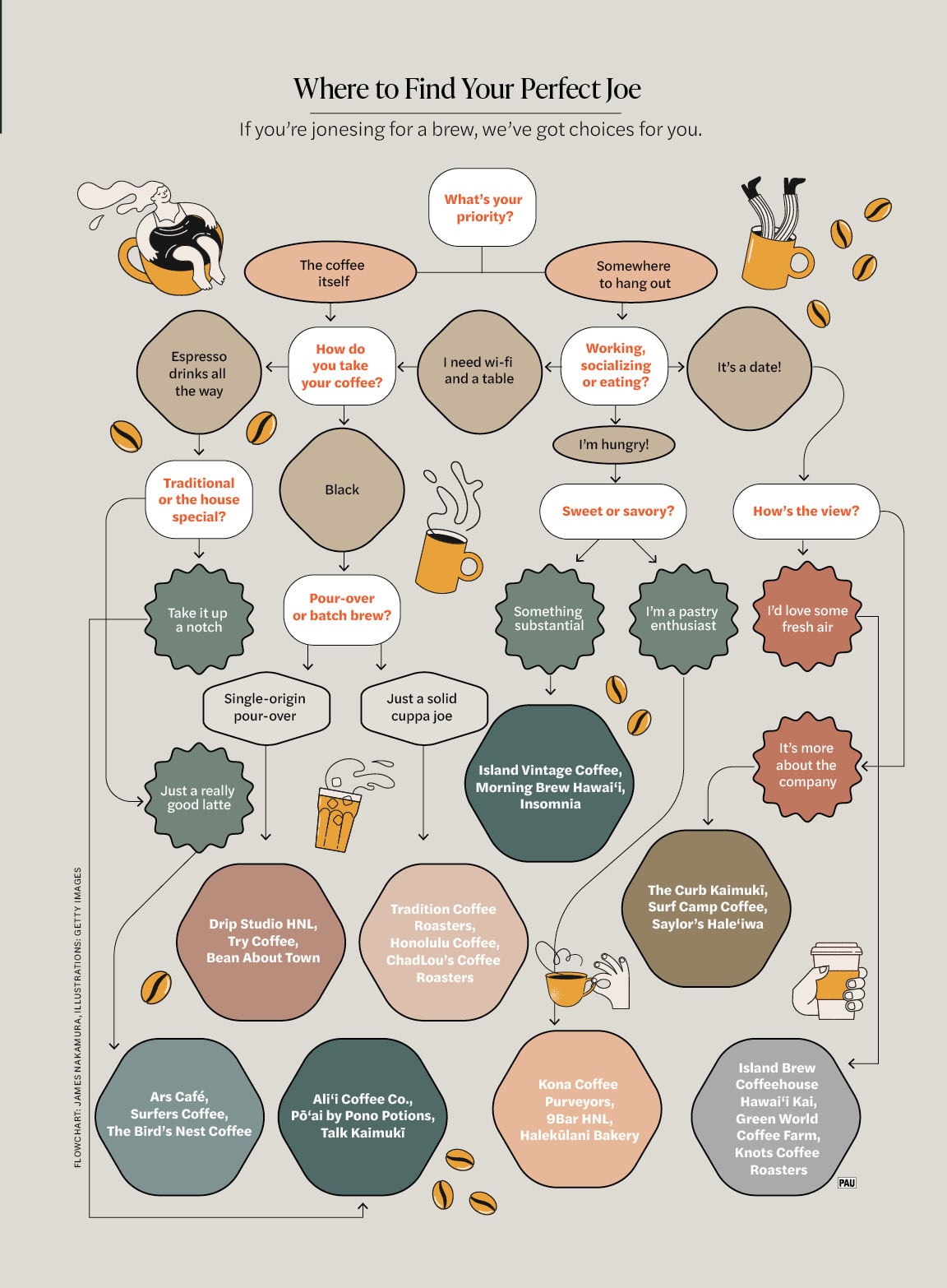
Where do coffee heads go for a cuppa? Try Coffee, Drip Studio, Tradition Coffee Roasters, The Curb and Ando Café frequently come up—places around Honolulu where baristas can really drill down about your beans. “Customers are no longer satisfied with simply enjoying a good cup. They want to understand where it came from, who the farmer is, how it was processed, how it was roasted, and how those decisions shape flavor,” Tradition founder and CEO Brian Burik says. “That curiosity is reshaping café culture.”
It’s also spurring cafés and restaurants to invest in deeper coffee training for staff, says Burik, a wholesaler and retailer in Kailua who offers tours and professional-level classes. That’s good because Hawai‘i coffee growers are increasingly experimenting with newer post-harvest methods involving oxygen-limited fermentation, selected yeast strains and extended fermentation—all trending in Colombia and other major coffee-producing regions.
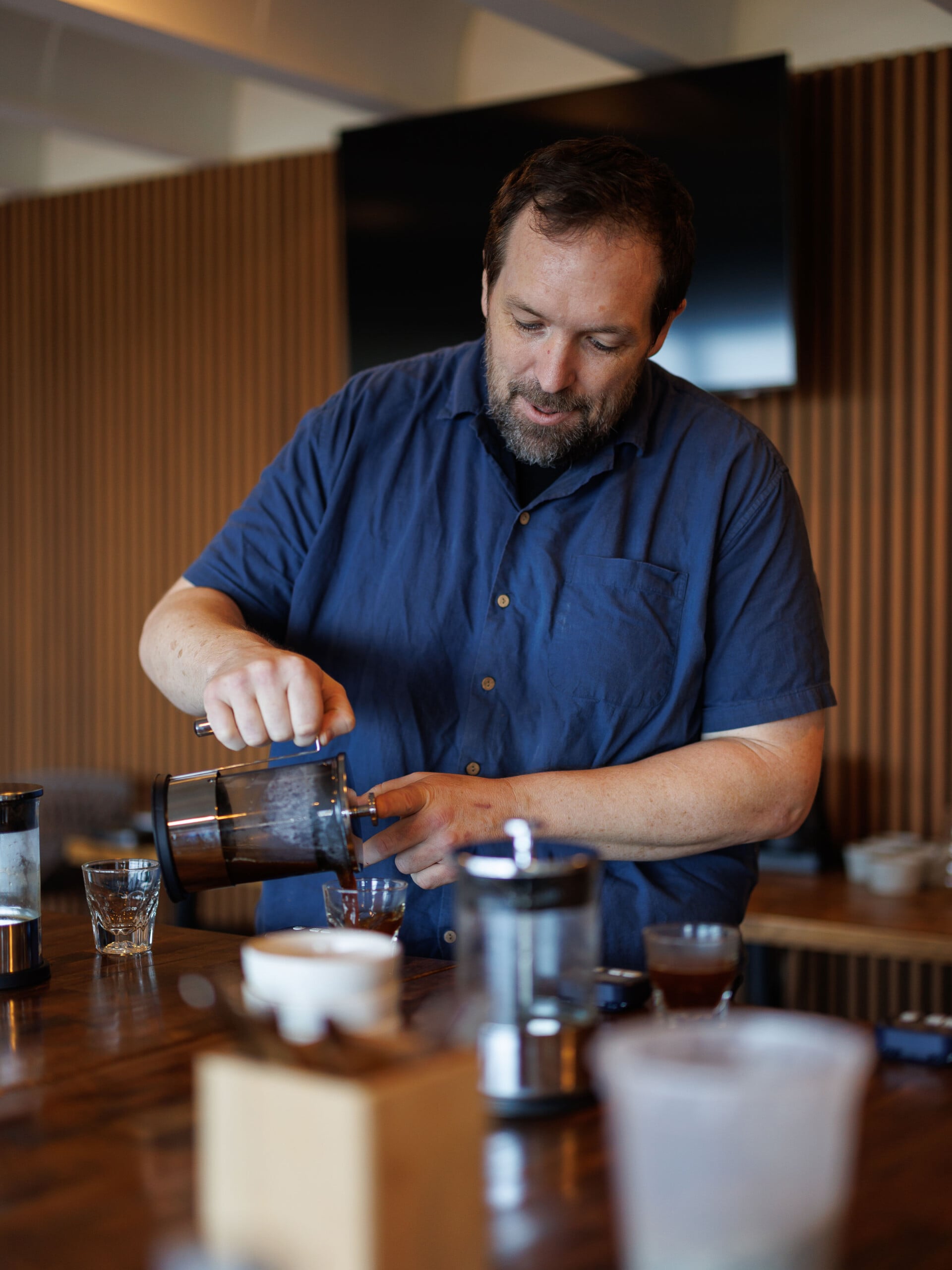
The possibilities are so heady that Vince Pōhaku, who owns Drip Studio on Fort Street Mall, comes in on his day off to conduct Sunday Service. “Once a month, I send out a thing to a small group of people, and we can explore different coffees,” he says. “If they’re open to it, I can explain this is a Washed Panama SL34 (a rare high-altitude bean). We can dive in. Play around with different ways. It’s important to know what’s a good coffee.” —Mari Taketa

Halfway There
A new law that goes into effect July 1, 2027, increases the amount of Hawai‘i-grown coffee that must be included in Hawaiian-named blends, from 10% to 51%. While updated labeling helps consumers understand what they’re buying and protect the identity of Kona coffee, expect prices of those blends to increase.
Roast Your Own Beans
Hala Tree’s Coffee Lab offers a hands-on experience in Ka‘a‘awa.
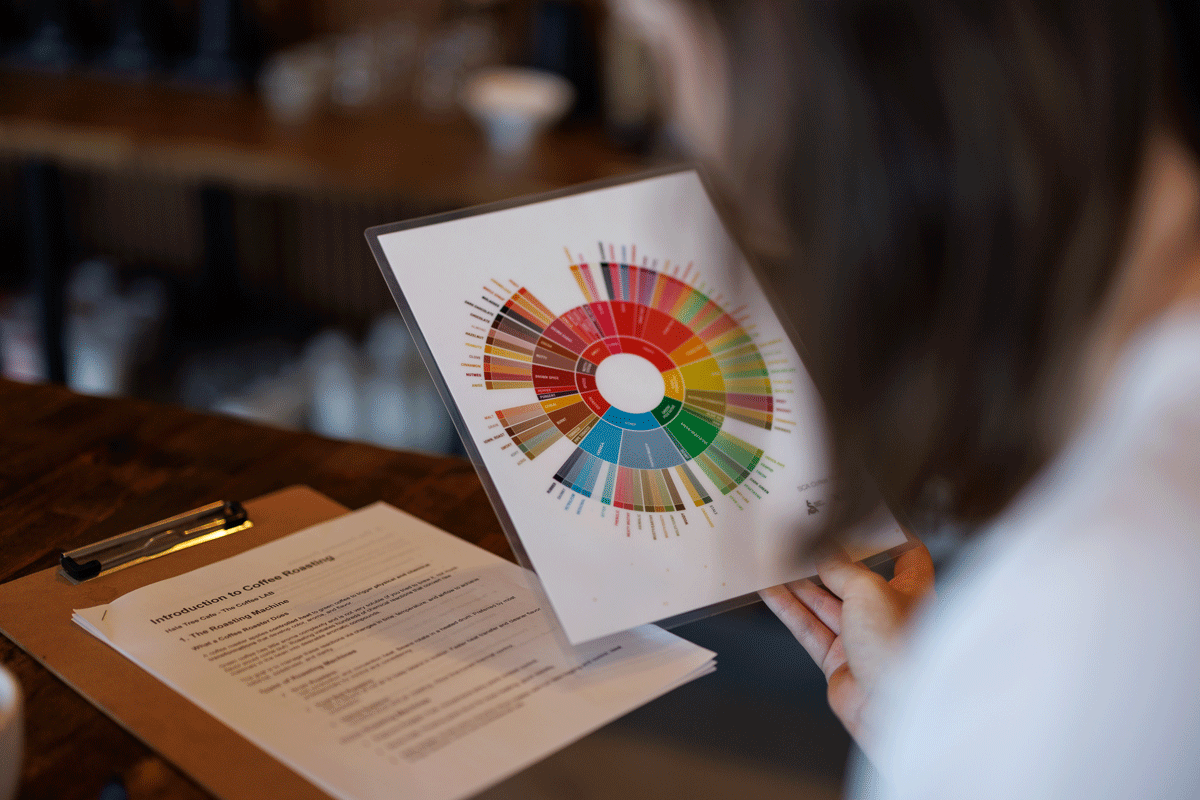
Downstairs from Hala Tree Café next to Crouching Lion, manager Brian Webb prepares the Coffee Lab for one of its daily workshops. I’m here for the roasting class, a next-level endeavor and the only one I know of on O‘ahu. Besides, Hala Tree’s 100% Kona coffee is one of my favorites.
The class begins with some Hala Tree history. The family-owned company opened its coffee farm in Captain Cook in 2012 and its café and lab in 2024. Webb, I learn, has decades of experience in the specialty coffee industry, and his manner makes the science of roasting accessible to novices like me.
He prepares cups of Kona coffee from beans that have been sorted into three roast levels and encourages me to describe the flavors. I like the medium roast best. Webb says we’ll try to replicate it with the lab’s roaster, a countertop machine the size of a small dog.
Buttons control fan speed and temperature; the rest is up to the operator. Webb outlines the process in detail—using phrases like “Maillard reactions” and “pyrolytic compounds” that make my head swim—then walks me through exactly what I’m looking for. From the point the beans turn yellow to when they start popping like popcorn, it’s up to me to know what to do at different stages, sometimes within seconds, to achieve my desired medium roast. Webb keeps a close eye to make sure I’m pressing the right buttons at the right time.
Fifteen seconds after the final pop, I turn off the machine, let my freshly roasted beans drop into a cooling tray and stir them to dissipate the heat. We inspect the curvature and chaff to confirm the beans look the way medium roast beans should.
I make the long drive back to town with about a half-pound of beans, a renewed desire to keep experimenting with preparation methods and, not least, a new respect for our local roasters who literally have this down to a science.
$55, 51-666 Kamehameha Highway, Ka‘a‘awa, halatreecafe.com/coffee-lab
Katrina Valcourt is the executive editor of HONOLULU Magazine.