How Important Is the Military to Hawai‘i?
As critical land-lease negotiations loom, discussions about the military presence in the Islands have escalated.
U.S. Sen. Daniel K. Inouye wrote to President John F. Kennedy expressing his concerns about the military’s push to secure long-term $1-a-year leases for large “maneuver areas” on O‘ahu and Hawai‘i Island. Inouye questioned why the military needed the land for its exclusive use, precluding the community from recreational access, and suggested short-term leases would be a better fit.
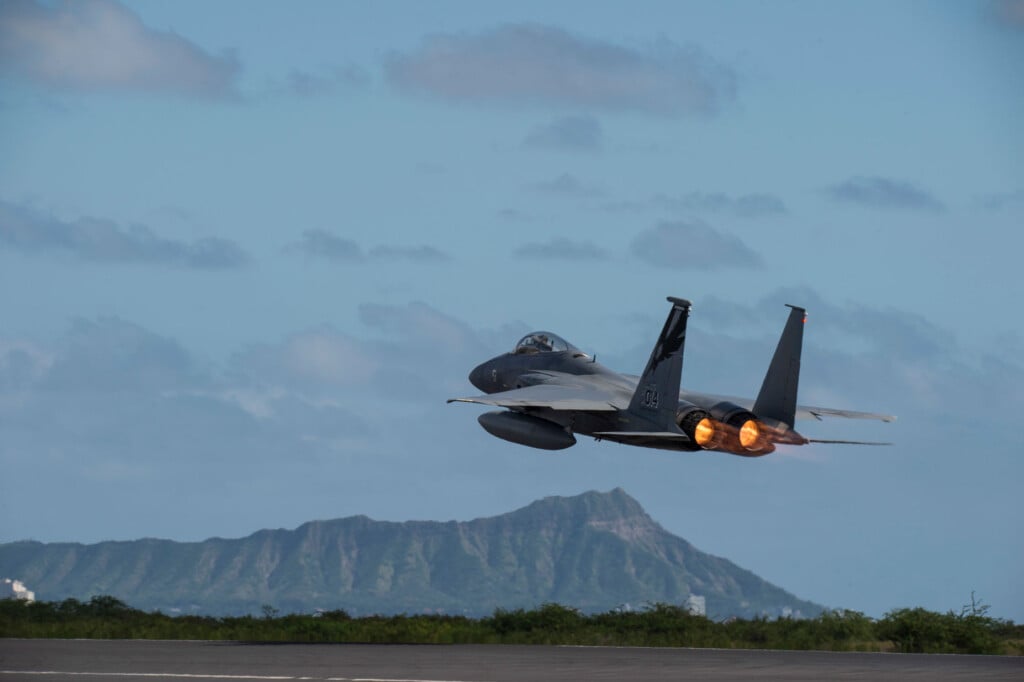
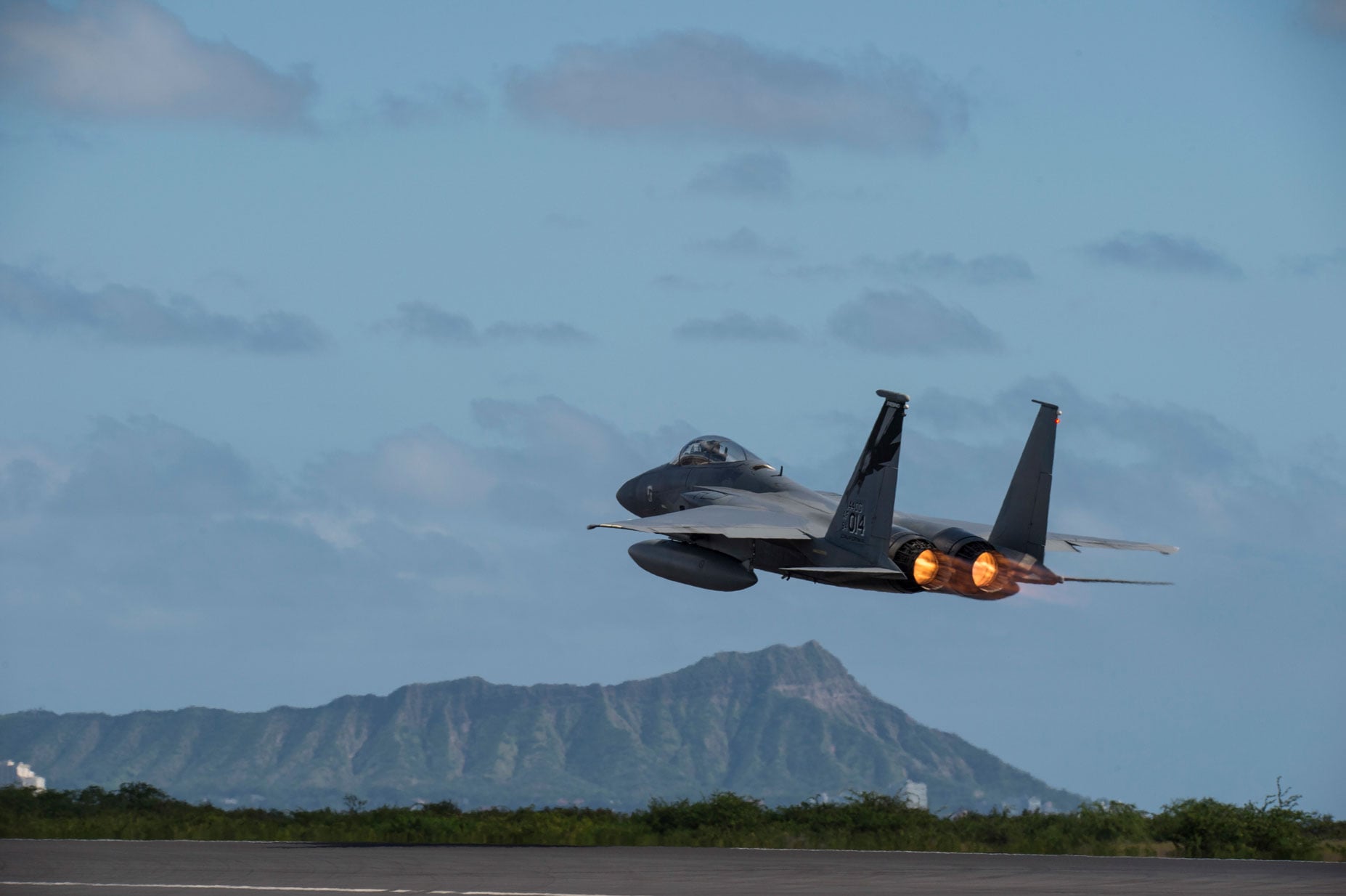
A year later, despite Inouye’s objections, the state gave the military 65-year leases for thousands of acres in Mākua and Kahuku on O‘ahu and Pōhakuloa on Hawai‘i Island, and those sites would quickly come to serve as centerpieces of the military’s training activities in the Islands. Live-fire exercises were permanently halted at Mākua in 2023—roughly two decades after being paused—but they continue on the approximately 23,000 acres of state lands at Pōhakuloa Training Area.
Davis Price, co-founder of ‘Āina Aloha Economic Futures, invoked Inouye’s letter recently when discussing the future of those training area leases and others, the first of which are set to expire in 2029. Advocates like Price see the military land-lease talks, happening now, as a chance to start a broader conversation about the military’s presence in Hawai‘i, and its overall costs and benefits to the state.
Price, an attorney, says for too long the armed forces have been “above reproach,” their responsibilities as tenants and neighbors—such as explaining how they’re using land, allowing community access and cleaning up—an off-limits topic. “The common narrative and framing here is that’s just the way it is,” he says.
“So how do we start to address the bogeyman at the state level to hold them accountable? What are the negative economic impacts that they’re having? We need to start really changing the starting point, but we can’t have a conversation about the military paying its fair share if we only consider the positive,” Price says.
Mixed Feelings
The military has long had a fraught relationship with some groups, from environmentalists to Native Hawaiian activists, even as it has enjoyed largely favorable public opinion in the Islands. That still appears to hold true. A state survey released at the beginning of the year found 6 in 10 residents “feel positively” about Hawai‘i’s military presence and 74% said the military strengthens the economy.
At the same time, there have been growing calls for a new chapter in the state’s relationship with the military, building in stronger pledges aimed at mitigating the environmental, economic and social impacts of the military’s outsized presence in Hawai‘i. Gov. Josh Green has embraced that “reset” language, proposing a federal investment of $10 billion as part of the land-lease negotiations. In an October 2025 letter to then U.S. Army Secretary Dan Driscoll, Green proposed federal funds for transportation infrastructure improvements, environmental cleanups and the construction of new housing units and conversion of a lot near Schofield Barracks for workforce housing.
Backgrounding negotiations, however, are concerns that President Donald Trump’s administration could invoke so-called “friendly condemnation” of the military training lands it needs, usurping any opportunity for a deal. That was certainly a threat last year for the state leased lands at Pōhakuloa Training Area, which the military argues is its only option in the Pacific for troop readiness and live-fire training. Seeking a swift resolution, military officials reportedly pursued avenues for taking control of the training lands without a negotiated lease. Congress stepped in to block the move, and military leaders now say they’re committed to good-faith talks.
Laurie Moore, executive director of the state’s Military and Community Relations Office, says major questions in those talks remain regarding compensation, cleanup, stewardship, accountability, community benefits and more. But, she added, the footprint of the military in Hawai‘i is already shrinking: The Army plans to retain about 450 acres of leased land on O‘ahu out of the more than 6,000 acres it currently operates on.
“That’s a sea change, and we welcome it,” she says. “In community conversations, we keep hearing the same priorities: Return land that is no longer needed in a condition that allows for safe future use; reduce the footprint to what is actually required; improve cultural and community access where it can be provided safely; and strengthen protection of cultural and natural resources.”
Difficult Conversations
Still, while there may be some broad agreement that the state’s relationship with the military must change, and public acknowledgments from the military that concessions are required, what that change looks like in the short and long term is less clear.
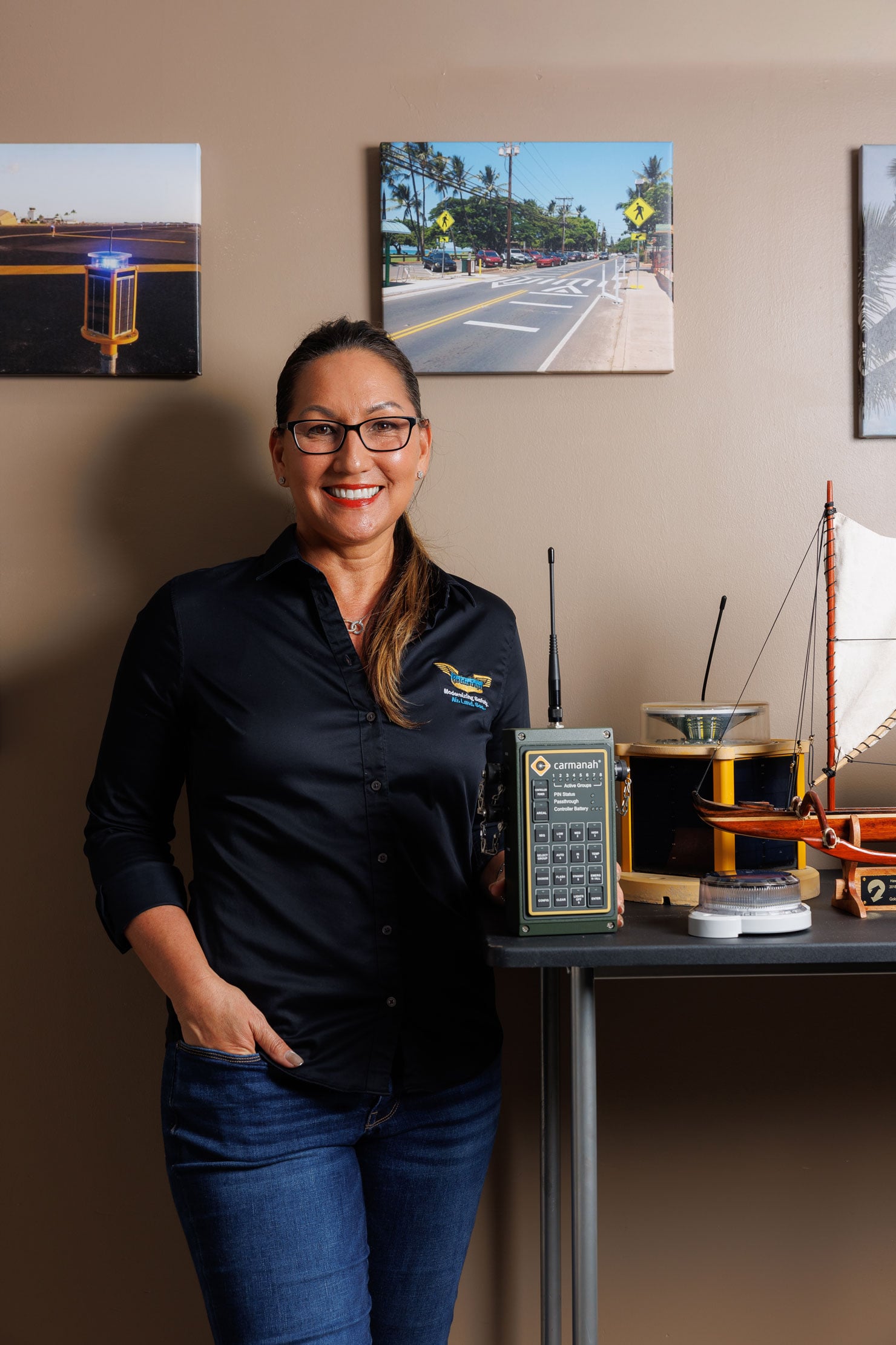
“It’s a very difficult conversation,” says Lia Young Hunt, CEO and president of Goldwings Supply Service Inc., which specializes in solar and airfield lighting and navigational infrastructure. As a military contractor, she says she’s apprehensive about the military land-lease talks and the future of the military in the Islands.
“I do believe there is unfinished business between the Hawaiian Kingdom and the military,” says Hunt, who is Native Hawaiian. “But how do we move on while being empowered? That’s where I feel like we can be strategic. I look at it through a long-term lens. The decisions that we make now are for 100 years from now.”
Hunt says there’s no sugarcoating the missteps the military has made over the decades. Among them: The 2021 leak of the World War II-era Red Hill fuel storage tanks. Thousands of people, mostly in the military community, were sickened by tainted water and the crisis threatened O‘ahu’s largest aquifer. It also harmed public trust in the military, with many—including government agencies—roundly criticizing the Navy’s immediate response to the leak, saying a lack of transparency and attempts to downplay the scale of the disaster threatened people’s safety. A costly environmental cleanup continues, and some warn that’s falling short too.
“When you look at Red Hill, everyone suffered,” Hunt says. “It was their own. It was the people of Hawai‘i and our water resources. It was everyone.” But Hunt is skeptical of those calling for a drastic shift in the military presence in the Islands. She prefers incremental changes and says it’s important that that change starts at home. “These collaborations are super important, but we have to remember that this is a huge ship and that it really does benefit from everyone doing their part,” Hunt says.
The Military’s Extensive Reach
Few states have a military presence as large, concentrated and consequential as Hawai‘i’s. Across the state, the military owns or uses about 221,000 acres, half the size of Maui. And about 44,400 members of the military live in Hawai‘i, the highest concentration of military personnel per capita in the nation. With dependents—about 51,000 spouses and children—the military population accounts for 9% of the state’s population. Meanwhile, the civilian workforce for the military tops 20,000.
The state and military have long pointed to military spending as a central support in the “three-legged stool” driving Hawai‘i’s economy, alongside tourism and construction. They estimate direct military spending at upward of $10 billion annually, which includes military salaries, housing allowances, contract spending and grants. It’s the state’s second-largest economic sector after tourism, officials say.
A report released this spring, “The True Cost of the U.S. Military in Hawai‘i,” questioned that oft-cited analysis, however, calling the figure exaggerated because it includes spending on contractors located outside of the Islands. The direct spending estimate is closer to $7.2 billion, the report concludes, which means other sectors (like healthcare, real estate and retail) represent larger or equivalent shares of the state’s gross domestic product.
Several local and national organizations, including Price’s ‘Āina Aloha Economic Futures, the ‘Īlio‘ulaokalani Coalition and Sierra Club of Hawai‘i, partnered to put the report together, saying their aim was to bring a skeptical eye to claims about the military’s benefits to Hawai‘i, which they say have been unexamined for too long. The report also spotlighted the military’s impact on Hawai‘i’s housing market, concluding that military housing demand in 2024 spurred rents to increase by about 7%. For the average renter, that translated to about $154 more per month.
Price, for his part, says he isn’t calling for dramatic changes to the economy or military presence in the near term. The study, he says, was about “creating the space to talk about building an economy that aligns with our values as a place. We shouldn’t have to accept bombing and depleting because we need it to survive economically. Like anything, it’s going to take work, but we can start it.”
He says the question is a simple one, even if the answer is anything but: “Are the benefits the military brings worth the costs borne from their presence and activities?”
“The military is very important, good and bad,” he says. “Yes, they have a large impact on the economy. You can’t just remove any element of our economy and not expect to have a lot of pain, and that’s not what we’re proposing here. But I think there has to be a reckoning. There has to be some type of rebalancing.”

The Risks of Reduction
Moore’s office, meanwhile, has cautioned that even a 10% reduction in the military force because of federal spending cuts, a deployment or a major unit realignment would be devastating, triggering a $1.7 billion annual loss in direct spending to Hawai‘i’s economy. “The military is important to Hawai‘i. It is a major employer, it plays an important national security role, and military families are part of our communities,” Moore says.
But, she adds, “Hawai‘i’s people, and the state’s responsibilities to our land and resources, have to come first. What does Hawai‘i need from this relationship, and how do we make sure it works for our communities as well as the military? For too long, Hawai‘i’s interests have come second to the military’s. That needs to change.”
The Military’s Response
For its part, the military appears to be listening to that message.
In 2024, the Pentagon established a dedicated Hawai‘i office to work with communities as land-lease negotiations move forward. Its stated purpose: to bolster communication, foster trust, and protect natural and cultural resources. Noe Kalipi, a Hilo native and senior adviser at the office, says her work includes providing key military decision-makers with “local context, history and cultural perspectives.”
“We recognize that there are many diverse opinions about the military’s presence across the state. Supporters cite economic benefits, including jobs, innovation and workforce development, along with the national security importance of Hawai‘i’s strategic location in the Pacific, roughly 2,500 miles from the U.S. mainland.
“For others,” she adds, “concerns about the military’s presence are deeply rooted in history, culture, land and past experiences. These concerns cannot be resolved through a single conversation and trust cannot be assumed.”
Talks Continue
Alongside the community listening sessions and pledges of collaboration, however, is the reality of the military’s stated operational need for training lands, skeptical onlookers say. They’re not so convinced that friendly—or forced—condemnation of state lands for military training is off the table. The U.S. Army Pacific, meanwhile, says it’s “focused on balancing key national defense priorities, resource management and addressing community concerns.” In a statement, an unnamed U.S. Army Pacific leader says, “The Army remains in close communication with all stakeholders.”
Air National Guard Maj. Gen. Christopher K. Faurot, mobilization assistant to the commander of U.S. Pacific Command, adds that training lands are important to the Hawai‘i National Guard, too. “Ultimately, these lands help us maintain forces that are ready to defend the nation and ready to support the people of Hawai‘i when they are needed,” he says.
A Better Relationship Is the Goal
It’s not clear when the talks might wrap up, and the state says the terms of any agreement are more important than a deadline. Summer Sylva, Office of Hawaiian Affairs interim chief administrator and CEO, says while the negotiations won’t tackle everyone’s grievances with the military, they’re a starting point. “There is ample room for improving the military’s relationship with our community,” she says.
OHA is not directly participating in the negotiations, a point of contention for the semiautonomous state agency, but Sylva does sit on an advisory council the governor has assembled, and she says OHA has developed a list of non-negotiables: no land transfers or condemnations, no more destructive live-fire training, and compliance with environmental laws.
State Rep. Ikaika Hussey, a member of both the House Finance and Tourism committees, has long supported demilitarization and self-determination for Native Hawaiians. He says the lease negotiations shouldn’t be an endpoint, but a beginning. Like Price, he points to Inouye’s 1963 letter as evidence a shift in perspective is needed.
“There’s the question about what happens with the leases and then there’s the question about all the other land that the military controls, worth billions of dollars, that have essentially been lost to the people of Hawai‘i,” Hussey says. The lawmaker has called for a full economic analysis of military-controlled lands in the Islands and says military-owned lands under the Hale Koa Hotel in Waikīkī should be returned to the state.
His contention is that the state’s relationship with the military has been an uneven one, focusing on the economic benefits of salaries and contracts and playing down the disruptions to the housing market, the environmental impact, and the use of services. “I don’t believe the math that the military offers up,” he says. “For too long, we’ve been ignoring the other side of the balance sheet. There’s got to be a better way.”
Tiffany Vara
Tiffany Vara is a U.S. Army veteran, mom and community volunteer. A few years ago, after learning about the Hawai‘i Executive Collaborative’s Rediscovering Hawai‘i’s Soul initiative, she jumped in to be part of the group’s Military and Community Hui, which gathers monthly to tackle questions about the military in Hawai‘i.
My role is as a facilitator. I don’t have a voice here; I hold the space for the conversations rooted in something called “stretch collaboration,” bringing people together to work on issues that matter to all of them. What I have witnessed in our hui is that hard things can be said and hard things can be heard and people remain in relationships. We can listen without defensiveness because we’re not expected to align.
Our hui has about 25 members, all senior leaders. They’re members of the military, community leaders, and people with different viewpoints. Some of them have a foot in both worlds. They have a heavy load to carry, and they’ve been incredibly valuable in our circle.
This process has taught us that we have to be comfortable with things not being resolved right away. It calls for patience while the world feels like it’s on fire and that’s a big ask. But the hui members are challenging themselves to talk with purpose. Let’s talk with a goal and the goal may be deeper understanding.
Looking forward, I’m hoping we can continue to diversify the people in our hui and continue to have disagreements. We’re trying to meet the moment in the moment, rooted in history and looking toward the future.

Courtesy: Moses Kaoiwi Jr.
Moses Kaoiwi Jr.
Moses Kaoiwi Jr., who serves on the Office of Hawaiian Affairs technical advisory group for the military land-lease negotiations, approaches the topic from multiple perspectives. He’s Native Hawaiian, a retired brigadier general with the Hawai‘i Army National Guard, a former Hawai‘i Island police officer and the owner of INDO-PAC Strategic Consulting. He says ensuring the military can continue training in Hawai‘i is important, and it’s also important that people educate themselves on the issue.
I was born in Mākaha, but raised in Kaiwiki Homesteads above Hilo. Climbing cliffs, catching ‘ōpae with bamboo nets, it prepared me for the infantry in the military, to understand the terrain and the environment. I joined the National Guard in 1983 and from ’83 all the way through 2017, I would consistently go up to Pōhakuloa Training Area. I understand the concerns about the training at Pōhakuloa. A lot of people are worried about the live-fire bombing, and from a Native Hawaiian perspective I can understand that. But it may not be as devastating as some people think; the military has an environmental and archaeological program there. They’re propagating endangered species, and nobody is using high-explosive rounds.
For me, it’s about balancing different needs. Do we sacrifice Pōhakuloa, get the military out, but at the same time lose the Guard training capabilities we need? We have a relatively small state. If Missouri needs help, they can reach over to Kansas. But we’re all we’ve got. If the Guard gets reduced, we’re not going to have that capability. Look at all the times the Guard has responded to natural disasters. No matter what your position is, it’s better to understand the facts. You don’t want to go latching onto something because it fits your narrative and then find out it’s wrong.

Courtesy: Kyle Kajihiro
Kyle Kajihiro
Kyle Kajihiro is an assistant professor of ethnic studies at UH Mānoa and the former Hawai‘i program director of the American Friends Service Committee, where he worked for years to advocate for demilitarization in the Islands. He says conversations happening now about the impact of the military presence in Hawai‘i will have generational consequences.
Questioning the military presence in Hawai‘i, it’s been one of those forbidden conversations for so long. But amid the military land-leases conversation, where these leases are expiring, we have this window of opportunity to ask, what are the alternatives? Who benefits from this economy? Who is disadvantaged?
The problem with the typical calculations around the military’s impacts on the economy is that the costs that are externalized are never really factored in, such as the cost to the environment. But these costs get passed down to communities that can’t speak for themselves or for future generations. That’s not fair or ethical.
Ultimately, we’d like to see economic priorities shift to investing in the long-term restoration of lands and in our communities. We want to invest funds into education, healthcare, into a workforce that can help restore Native ecosystems.
This might be a generational process, returning these lands and restoring them, but if we do it thoroughly and we do it right, we may have different outcomes. It’s about repaying the debt and making reparations on the harm that’s owed. It’s not a one-time settlement of this whole problem. It’s a process. And I don’t expect it will happen in the short term or even in my lifetime, but we’ve already seen tremendous change happen just in recent decades. I think people are realizing that we really need to have those conversations.