A.I. Will Transform Disaster Management
Hawai‘i is already testing A.I. tools and systems that could save lives during weather emergencies.
When strong storms moved over the Islands earlier this year, buffeting communities with forceful winds and torrential rain, a new internal AI program at Maui’s Pacific Disaster Center was taking notes. The system collected a stream of reports on the storms’ impacts, from downed trees to flooded neighborhoods, feeding a large database and learning along the way.
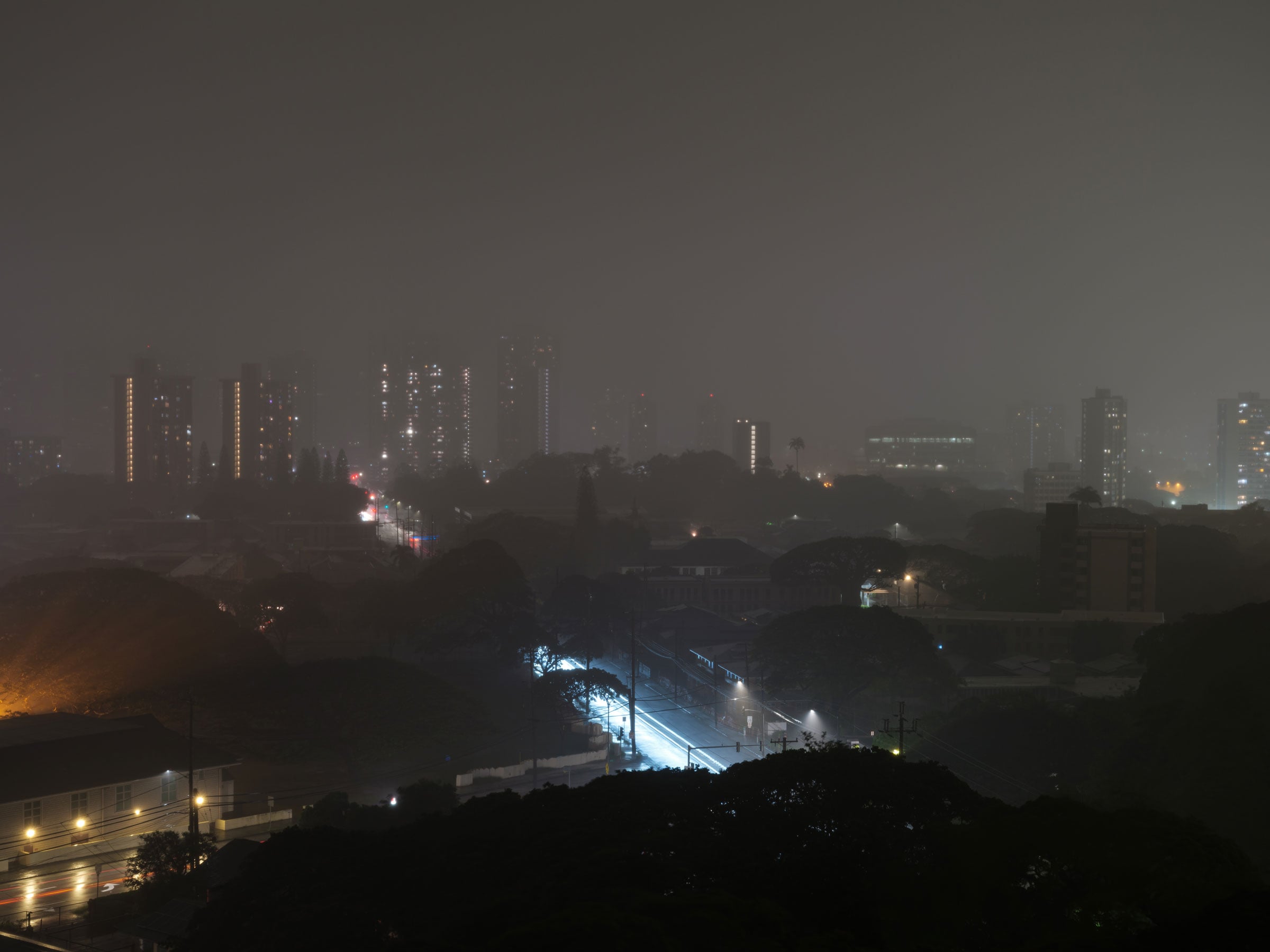
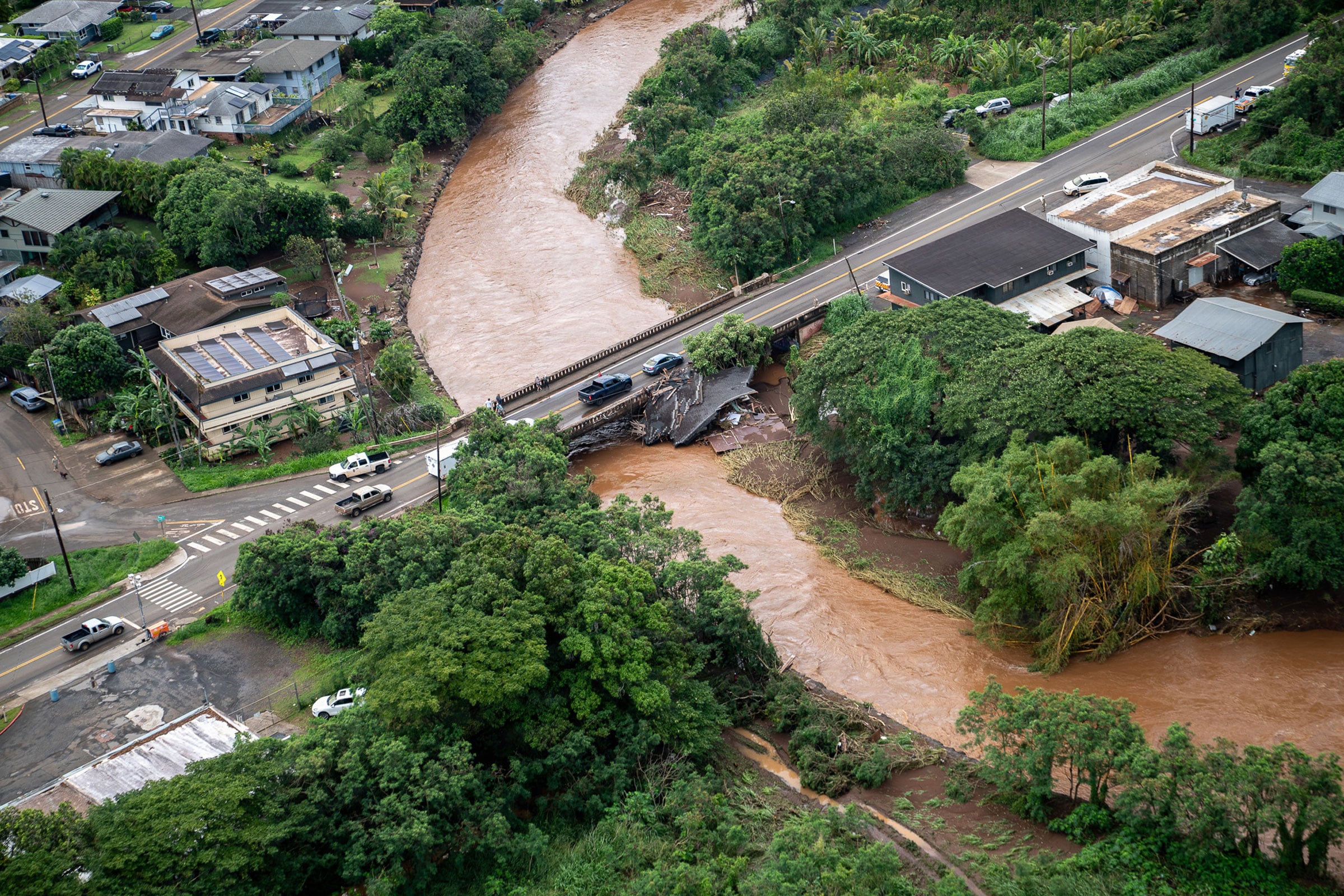
In the case of the March Kona lows, the damage was extensive and devastating, submerging communities on O‘ahu’s North Shore and resulting in more than $1 billion in damage. Disaster planners hope the AI program could soon help construct better predictive models for storm destruction and alerts with more actionable insights. “We know that a Category 5 hurricane is bad, but what does that actually mean?” says Joseph Green, the disaster center’s director of applied science. “These reports fill in the blanks and over time, we can build more sophisticated models to say, this is what we can expect as far as impact.”
The tool will be programmed to eventually offer region- or even neighborhood-specific analyses, a level of detail that emergency managers could use to focus storm preparations and response efforts and to tailor the urgency of messaging. Improvements like these could have helped such communities as Waialua, Kīhei and Mānoa, which were inundated with floodwater during the March storms. “It’s a whole new realm of disaster modeling,” Green says.
Experts say AI is poised to transform just about every element of society, disrupting sectors as diverse as hospitality and health care, and the world of disaster management and preparation is no exception. Nationally and locally, AI promises to improve early warning systems and the allocation of resources, and disaster response groups, public agencies and private organizations alike are looking at how they can adopt it.
Driven by a growing threat of climate-fueled disasters and the memory of the catastrophic Lahaina wildfires and the Kona low storms, the state is investigating AI systems that could make its work more efficient and help responders react quicker when lives and property are at stake. “We are diving headfirst into AI,” says Randal Collins, director of the Honolulu Department of Emergency Management. “When used responsibly, AI only ups the game.”
Faster Decision-Making
Collins plans to use a $1 million federal grant to help build an AI-driven hazards information prediction and warning system for O‘ahu. “It will give us an early alert, a little more time,” he says. The system will be taking in data from a host of sources, including National Weather Service warnings, cameras and stream-level monitors.
The AI system, preloaded with emergency planning documents, could also take in real-time reports from different entities, like Hawaiian Electric Co. and city maintenance crews, to help with decision-making.
Collins describes the interface as much like ChatGPT and adds it would also be invaluable for after-action reports and on “blue sky days,” when emergency planners are looking to run scenarios or test out systems. The city is also tackling a separate AI project that would use drone and open-source video to create on-the-fly 3D representations of sites that could be used for response and recovery.
He says the system will be capable of building so-called “digital twins,” or separate simulations for different scenarios. “We can go to critical infrastructure around O‘ahu, and then I can use a digital twin to ask, ‘What happens if there’s a landslide?’ We can then better coordinate a plan,” Collins says.
The Hawai‘i Emergency Management Agency, meanwhile, is planning to pilot AI systems for training, operational planning and response efforts, as well as federal compliance work. “These efforts aim to enhance efficiency, improve decision-making, and strengthen overall disaster preparedness,” says community outreach lead John Vierra.
“Early detection and better forecasting can reduce downtime and protect assets.”
— Jason Leigh
Real-Time Data
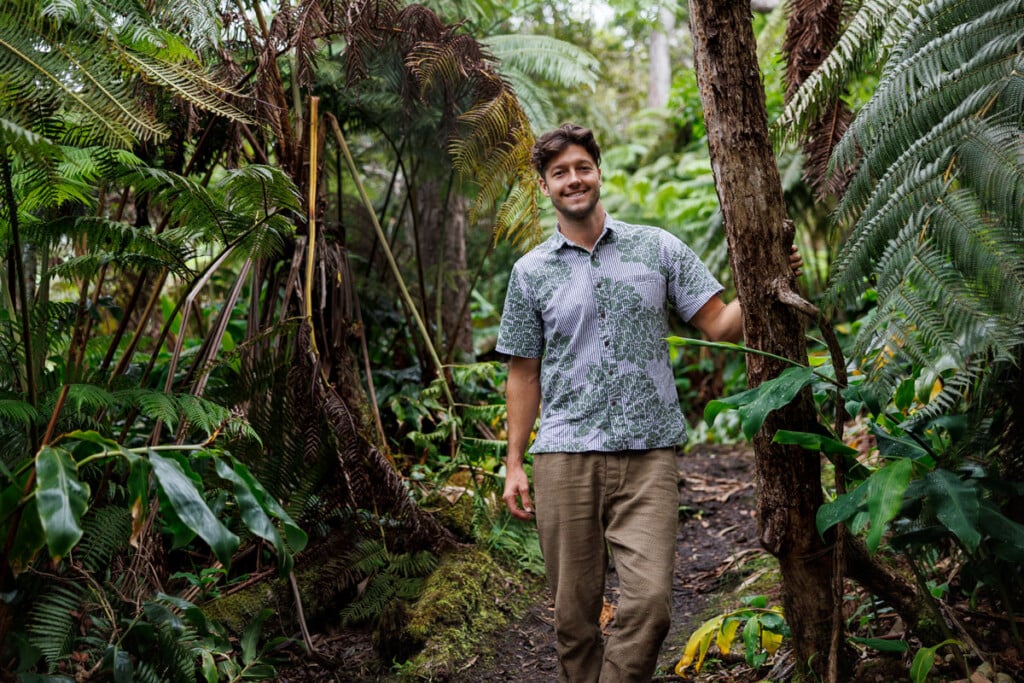
Jason Leigh, a computer science professor and director of the Laboratory for Advanced Visualization and Applications at the University of Hawai‘i, is part of a $25 million National Science Foundation project to install 300 advanced AI sensors across the country to provide faster warnings for everything from wildfires to floods.
Leigh’s team plans to deploy two to three sensors in the Islands at as-yet undetermined locations. He says while AI-enabled sensors are pricey, costing $10,000 or more, they’re a relative steal compared to the growing costs of extreme weather events. In 2024 alone, the U.S. saw 27 disasters that each cost more than $1 billion.
Damage and recovery costs for the wind-fueled inferno that tore through Lahaina in 2023, claiming more than 100 lives and leveling the town, have been estimated at $12 billion.
“We don’t think twice about putting smoke detectors in our homes. Early detection and better forecasting can reduce downtime and protect assets. Even slightly reducing damage from one major event could justify the investment,” Leigh says.
“Forecasting and modeling aren’t new. What’s changing is the speed, scale and accessibility. When you move intelligence closer to real-time and embed it directly in the field, you shorten the time between detection and action.”
Green says the Pacific Disaster Center is also using AI to tackle gaps in hazard detection. The AI-built database that collected news reports on this year’s storms is designed to have a global reach. As reports come in, experts tag potential hazards (catastrophic flooding, wildfire risk and so on) so the model learns.
In underserved and unserved communities with less real-time data input, the system could serve as an early warning system, pairing news and other reports with historical data to flag potential problems that people should be aware of.
“If done correctly, we can start to generate more reliable forecasts,” Green says. Like the city, the Pacific Disaster Center is also eyeing “digital twin” technology, including as a tool to help policymakers and the public understand the importance of disaster preparedness and investments in critical infrastructure improvements.
Caution Urged
To state Rep. Della Au Belatti, chair of the House Committee on Public Safety, AI’s potential for disaster management and response amounts is more a tsunami than a sea change. “It can help us at all points of disaster preparedness and response. It can help on planning and forecasting, but also with warnings and assessment,” she says.
But in talking about AI, Belatti also strikes a note of caution. “For one, how do you integrate systems that are siloed and operating on different frequencies? It’s going to be expensive,” Belatti says. “In Hawai‘i, you have a diverse community in terms of languages, access to communications. On the implementation side, how do we manage these things in a way that actually helps people?”
Leigh, the UH professor, says solving those problems is a work in progress. Importantly, he adds, “AI isn’t replacing human judgment. It’s helping people process more information, faster, so they can make better decisions under pressure.”
That’s why even as they test out AI systems and look ahead to broader implementation, disaster managers and researchers in the Islands are stressing the need for coordination and for always keeping the “human in the room.”
After all, one of the concerns about large language models like ChatGPT and Google’s Gemini is that they can “hallucinate,” a euphemism for fabricating information and data and even fudging conclusions in order to offer up a complete response.
Green says AI also tends to reveal deficiencies in existing systems, not fix them.
“AI is very exciting, I will give it that,” Green says. “But we have to be very careful about how we insert it into our systems. AI is not going to help us bridge siloes. That’s going to be the job of the people running and managing the systems.”