Ho‘okua‘āina Is Restoring Hawai‘i’s Ancestral Ways
With a major expansion, Ho‘okua‘āina encourages land and cultural stewardship along with community well-being.
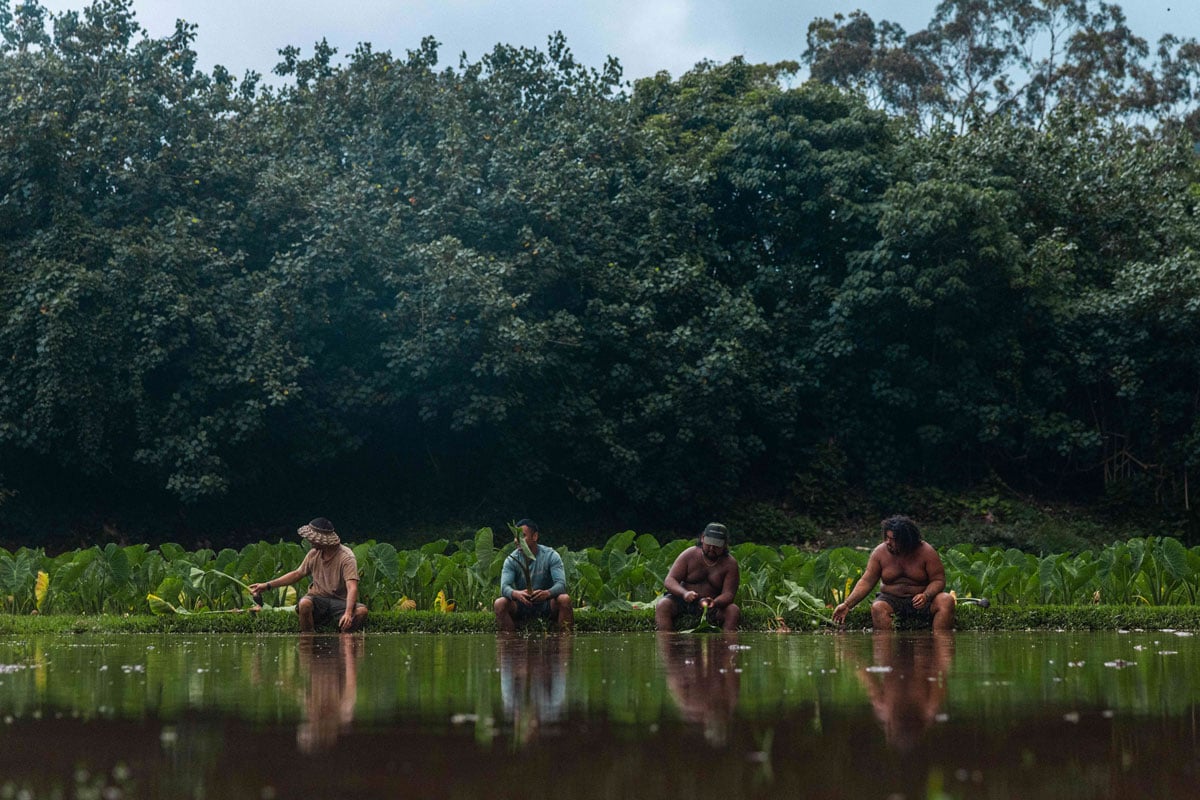
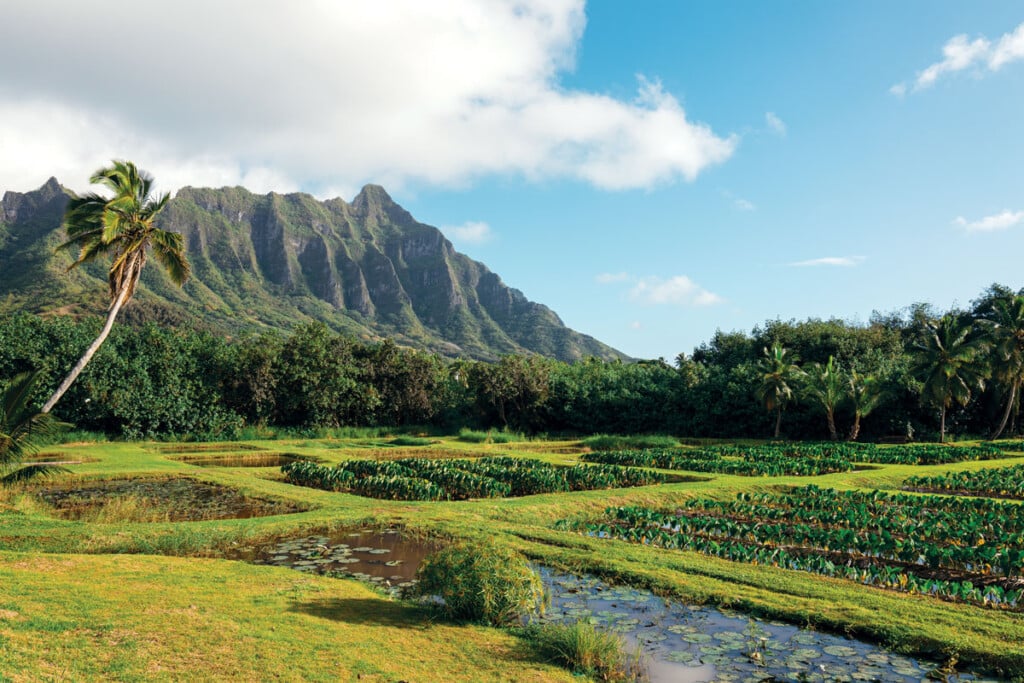
At the end of a single-lane driveway just a quarter mile from Kalaniana‘ole Highway, a tunnel of branches opens up to parcels of lo‘i kalo. This area, Kapalai, is stewarded by Ho‘okua‘āina, one of the biggest producers of kalo on O‘ahu. But the nonprofit, started by Dean and Michele Wilhelm in 2007, offers more than that. The larger picture is to heal, rebuild and nourish community.
Across the street, the next chapter is unfolding.
Once at risk of development, 116 acres of land called Pālāwai at the back of Maunawili Valley Neighborhood Park is now in Ho‘okua‘āina’s hands and will be protected in perpetuity through a conservation easement. “This expansion is an incredible opportunity for us to not only expand the community work we do and the culture-based work we do, which is really the heart of who we are, but we also get a chance to build upon addressing food security and growing our own food in Hawai‘i,” says Māhie Wilhelm, innovation and identity lead for Ho‘okua‘āina and one of Dean and Michele’s daughters.
The team was given right of entry to the land in 2022 by the Weinberg Foundation and has since restored nearly a mile of Maunawili Stream. There has been a reduction in flooding from the clearance of more than 50 years’ worth of debris and invasive plants, and the planting of more than 100 native trees and shrubs.
The group is also working on restoring an ancient ‘auwai to get the water flowing to the lo‘i once again. Fifteen acres of the property have been fenced in to keep out pigs. Once water is flowing, kalo will be planted along with a diversity of other traditional crops and agroforestry orchards. Besides farming, Ho‘okua‘āina also wants to continue with community and education programs, such as volunteer days. “This is a model for how in the modern time, we can bring back and restore our ancestral ways and bring those values to the forefront of everything that we do,” Māhie Wilhelm says.
“I feel like my life’s calling is helping address food security,” she says, and she wants to continue to encourage people to eat kalo so there’s more demand for it. “We can grow as much food as we want in Hawai‘i, we literally can,” she adds, noting that Pālāwai used to be considered the breadbasket of Windward O‘ahu. “We’re [in] the perfect place to grow everything we could possibly dream of, but unless we eat it, it’s never going to serve the purpose that we need it to serve.” Right now, Ho‘okua‘āina produces 30,000 pounds of kalo annually.
Anyone interested in supporting the nonprofit as it continues to raise money for things such as a food hub/resiliency center, along with farmworker housing, can donate online.
Katrina Valcourt is the executive editor of HONOLULU Magazine.