Will Restaurants Ever Be the Same?
Reduced hours, higher prices, QR codes and a shift toward small, casual concepts: Our dining scene is in flux. Ten longtime restaurateurs tell us what’s happening.
The restaurateurs we spoke to:
Jason Peel, Diamond Head Market & Grill, Kapahulu (formerly Nami Kaze, Iwilei)
Danny Ka‘aiali‘i, The Daley Burger and Pizza Mamo, Chinatown; Onda Pasta & Provisions, Kaimukī
Ross Shigeoka, Shige’s Saimin Stand, Wahiawā
Cheryl DeAngelo, Side Street Inn, Ala Moana and Kapahulu; Hali‘a by Side Street Inn, ‘Ewa Beach
Colin Hazama, C4 Table
Keola Warren, Moké’s Bread and Breakfast, Kailua and Kaimukī
Michael Miller, Tiki’s Grill & Bar, Waikīkī
Jason Higa, Zippy’s
Sheryl Matsuoka, Hawai‘i Restaurant Association
Roy Yamaguchi, Roy’s Restaurants Hawai‘i
Jason Peel opened his modern izakaya after 25 years of working for and opening other chefs’ restaurants. In three years, Nami Kaze garnered two James Beard Award nominations and a Hale ‘Aina award for best new restaurant of 2023. Last fall, after an okazuya spinoff failed and lease renegotiations fell through, Peel closed it for good.
But there were other issues at play. “I know how tough the industry is. People just don’t want to work for it anymore,” he told us at the time. “There’s a lot of good ones, don’t get me wrong, but there’s a lack of passion and loyalty and accountability.”
Peel’s candor caught the industry’s attention. He voiced just one aspect of a dining scene in turmoil. Not that other industries are immune. But we all eat, and whether we gather at restaurants for celebrations, club meetings, pau hana with coworkers or just because we’re hungry, fundamental shifts have touched virtually all.
Are restaurants at an inflection point? Will they ever be the same? We talked to veteran restaurateurs from Zippy’s to Roy’s, Moké’s Bread and Breakfast to a high-end pop-up—here’s what they told us, edited only for brevity.

“Who’s Gonna Take Over?”
JASON PEEL
Diamond Head Market & Grill, Kapahulu (formerly Nami Kaze, Iwilei)
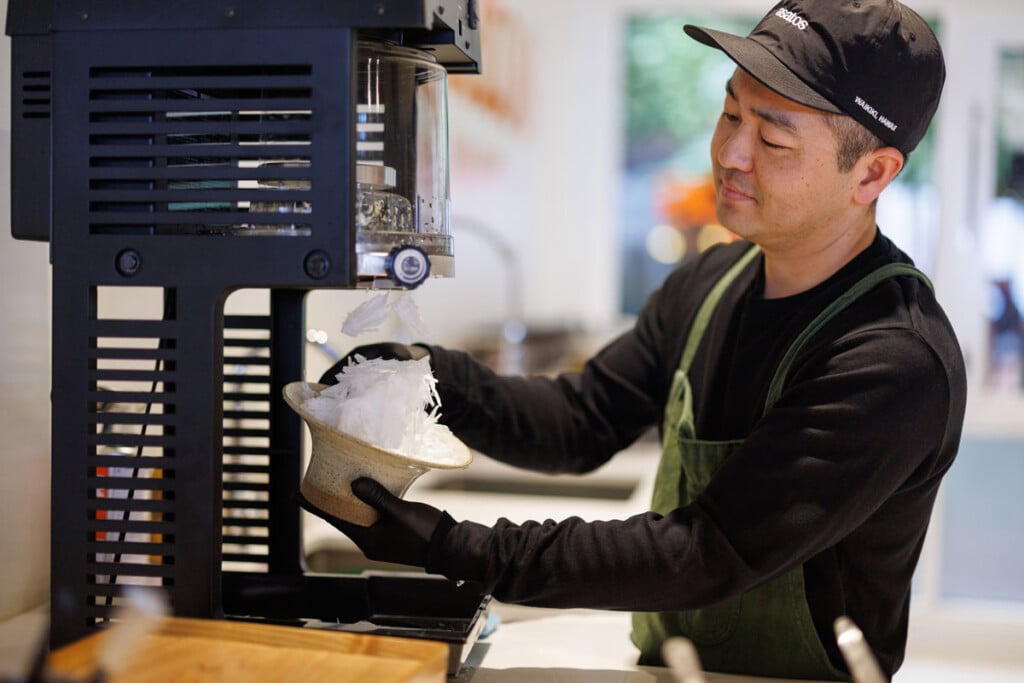
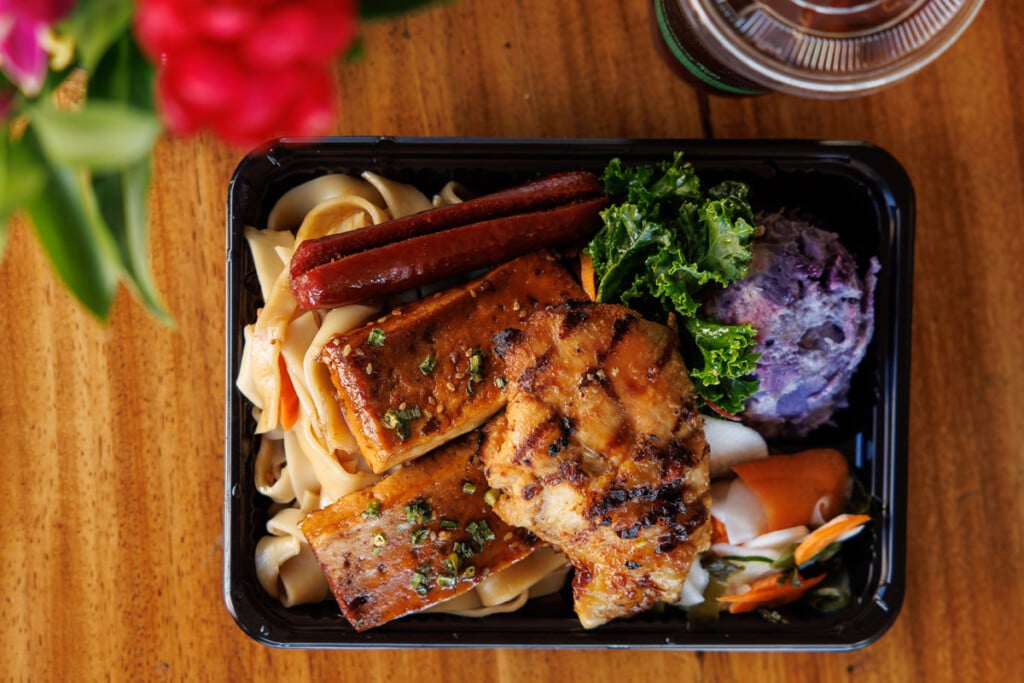
Chef Jason Peel closed his 100-seat restaurant in October. He resurfaced in the kitchen of Diamond Head Market & Grill, where he launched an okazuya pop-up in December and planned to start a supper club.
The biggest thing I’ve been talking to people about is who’s gonna take over? As our generation gets older, who’s gonna sustain the industry?
We’ve kind of lost that—I don’t know if it’s the passion or what, but we’ve lost the accountability. I say that a lot, but do your job. If you get scolded, it’s sad when you don’t try to get better. If you don’t know a wine on the menu, maybe you should learn it. If you don’t know a word on the menu, maybe you should look it up.
I still want to support local, but maybe it’s in a different way, and that’s what I’m transitioning to. I’m not sure I have the right answer now. Hopefully, a lot of people can chime in and help Hawai‘i change, to help small businesses stay alive and keep Hawai‘i Hawai‘i.
I’m ready for another journey. I love the industry. I love Hawai‘i. I’m gonna push. Gotta make sure I’m doing it for the right reasons and the right people.

“Everyone Wants the Uber Driver Schedule”
DANNY KA‘AIALI‘I
The Daley Burger and Pizza Mamo, Chinatown; Onda Pasta & Provisions, Kaimukī
Danny Ka‘aiali‘i and business partner Jonny Vasquez won the Hale ‘Aina Restaurateurs of the Year distinction in 2021 for their successes with tightly focused craft concepts.
The workforce now is completely different. Everyone wants the Uber driver schedule. They want to work when they want to work. You roll out of bed at 2 p.m. on a Saturday, and you were supposed to hang out with somebody, they canceled, so you go drive Uber. There is definitely a portion of the workforce that that’s how they think, and they take that attitude into more traditional jobs. It’s really crazy.
I think you’re gonna see more focus and specialization. The model that really works well for us is the Daley Burger because it’s so focused. We do one or two things really well. I think you’re gonna see a lot of concepts really trim back their menu.
The service model is going to be changing in a lot of places. At Pizza Mamo, we’re contemplating having QR codes on the tables. You’re gonna see a lot more fast casual models, kiosks, even robots in place of a server.
“Give Them the Respect”
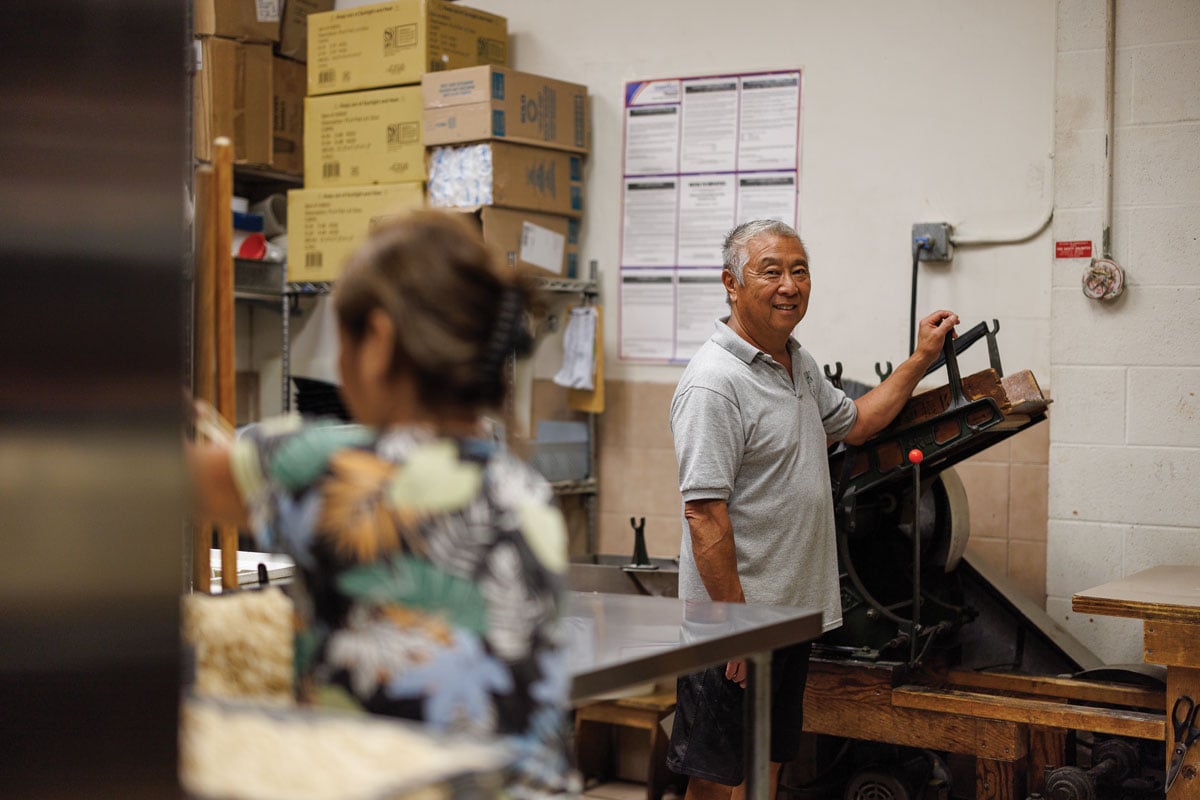
ROSS SHIGEOKA
Shige’s Saimin Stand, Wahiawā
Ross Shigeoka opened his modest restaurant in homage to his grandparents’ saimin stand. Still old-school 36 years later, Shige’s is one of Wahiawā’s longest-running eateries.
The cost of employment, ours doubled. How you going retain your old-timers? When you look at this kind of small mom-and-pop, how you gonna survive? We doing it because we got cheaper rent, our food products is not as expensive, and I make my own noodles every morning.
We really didn’t get slammed by ups and downs. It’s been steady, even during COVID. Regulars would come, open the back of their truck, put up their umbrella and beach chair and sit there eating their regular—saimin and one burger or one plate.
I tell you, success of any business is personality. You don’t have that personality, you going fail. You know everybody’s faults, everybody puts up with it. So you coach it, not come down on it. Anybody can get fed up. It’s a different way how you speak to people. Give them the respect and hopefully, it will come back.
No matter how hard it is with each individual, stay positive. Look at their high points. Always on time or something. Praise them on their hair. Nah.
“We’re Gonna Figure It Out”
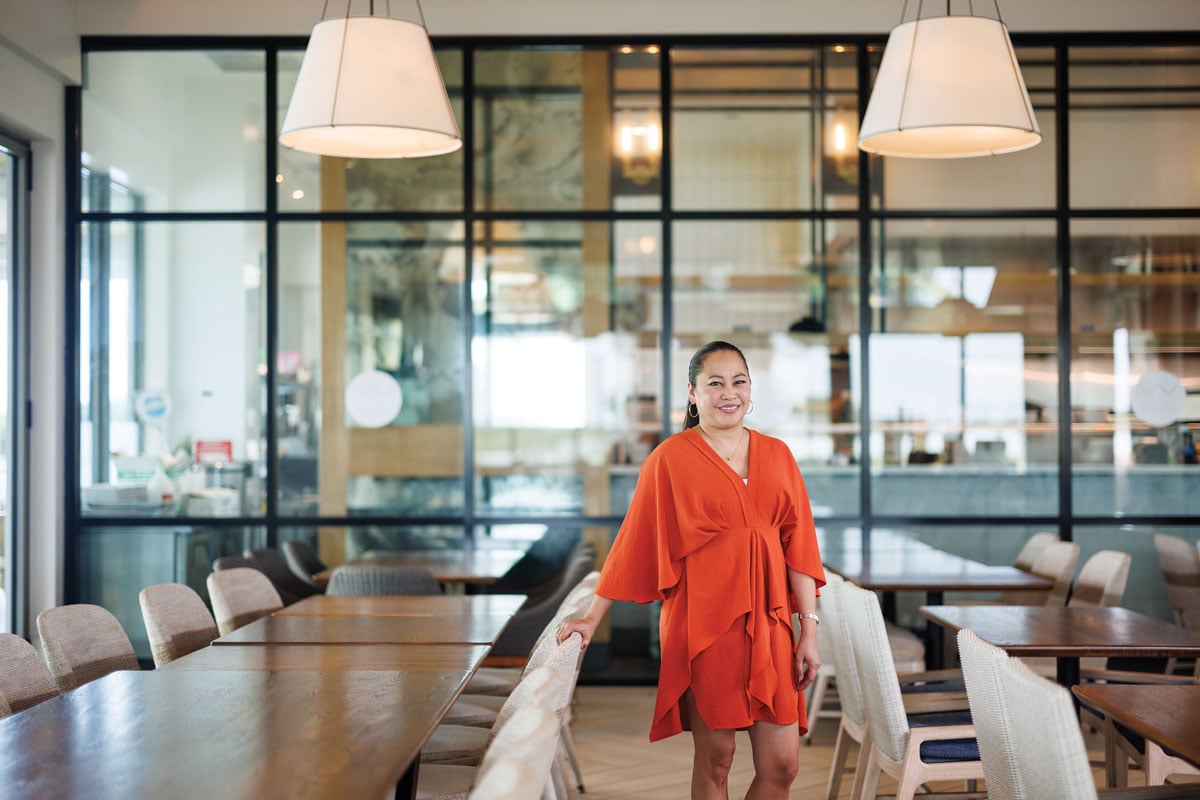
CHERYL DEANGELO
Side Street Inn, Ala Moana and Kapahulu; Hali‘a by Side Street Inn, ‘Ewa Beach
Cheryl DeAngelo started out as a bartender at Colin Nishida’s Side Street Inn 32 years ago. After Nishida’s death in 2018, she and business partner Lisa Meyer took over; they expanded to ‘Ewa Beach in 2025. DeAngelo hopes to open more locations—in Japan.
I wouldn’t open up another restaurant now; it really is difficult. If Side Street didn’t have its name for over 30 years, we wouldn’t have opened Hali‘a.
We feel blessed to be out here with really good people. At the same time, it’s getting harder and harder to get people in the seats Monday, Tuesday. We have to be more creative. What special event, what special dinner? I don’t know what it is, but I find myself thinking what else can we do?
It’s starting to feel like it’s a permanent shift. I don’t know if it’s because of the government shutdown. It feels different.
You just have to know when to pivot. We just have to survive. This is all we do. We do restaurants. So we’re gonna figure it out.

“There’s No Turning Back”
COLIN HAZAMA
C4 Table
Colin Hazama left his job as executive chef at The Royal Hawaiian hotel during the pandemic. He now caters upscale private events and has weekly pop-ups at Fishcake. He plans to open a modern okazuya this summer.
People always ask how come I never went back to the hotel. I had five different venues, the restaurants and catering and banquets. It would be easy and comfortable, going back to the hotel, but it was time to step out of the box, and there’s no turning back. I love being able to do the kind of things I want to do.
I talk to other chefs, and they tell me you have to always be true to your style and niche and keep that consistency for the legacy to keep going. It’s about having that passion for the industry—being smart about it, keeping up with what’s going on, knowing how to deal with social media, understanding the trends.
Yeah it’s always going to be challenging to get staff , but we all have to eat, and all these chains from the mainland and Asia have been taking away our traditional cuisine. I think our flavors and our cultural style of cuisine will maintain its integrity. But moving on, things will change.

“How Do You Get People to Care More?”
KEOLA WARREN
Moké’s Bread and Breakfast, Kailua and Kaimukī
Keola Warren worked at his parents’ brunch restaurants for decades and took over last year when they retired. He plans to open a beer bar next to Moké’s Kaimukī this spring.
A lot’s changed from COVID, and I don’t think our industry can or will rebound for quite a while.
The mentality of an employee has significantly changed in the last five to 10 years. There’s a shift generationally as far as work ethic, work-life balance, what a business should provide to an employee, and what an employee has an obligation to provide to a business. Finding people who are as passionate and dedicated as we need them to be is quite challenging.
Can we work with and harness the younger generation and maintain the standards that we’ve always held ourselves to? How do you get people to care more?
Most of my friends in the business are front-of-house guys who came up serving, bartending, things like that. We’ve all had to train and become skilled in back-of-the-house just to keep the doors open.
Somebody calls out, line cook calls out. We can’t operate one person down. So in order to keep our two restaurants operating, I’ve pretty much removed myself from the schedule and keep myself as an on-call manager that can fill in any gap. Being flexible and able to do multiple jobs seems like the only way to make sure everything is getting done.
And in Kaimukī, some businesses that do very well have strong social media presences. That’s a tool they harness to keep eyes on their business and keep people remembering to come in and visit. We need to improve ours, to be honest.

“I Have a Lot of Hope”
MICHAEL MILLER
Tiki’s Grill & Bar, Waikīkī
Michael Miller has worked at Tiki’s for more than two decades and co-owned it since 2018. Last April, the restaurant expanded into Japan with the opening of Tiki’s Tokyo.
It’s easy to have a franchise restaurant or mainland-based restaurant—Hawai‘i people love them. But what ends up happening is all the money and the high-paying jobs—head of finance, head of marketing, head of operations—leave the state, and maybe the highest paid job is the GM or exec chef, if even that.
If people really knew who the true local operators are, whose kids are going to the same schools and playing sports with them, that’s the amazing thing to understand. Supporting local restaurants means that.
Jason [Peel] is a clear example. He shows up at charity events and cooks, just like we do at Tiki’s and so many other restaurants, 10 to 20 charity events a year to help out. Those support the community. In turn, the hope is that people go and support the restaurant.
I have a lot of hope. What we do well in Hawai‘i is community. But I think the opportunity for our elected officials to help our restaurant industry is really to get out of the way. Don’t create new legislation. What legislation can you get rid of that can make it easier for someone in business to succeed?
We see people at the best times of their lives. We see them for birthdays, graduations. After 22 years at Tiki’s, I see people that got married here and now their kids are graduating from high school or even college. It’s a fun, fun thing. Even at celebrations of life, people are still getting together and enjoying each other’s company, and that’s what’s neat about the industry.

“Be Open to Changes”
JASON HIGA
Zippy’s
CEO Jason Higa’s father and uncle opened Zippy’s in 1966 and quickly expanded, a strategy that helped the chain survive and retain employees—until the pandemic, when many in that core older group retired. Today, Zippy’s has 22 restaurants in Hawai‘i, four in Las Vegas and one more opening there. It’s operating with a shrunken workforce and a diminishing local population at home.
At this point we’ve come to near-saturation in Hawai‘i, so if we wanted to double the size of our company, we could only do it by expanding to the continent. The exodus of residents has created a customer base for us there. That’s the reality, that people can’t afford to live in Hawai‘i anymore. The Hawaiian Council is holding their conventions in Las Vegas, and they just had one in Seattle. The whole concept of Hawai‘i being broader than our shorelines is something that many within the community are embracing.
We decided to reduce hours, reduce our labor force and reduce our menu items by 20%. We’ve also brought in food lockers. We’re gonna have ordering kiosks. For dine-in, a server will have a tablet and can take your order and process your payment at the table.
We hired in-house technology and marketing teams, and we are now taking greater control over our technology platforms. We worked with a third party to develop an ordering app that we control.
In the near future you can go on your phone, bring up Siri or Alexa, just say, “Hey, I want to place an order for two Zip Pacs and two apple Napples at Zippy’s Makiki, and I would like to pick it up at 6 p.m., and you can use my Hawaiian Airlines credit card.” And just like that, your order will be waiting for you. That’s all AI. AI is pretty much already here—that’s gonna have another significant impact.
McDonald’s and the larger national brands, they’re going all in with technology. We understand that we need to keep up. When you talk about a mom-and-pop, that’s probably impossible in terms of expense.
You really have to be open to changes. That’s the one thing that I think my father and uncle instilled—don’t do things the same way.

“That’s Their Passion”
SHERYL MATSUOKA
Hawai‘i Restaurant Association
Sheryl Matsuoka, HRA’s longtime executive director and co-owner of Rainbow Drive-In Kalihi, comes from a restaurant family. Different relatives owned Little George’s, Pearl City Tavern, Club Hubba Hubba and Ginza restaurant in Downtown Honolulu.
Times have changed. They’re not changing, they have changed. With that, you have to be agile and you have to adapt.
Technology is gonna help restaurants. The mom-and-pops, I get it, some of them are not comfortable using computers. I tell them, “Please ask your nephew or someone you trust. Technology is gonna make your business more efficient—whether it’s inventory so there’s not wastage or seeing what your top sellers are. The days of pencil and paper are gone. It’s gonna be worth it to make that person part of your team so you can be more efficient.”
We still have restaurants opening, because for restaurateurs, that’s their passion—the hospitality, seeing people come in and have their celebrations in their restaurants. But now they’re gonna open with eyes wide open because they know it’s tougher to get that workforce in there. But they will continue, guaranteed.
“Navigate for 10 Years
Down the Line”
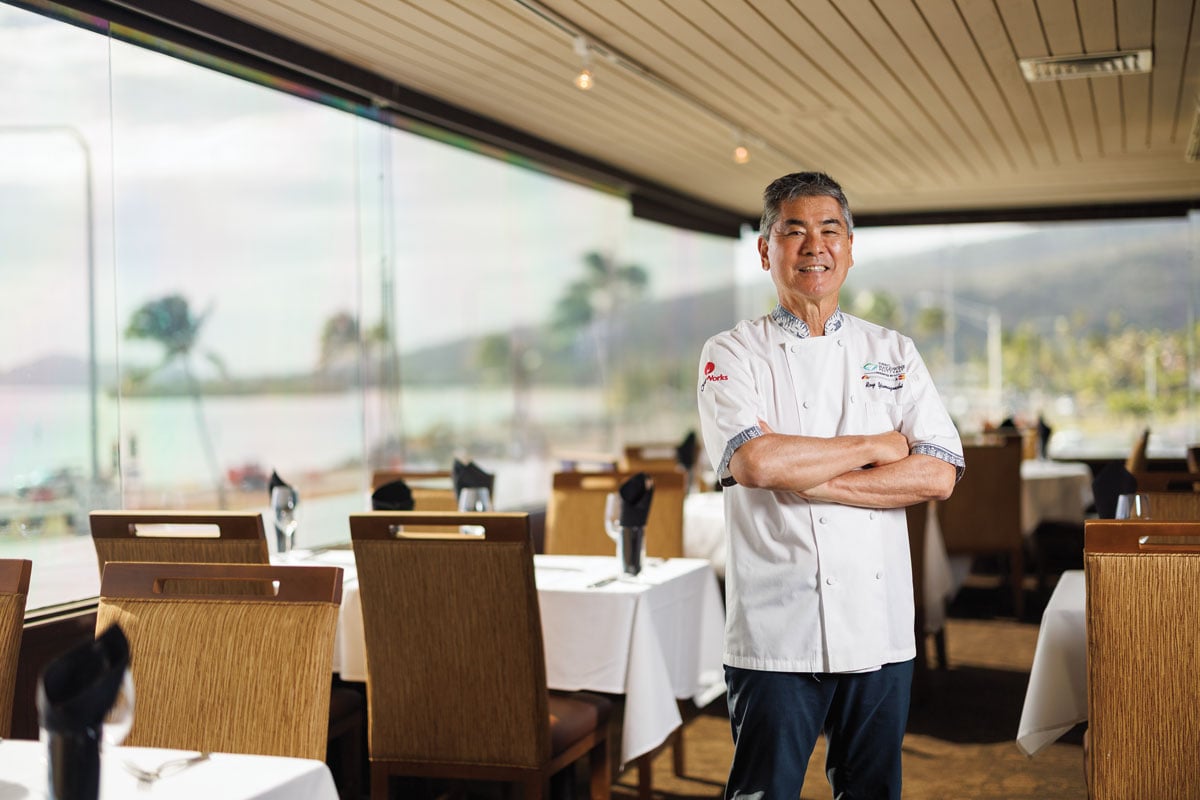
ROY YAMAGUCHI
Roy’s Restaurants Hawai‘i
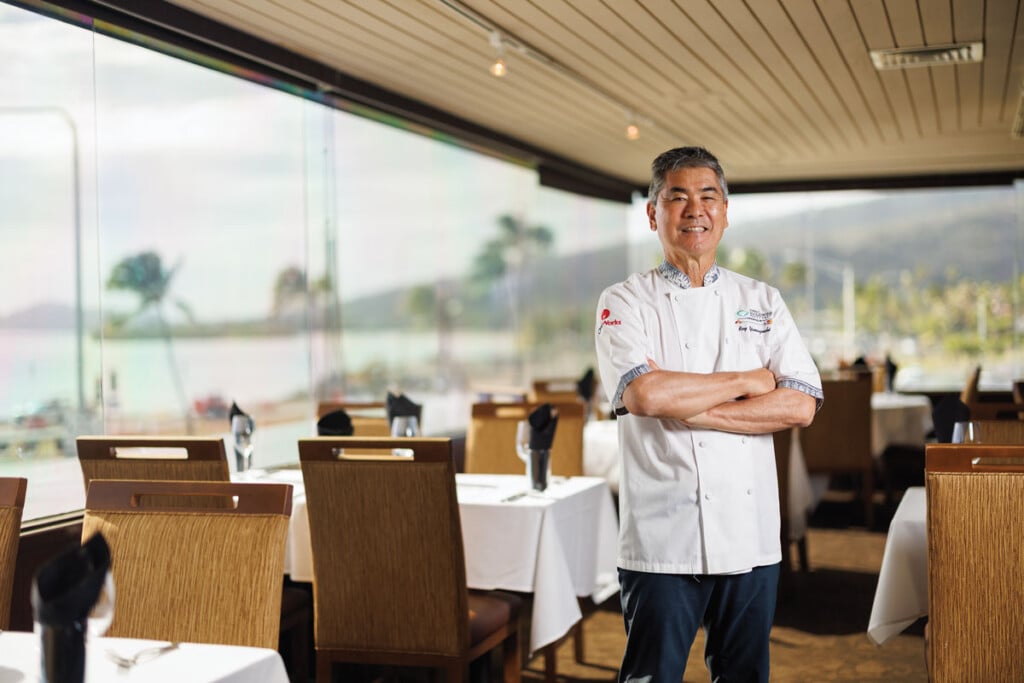
A visionary behind Hawai‘i Regional Cuisine, chef-founder of Roy’s Restaurants, founding co-chair of the Hawai‘i Food & Wine Festival and pro bono executive director of the Culinary Institute of the Pacific at Diamond Head, Roy Yamaguchi is one of the most recognized culinary leaders in the country. He opened his first Roy’s in Hawai‘i Kai in 1988.
Our industry, especially, is made out of things like communication, leadership, followers, teamwork, problem solving, critical thinking. Especially if you’re a leader, you have to be a listener, people have to follow you, you need to have answers, and you need to be able to communicate.
That part of what we do as humans, how we bond with each other in a restaurant, those things may have diminished over the years. It’s a generational change and that’s a big part of it. But we all have to own it and try and figure out how we can make the best of it. At the end of the day, we can’t just say that’s just the way it is. If that’s it, then we’re all sunk.
Will restaurants ever be the same? Probably not. But to me, it’s probably a good thing.
When we went through COVID, we couldn’t be status quo because if we were, we wouldn’t survive. Do we want to be in that position? No, but it makes you think about what you’re doing day to day and focus on the future. You have to navigate for 10 years down the line.
Sometimes, we have to be less emotional and really think about what we need to do individually and as a team for the future. That’s when problem solving, critical thinking, communication, teamwork all come into play. People’s mindset has to change and adapt to what’s happening at the moment and how you’re gonna maneuver for the future.
We’ve been here [in Hawai‘i Kai] 38 years, and it’s not a slam dunk. We fight for our business to be successful on a day-to-day basis, based on every customer that walks through the door. We do our best to gain their trust so they’ll come back. You would think after 38 years, it would be easy, but it’s not easy.
The original Roy’s, it was unbelievable how much support we got from our local community. They wanted to make sure we survived, and we’re very appreciative.
Think about a community. When things go wrong, who do people call? They call a restaurant and say, “Hey, can you help with a fundraiser?” Hopefully, people will look at restaurants differently after this article and see we’re here to take care of our guests and take care of our community. That’s our passion—create memories for people and make our communities stronger.