Honouliuli, Hawai‘i’s Longest-Running Internment Camp, Will Open for Tours
The national historic site marks where Japanese American citizens and prisoners of war were detained during World War II.

In 2023, members of the National Park Service’s Historic Preservation Training Center laid new cement to rebuild the rock wall. Photo: Courtesy of National Park Service
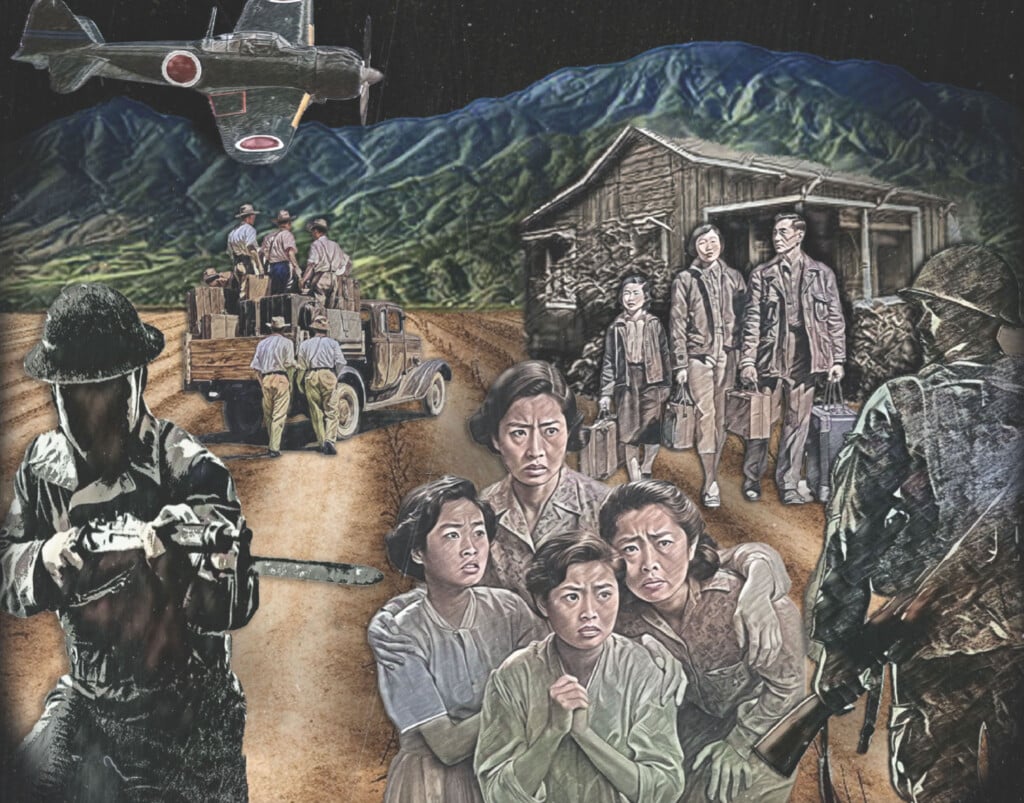
Honouliuli Internment Camp all but disappeared after being dismantled in 1946, a painful relic of World War II forgotten in a Kunia gulch until its rediscovery in 2002. Another 13 years would pass before it would be designated a national monument by President Barack Obama. And since 2015, progress to recognize and preserve the 123-acre site, which had detained mostly Japanese American citizens as well as prisoners of war, has ramped up.
“A lot of the first initial years were spent doing research and planning, and understanding the natural and cultural resources that were there,” says Honouliuli’s Christine Ogura, a nisei born and raised in Mō‘ili‘ili. She’s been the superintendent of the site since September 2024.
Now designated as one of two official national historic sites in Hawai‘i, Honouliuli has undergone restoration work on its aqueduct and rock wall, some of the only major features that still exist from the war.
The park’s team of three—Ogura, biotechnician Hannah (Jian) Shiraishi-Rzeszewicz and archaeologist Jonathan Mayes—has also been working on monthly vegetation maintenance, relationship building and, soon, natural resource management that includes native species. They’re looking for volunteers to help with things like weed whacking, outreach events and research.

In 2023, a member of the National Park Service’s Historic Preservation Training Center restored the date of Aug. 30, 1920, in fresh concrete on the aqueduct. The inscription had been broken. Photo: Courtesy of National Park Service
The goal is to open the site monthly to limited tour groups beginning in the spring of 2026, and to eventually recruit volunteer docents to expand the tours. “The reason why it’s not open to the general public and people can’t just drive there like Pearl Harbor is because the [National] Park Service doesn’t own any land that connects to a public roadway,” Ogura says. But UH West O‘ahu, which has had a long-standing partnership with Honouliuli, does. “When the park was established it was always with the understanding that UH West O‘ahu would be the access point for the public,” Ogura says.
To guide future usage, she’s also working on a long-term general management plan, which the public can take part in. “The feedback from the public has been so positive,” says Ogura, who was shocked when she learned about the internment of Japanese Americans from a Honolulu Star-Bulletin article she read while living on the mainland. “Had I been born a generation earlier, it could’ve been me. That’s why I took the position.”
To commemorate the 10th anniversary of the site’s national designation, the Downtown Art Center will host a community art exhibit from Jan. 2–17, featuring works inspired by the area, personal insights, and stories about its history. It will be open to all ages, experience levels and mediums. Stay tuned for more events in 2026, which marks 80 years since the camp closed.
Katrina Valcourt is the executive editor of HONOLULU Magazine.