What the Aloha Stadium Swap Meet Means to the Community
Behind the T-shirts and trinkets, the Aloha Stadium Swap Meet has maintained its community vibe for 47 years.

Photo: Olivier Koning
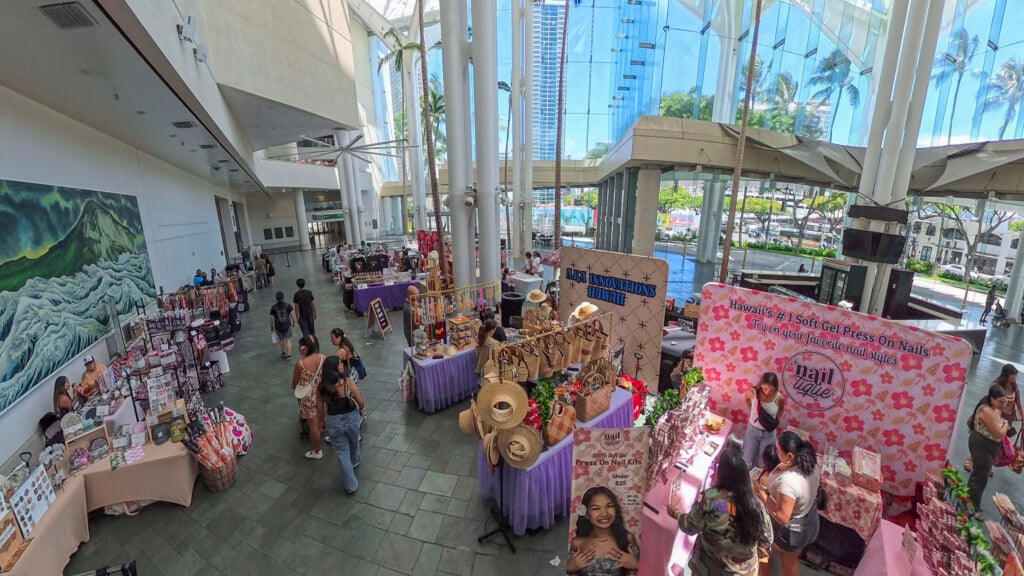
Since opening in 1979, the swap meet has grown into Hawaiʻi’s largest open-air marketplace, with hundreds of local vendors attracting crowds of both regulars and visitors. Even after relocating to a new area after Aloha Stadium was demolished to make way for a new stadium and entertainment district, the swap meet remains a steadfast presence in Hālawa. As the sun rises over hundreds of vendor booths every Wednesday, Saturday and Sunday, a new day begins at a place that’s been part of the island’s landscape for decades. While the surroundings may change, the swap meet carries on.
On any given weekend, thousands wander through rows of tents at the Aloha Stadium Swap Meet searching for alohawear, vintage goods, produce, jewelry or the perfect island souvenir.
What’s kept it thriving for nearly a half-century isn’t just what’s for sale—it’s also its local vibe. One vendor pauses to wave at a friend who’s passing by. Someone else calls out, “howzit!” and yet another helps a neighbor set up before customers arrive. “It’s more about the people than the things,” says longtime vendor Willy Pao, whose family has been selling clothing, vintage goods and housewares at the swap meet since the 1980s.

Willy Pao has been vending at the swap meet his entire life, first coming with his parents as a child and eventually taking over the booth himself. Photo: Olivier Koning
Some of Pao’s earliest memories are of weekends spent at the Aloha Stadium parking lot, learning the rhythms of the market and getting to know the people who return each week. Those familiar faces mean even more to Pao this year. His mother, a regular presence on Sunday for decades, passed away in June. “My second family, the swap meet, came and gathered around me,” he says. “They made me feel like my mom was an important person here.”
Nathan Torres, who grew up across the street from Aloha Stadium, has been coming to the swap meet since he was a child. He remembers following his parents through the aisles, hearing the slap of his father’s slippers on the pavement and stopping for cold coconuts before heading home.
“People feel at home here. It’s part of Hawai‘i tradition,” Torres says.
That’s what Pao and Torres fear losing. Over the years, Pao has seen longtime vendors retire, with no family members to carry on the business. And while Aloha Stadium officials say the swap meet will continue for many years to come, without those longtime vendors, Pao says, it won’t be the same.
As Torres puts it, the swap meet is “a community staple.”
Kayla Luke Colon, the 2026 summer editorial intern for HONOLULU Magazine, is a journalism student at UC Irvine.