Being Seen (a Little Too Much)
Teaching and living in Kailua means running into my students everywhere.

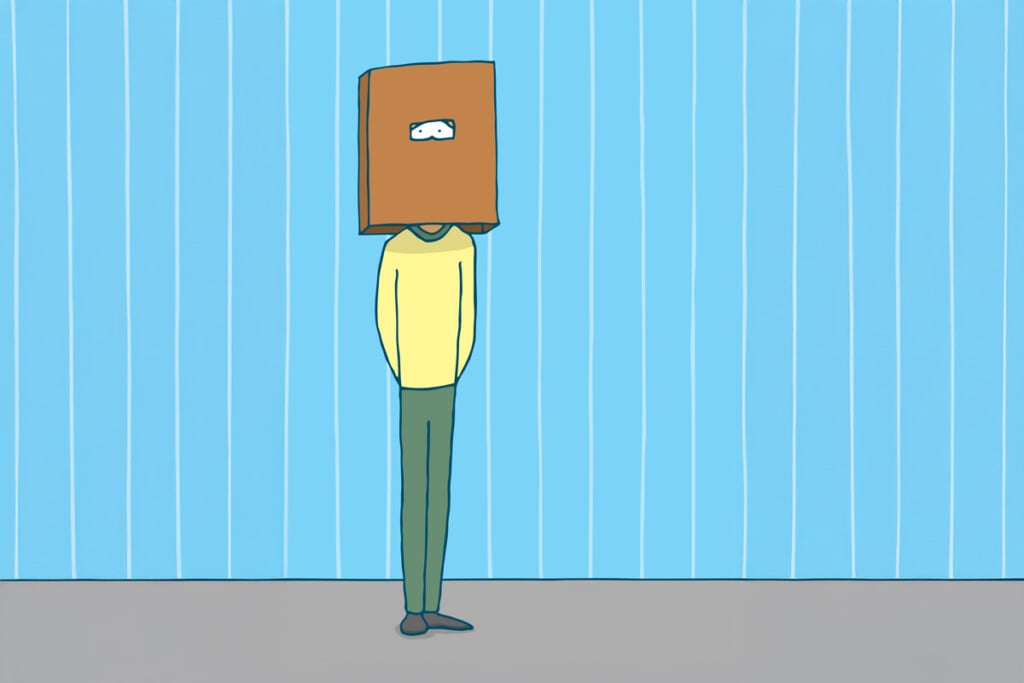
Illustration: Getty Images
“I know where you live, Mr. Stinton,” a student tells me as I fumble with my keys trying to unlock my classroom for the day. The excitement in her voice camouflages what could otherwise be perceived as ominous. She tells me she saw me walking out the front door of my home to my car this morning. I stand there with a close-lipped smile, unsure how to respond. “That’s all,” she says, before skipping toward her friends down the hall, who proceed to call her a stalker.
This is the norm since I started teaching in Kailua, my hometown. My “good mornings” to students are frequently returned with “I saw you driving your car” or “I saw you at Safeway” or “I saw you running.” That last one is particularly horrifying. I know I was heaving and wincing with each plodding step, and I’d prefer not to know what I look like in that state—which, of course, I don’t, until I start imagining what students see when they see me.
When the final bell rings at the end of the school day and my students leave, I am free to be myself again—Eric, instead of Mr. Stinton. But any reprieve I feel is short-lived. I see my students everywhere. And they see me.
I go to the Starbucks down the road to work on my computer, and the next day, a student informs me a photo of me hunched over my laptop like a gremlin is bouncing around on Snapchat. I go surfing, and a student paddles over between waves to ask if I graded the project he turned in yesterday. I read a book in front of my house and hear “STINT-TUHN” as students rip by on e-bikes, looking back to see if I see them popping wheelies.
For a long time this frustrated me, these sudden unexpected jolts back into teacher mode outside of school. It’s exhausting to be “on” all the time. Teachers give so much of themselves to their students that it becomes difficult to make sense of what’s left. I need, for my own sanity, to step away sometimes, the existential equivalent of leaving dishes in the sink overnight after a long day.
I suppose I could move or teach at another school, but that’s way too drastic, and not the kind of thing I’d want to explain during an interview if asked why I want to leave my current job.
I could find another coffee shop, one farther away, and get my groceries late at night. But what’s next, wearing a disguise when I’m out in public or disappearing into the shadows like a ninja whenever I hear someone yell my name?
No, for the foreseeable future, I’ve accepted seeing my students both in school and out. That’s my reality, and it’s not such a bad thing. It comes with being part of a community.
But there are ground rules. I’ve asked my students not to take photos of me without asking. I’m not sure they’ll oblige, but at least they’ll be more careful about telling me—and it’s better than my house getting egged.
It’s taken time, but I’ve come to accept that a part of me belongs to my students, and when I see myself through them—even when it’s embarrassing—I’m a better version of myself. And I can’t lie. It’s pretty cool that my mere presence inspires sick wheelies.
Eric Stinton is a writer and teacher from Kailua. He is a columnist for Honolulu Civil Beat, and his writing has appeared in Dwell magazine, FLUX Hawai‘i, Hana Hou! magazine and Vice Sports.