Pride of Palaka: The Resurgence of the Old-School Hawai‘i Fabric
Local designers Matt Bruening, Crystal Rose and Nāpali Souza give their insights on the palaka craze in Hawai‘i.
If it seems like you’re seeing palaka everywhere, you’re not imagining it. The classic Hawai‘i fabric is back—in our feeds, at makers markets and in every major shopping center on O‘ahu. Even Foodland’s palaka cooler bags went viral. We reached out to local designers for insight on the trend.
First, some history: The plaid, heavy-duty cotton fabric arrived in the Islands in the early 1800s on the backs of English and American sailors who wore it as loose, long-sleeve shirts. During Hawai‘i’s plantation era, palaka’s durability made it popular among paniolo and field workers. It also enjoyed a resurgence in the ’60s and ’70s. Along the way, the fabric wove its way into Hawai‘i’s heart as a symbol of community and our working-class roots.
Millennials, like designer Crystal Rose, grew up seeing palaka worn by her grandparents’ generation. “They only had a few colors, and I’d mostly seen it in quilts, shirts and traditional mu‘umu‘u,” she says. “It wasn’t really cool.”
Designer Nāpali Souza of Salvage Public agrees. “I remember choosing to wear palaka when I started at Kamehameha in the seventh grade and feeling a little out of place,” he says. “It was a little unusual to wear it back in 1993 as a teenager.” For designer Matt Bruening, it was reminiscent of family reunions and coming-of-age parties.
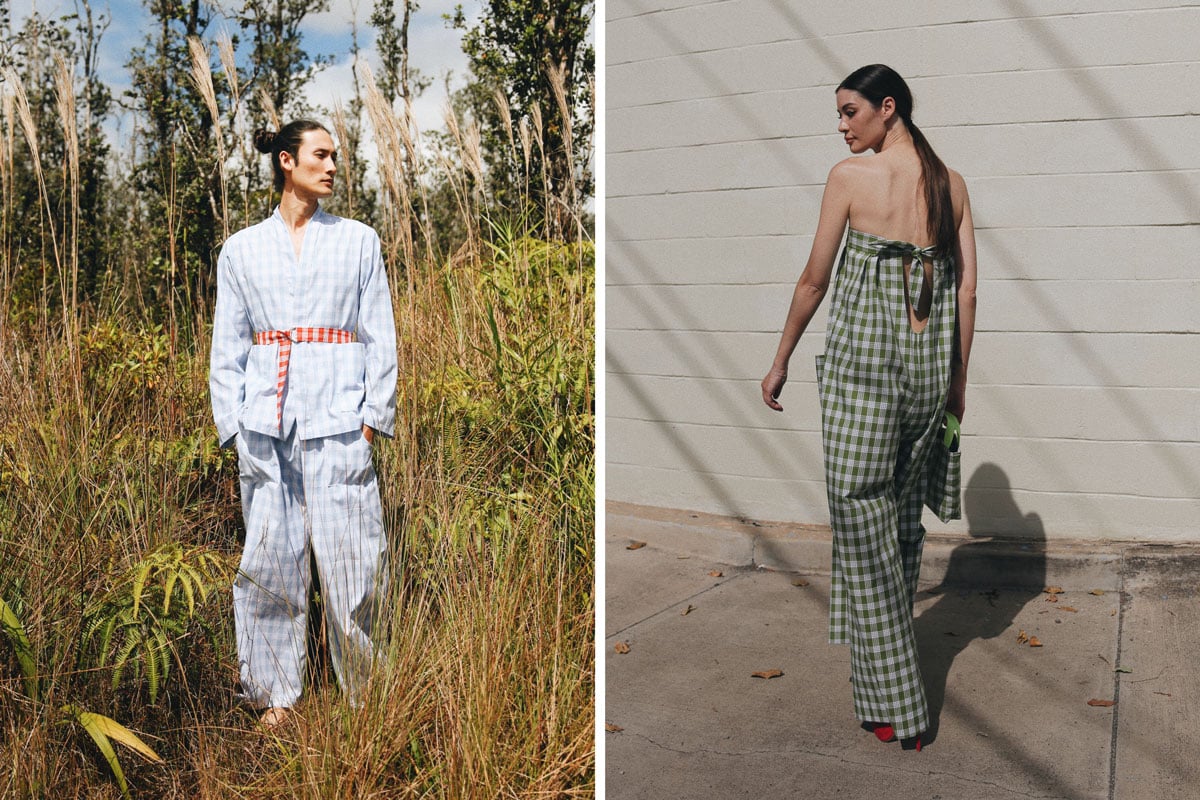
Souza points to Bruening as one of the designers to kick off the current craze. “He’s done such a great job of making it fresh, and presenting palaka in modern silhouettes,” he says.
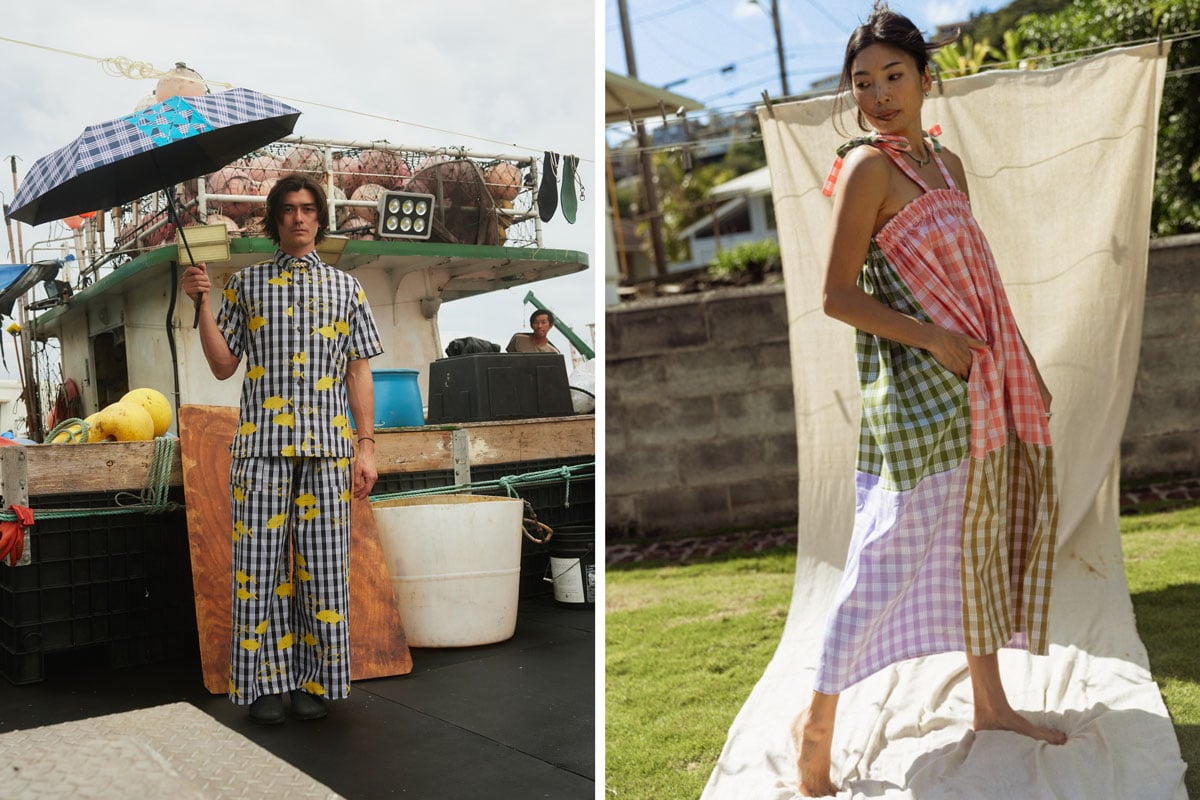
Bruening debuted his first palaka piece, a coach’s jacket, in 2018. “I thought that it was cool that it represents a hardworking class—that’s where I come from,” Bruening says. Next came his ’90s-style bucket hats, available in a rainbow of playful colors. “That went crazy,” he says of the response. Since then, Bruening’s whipped up everything from palaka patchwork maxi dresses and kimono jackets to ulua-printed shirt sets. His ability to elevate the fabric via fashion-forward cuts and offbeat color combos keeps customers coming back.
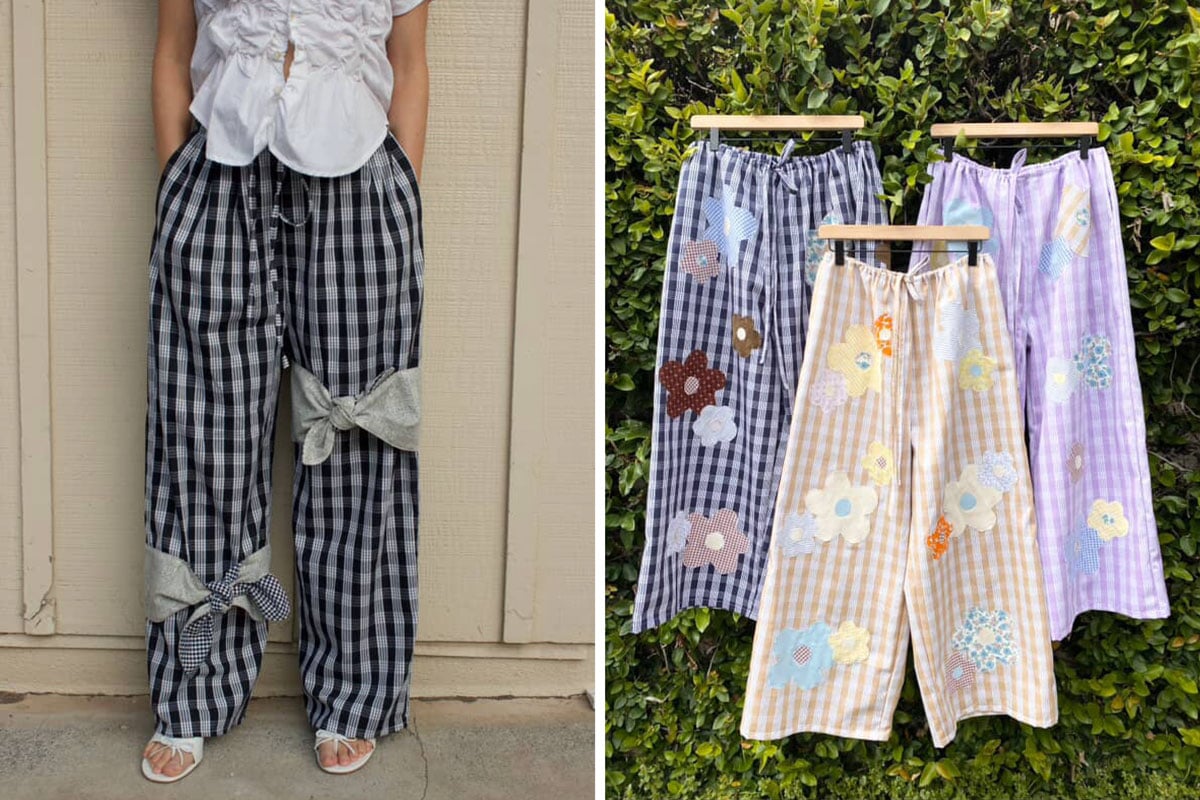
The same can be said of Rose’s designs. Drawing on her Japanese heritage, her Furoshiki pants feature knotted details inspired by traditional Japanese packaging. And her Flower Power pants, cut from a cheery lilac palaka, are covered in multihued floral patches.
The increase in palaka color options is part of what’s driving interest, she says, along with social media and sewing’s growing popularity. “Sewing has also become a cool pastime—it’s everywhere on TikTok—and palaka is an easier fabric to work with,” she says. This has inspired retro-loving younger generations to make their own wares. “Gen Z is the one that’s making it blow up and making it super popular,” she says.
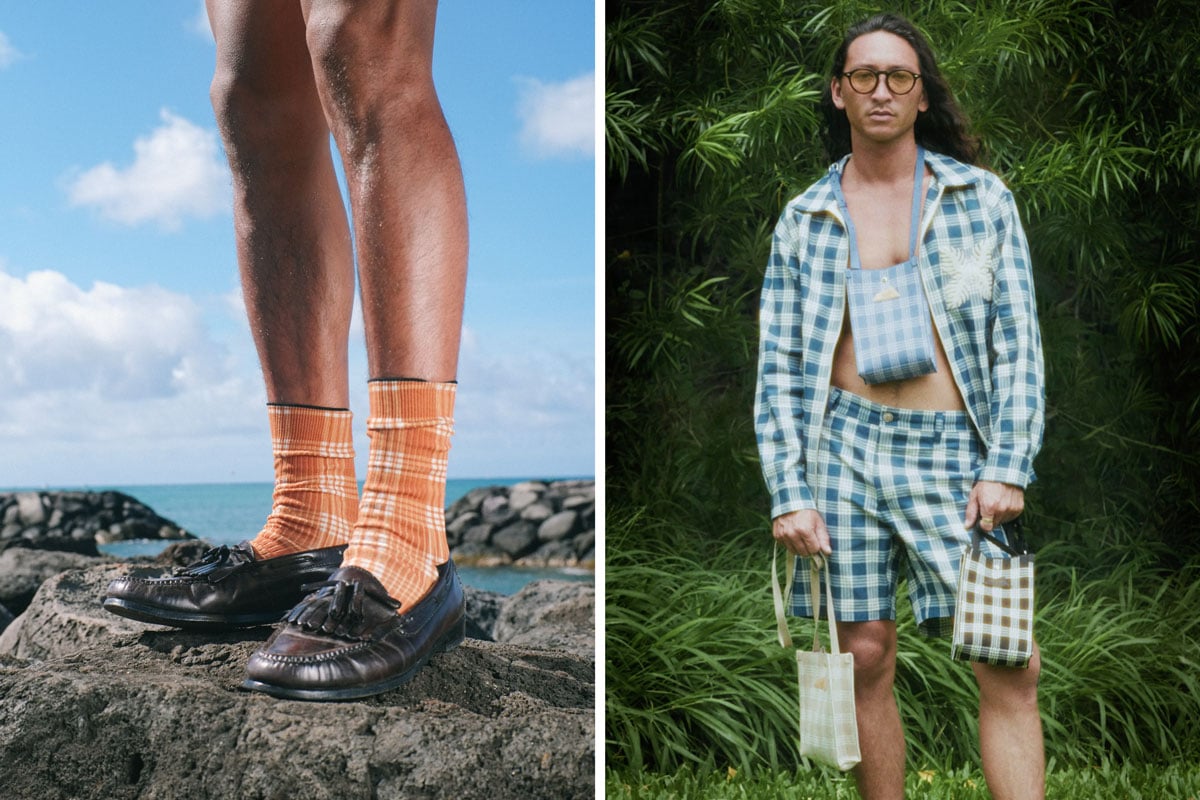
Yet Salvage Public’s palaka fans extend to customers in their 60s too, Souza says; all are drawn to the label’s unexpected translations in new, exciting fabrications. Its first palaka release was a tote made from a custom-designed Jacquard knit, which flew off the shelves. And its first foray into palaka clothing, a spring 2025 cotton twill zip jacket featuring indigo-dyed threads, sold out even faster. “There’s a growing appreciation of Hawai‘i fashion and a celebration of place and culture,” Souza says.
Bruening says if designers continue to push palaka in creative new directions, its reach will grow even more. “I’d love for people to wear it around the world,” he says. “It’s a conversation starter, an educating moment. It’s like a little piece of Hawai‘i wherever they go.”
Brie Thalmann is the home and style editor of HONOLULU Magazine.