Tails of the City: Kōlea Go the Distance
Year after year, kōlea travel thousands of miles to winter in Hawai‘i.
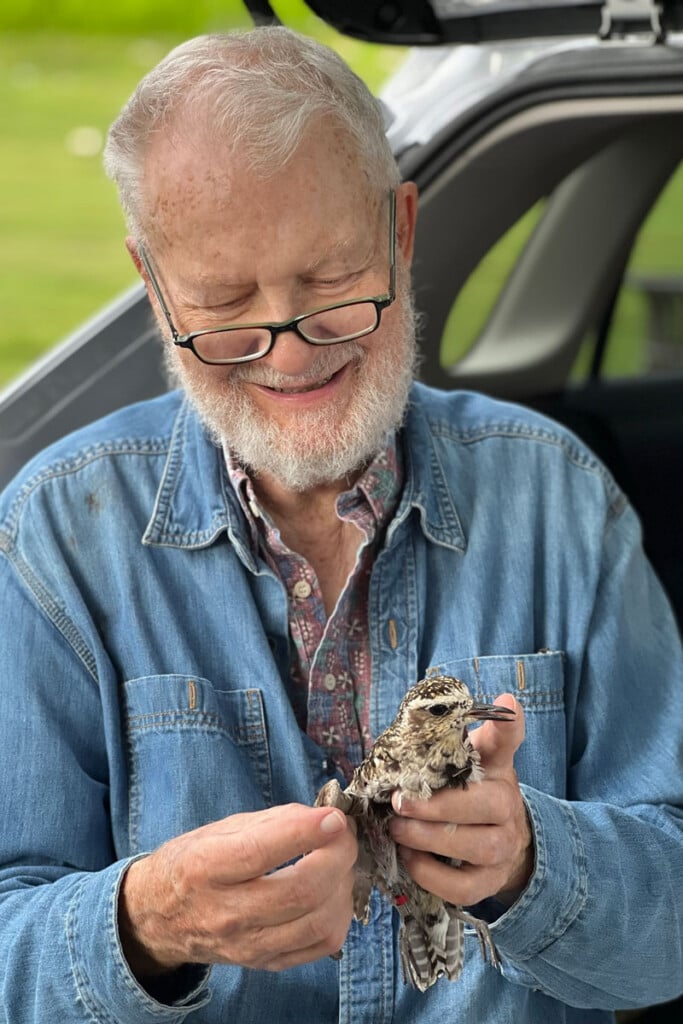
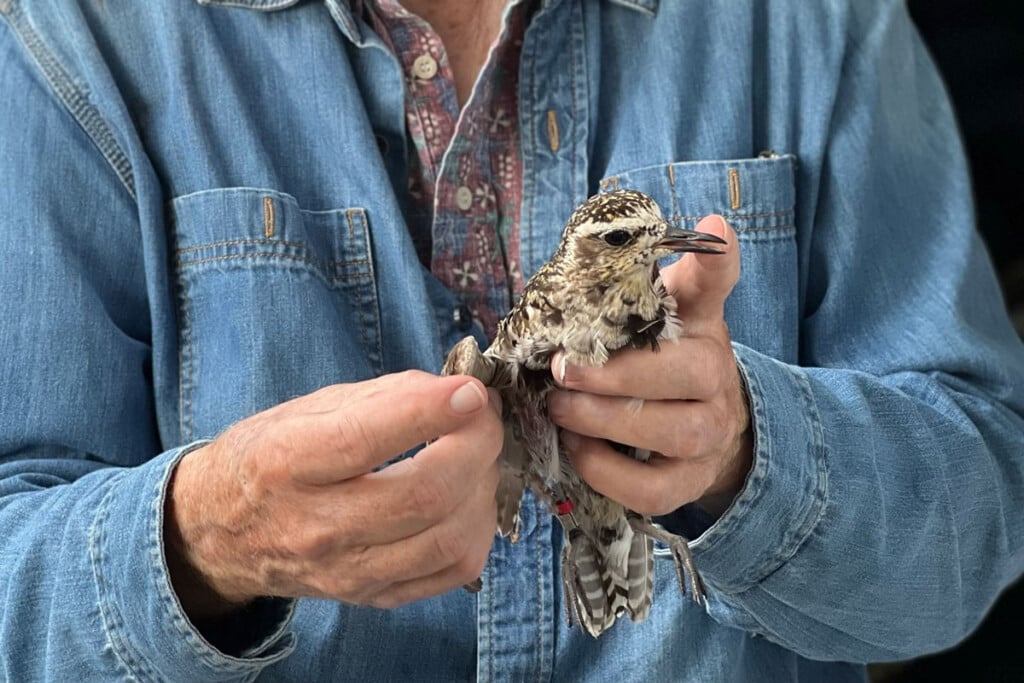
For more than 40 years, Oscar “Wally” Johnson has been coming to Hawai‘i to study the kōlea, or Pacific golden plover, which migrate to the Islands for the winter.
“It’s changed my life in many ways, and it’s resulted in friendships and various kinds of relationships that otherwise wouldn’t have happened,” he says. “And when you are working on a bird like this, it just becomes a part of your everyday activities, almost.”
Johnson is an affiliate research scientist in the Department of Ecology at Montana State University in Bozeman. He came across the birds in the Marshall Islands in the 1970s and has been studying them ever since. Using GPS to track them from Alaska, where they raise their chicks, Johnson says the birds are “special little creatures.”
Many people in Hawai‘i have kōlea in their yards, but what they might not realize is that these are the same birds every year. “They’re very site-faithful,” Johnson says, and most live six or seven years, though some survive more than 21 years. “People establish a relationship with the birds and become very attached to them. I think that’s kind of special.”
Johnson has been studying a flock of about 70 birds at the national cemetery at Punchbowl. “They’re all territorial. We recently did a study using GPS with those guys and found about 90% of the birds that leave return and wind up back on the very same territories again.” One of those that Johnson banded in March 2022, nicknamed Mr. Necker, flew to Alaska, then Russia, then Mokumanamana (also known as Necker Island) in the Northwest Hawaiian Islands, then ended up back at Punchbowl seven months later. He was most recently seen returning to his usual spot this past August.
“Here on the mainland … we don’t develop the same kind of relationship that you do in Hawai‘i with this bird, and people are amazed at the fact that they can migrate these long distances and navigate so precisely back to a specific place,” Johnson says. “There are other birds out there that can do the same thing, but plovers are just attractive, and they’re able to coexist very nicely with us.”
SEE ALSO: Tails of the City: Mr. Mejiro
Katrina Valcourt is the executive editor of HONOLULU Magazine.