Two Young Filipinas, Matched on the National Marrow Donor Program, Are Now Blood Sisters
Mariel Tadena in Hawai‘i was a marrow donor for Nicole Fabela in California; since then, the two have been forever entwined by the gift of life.
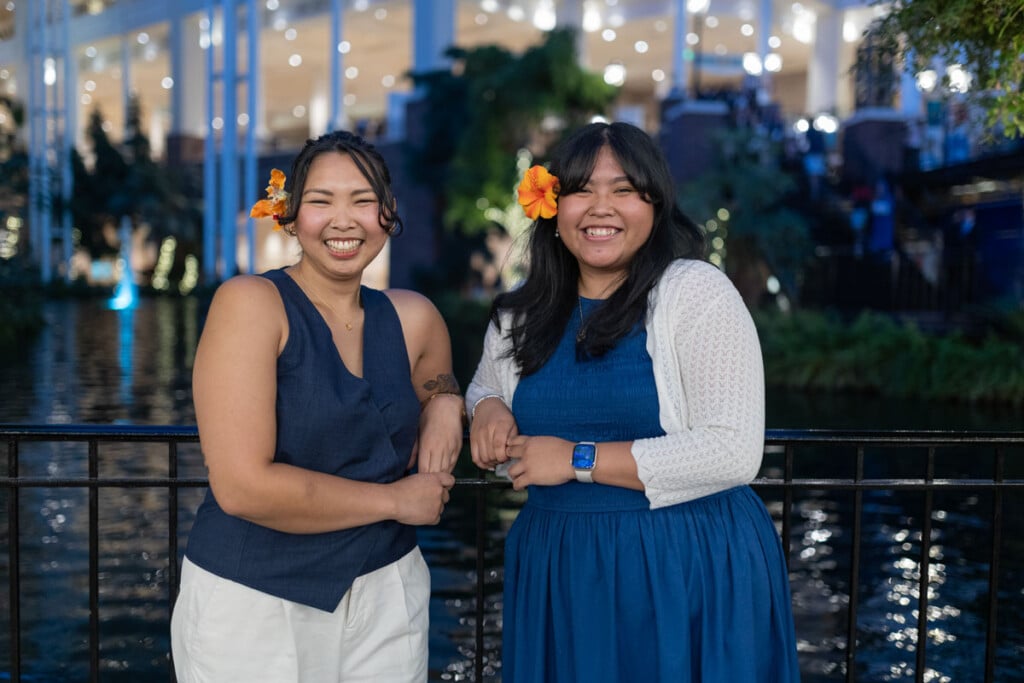
Blood sisters. That’s how Mariel Tadena and Nicole Fabela describe their bond. Yet separated by more than 2,500 miles, they likely would never have connected if their worlds hadn’t aligned in a transcendent way.
Tadena was an 18-year-old student at UH Mānoa who recently put herself on the national marrow registry after learning about the need for minority donors. In California, Fabela, also Filipino, was running out of options after two stem cell donations had failed to stop her acute myeloid leukemia.
“I was super excited, super shocked, but also scared,” says Tadena, now a 21-year-old UH junior, about learning she was a match in 2023. “It was a roller coaster of emotions, but I knew in my heart that I would do it if I ever got the call.”
Fabela was diagnosed with leukemia in 2021 while attending nursing school in Southern California. She underwent her first transplant, with peripheral blood stem cells donated by her sister that August, but they never fully engrafted. The next year, she received another donation from her brother, and things were looking good for about seven months before she relapsed. “It was devastating because a transplant is seen as the only thing that can cure you, and having a full sibling match is usually the ideal situation,” Fabela says. “We were at a loss. We didn’t know where we were going to go from there.”
Blood stem cell donation is a cure or treatment for more than 75 different blood cancers and disorders, including AML. The best match is typically a donor from a similar ethnic background, which can make it challenging for Asian Americans like Fabela who are underrepresented on the National Marrow Donor Program registry.
Although Tadena wasn’t a full match, she was close enough. On Nov. 7, 2023, Tadena donated blood stem cells at Kapi‘olani Medical Center for Women & Children. Fabela received the transplant the following day in California. “She was honestly our answered prayers,” Fabela says.
More than three years later, the 28-year-old remains in remission, is back in nursing school and resuming her life. Because the process is anonymous, the two women weren’t told much about each other, including each other’s names. So when the NMDP asked if they wanted to meet at the organization’s conference in Nashville in 2025, both jumped at the chance.
Nervous and excited, they met onstage, both wearing blue and white by coincidence. It was surreal. “Seeing her walk towards me, I felt all the emotions. I remember crying my eyes out, but I couldn’t stop smiling,” Tadena says.
The two have stayed in touch; they consider each other family. “She’s someone who will be in my life forever,” Fabela says. “Every time I talk about her, I get emotional. It was like an impossible connection that happened.”
For more information on becoming a marrow donor, visit nmdp.org.
Diane Seo is the editorial director of HONOLULU Magazine.