Can Hawai‘i Grow Rice Again?
UH Mānoa and the Tokyo University of Agriculture and Technology explore Hawai‘i’s rice farming potential.

Photo: Aaron K. Yoshino
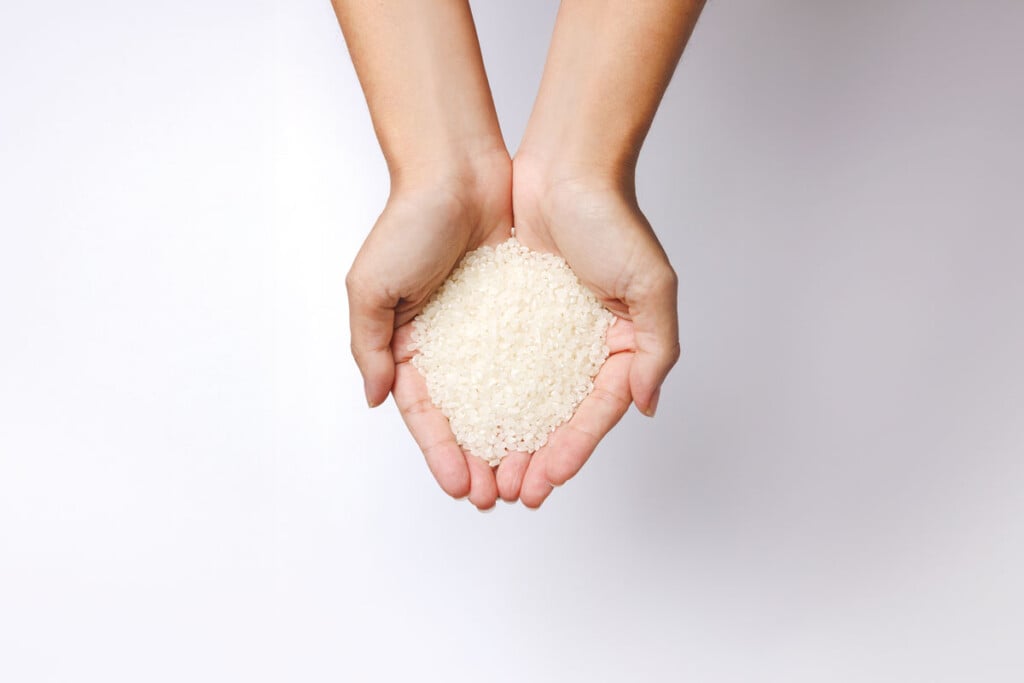
Considering how much rice we consume in Hawai‘i, you might be surprised at how much of the crop is actually grown on-island: none. Every year, we import on average a staggering 140 million-plus pounds. So after learning that UH Mānoa’s College of Tropical Agriculture and Human Resilience is exploring the possibility of once again growing rice in the Islands, our interest was piqued.
We say “again” because rice farming was a thriving industry in the late 19th century—at one point, rice was Hawai‘i’s second-largest crop after sugar. Bringing it back could reduce consumer costs and offset our state’s food insecurity.
The endeavor is a collaboration with the Tokyo University of Agriculture and Technology. “Japan is an expert in rice,” says Tomoaki Miura, professor and chair of CTAHR’s Department of Natural Resources and Environmental Management. “And the agricultural issues that Japan and Hawai‘i face, like small parcels, small-scale operations and complicated topography, are very similar. Collaboratively, we can come up with solutions.”

Photo: Aaron K. Yoshino
The project took root last year at a farm in Kapa‘a on Kaua‘i, with the planting of Koshihikari, a premium variety of Japanese short-grain white rice. The area’s wet climate makes it an ideal locale. Three months later, its harvest yielded 400 pounds of rice, currently being evaluated for quality and taste.
At the time this article was written, the project was expected to also roll out on O‘ahu with the same rice variety planted on one-tenth of an acre at the Waimānalo Research Station. “Waimānalo gets a lot of rain but has sunny days as well, making it a good place to start experimenting,” Miura says. “The soil there is very rich, fertile and retains water well.”
CTAHR plans to gradually expand cultivation areas over the next few years. “If we are able to supply even a small amount of rice, we may be able to contribute to [Hawai‘i’s] food sufficiency,” Miura says.
Brie Thalmann is the home and style editor of HONOLULU Magazine.