Take Care of Your Community, and Don’t Forget to Laugh
81-year-old Edward Kuba shares his values and lessons learned over his decades of life.
Meet Our Kūpuna: Stella Shimabukuro | Edward Kuba | John Waihe‘e
Elizabeth Thu Hai Pham | Mark Cunningham | Blanche McMillan | Home
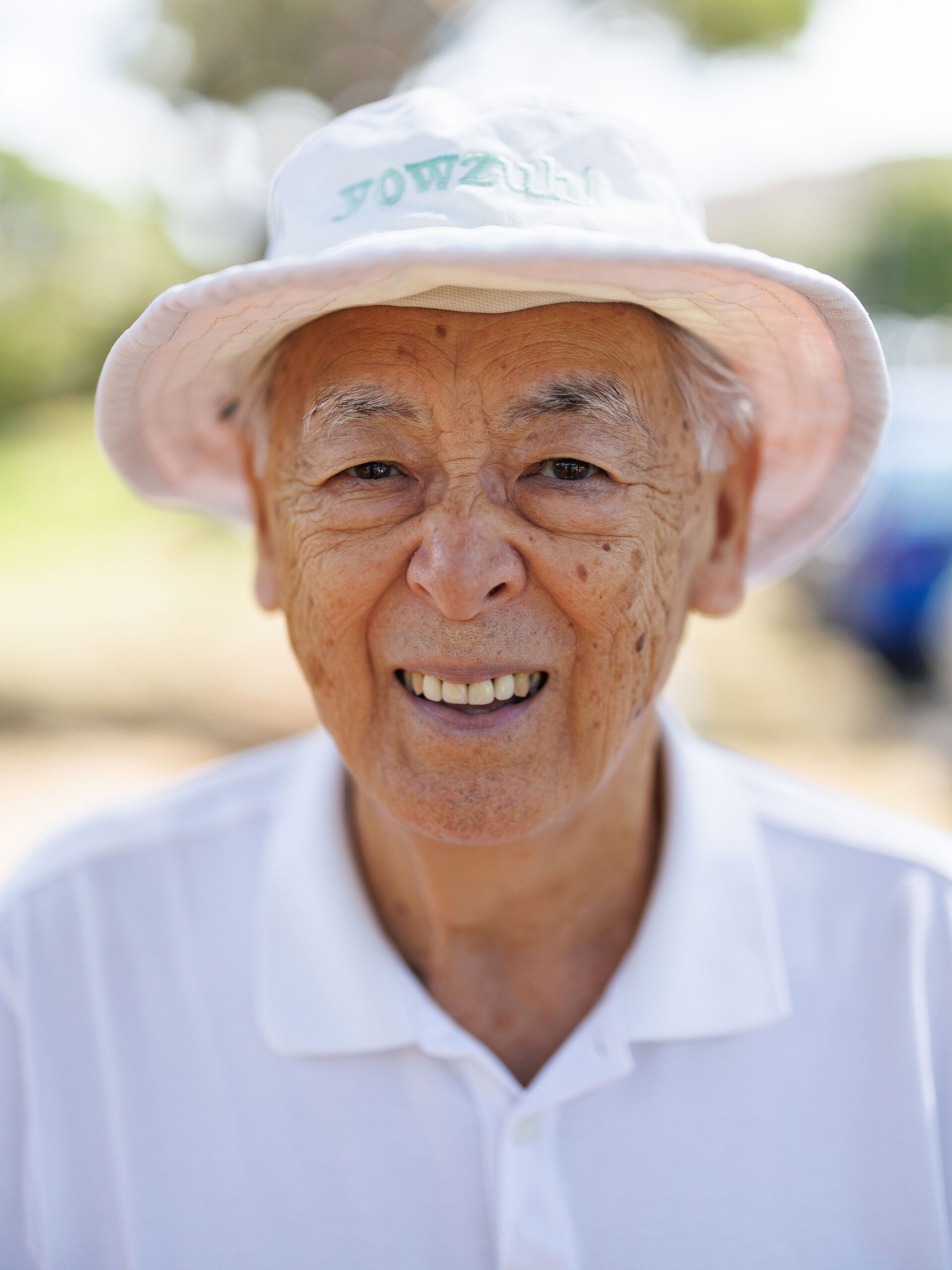
Edward Kuba | 81 Years Old
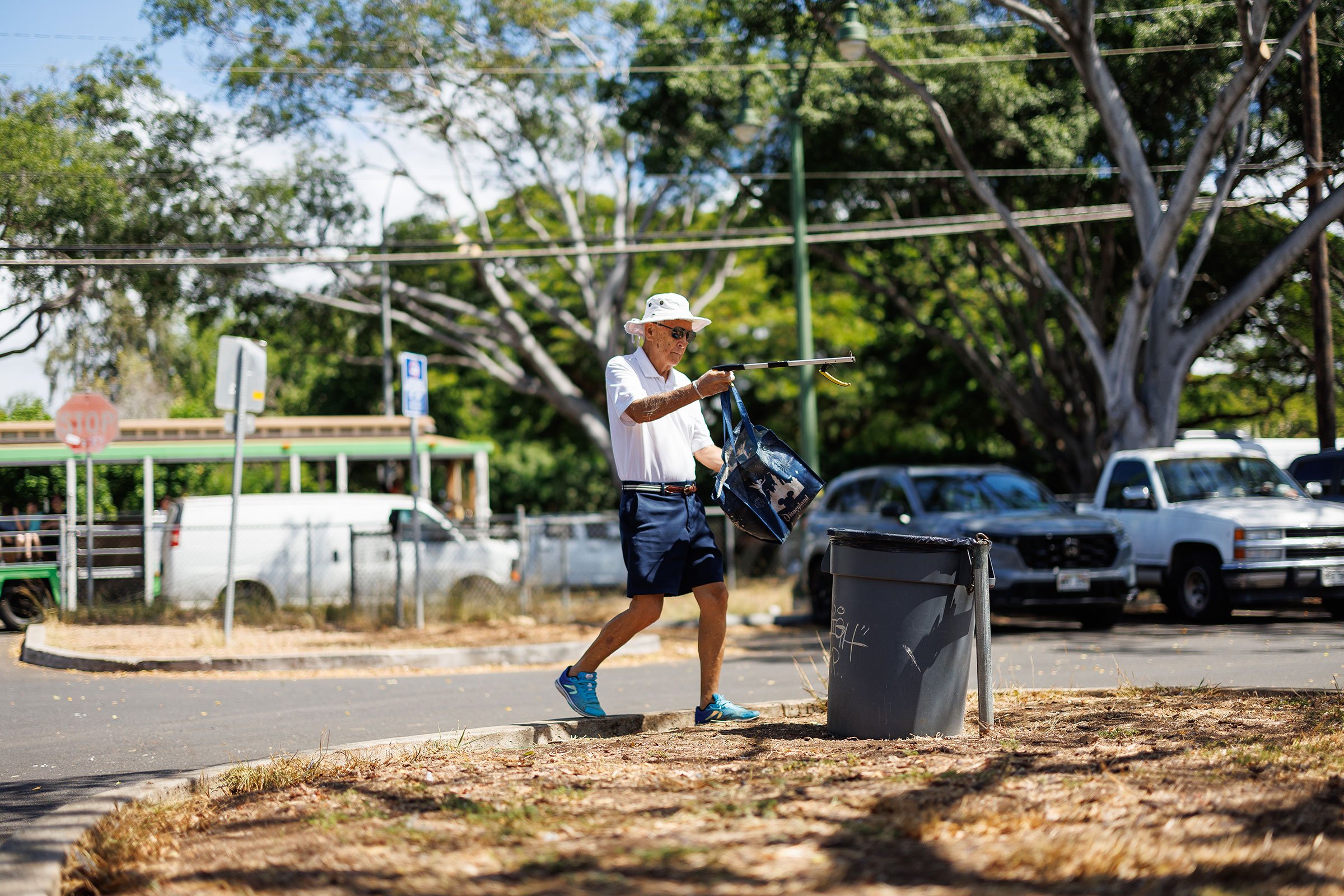
Every day, 81-year-old Edward Kuba makes his rounds around his Kapahulu neighborhood with a trash-grabber, getting his daily exercise while cleaning up the sidewalks. For 45 years, the retired lawyer has volunteered in the Okinawan community, helping to establish both the Center for Okinawan Studies at UH Mānoa—the first of its kind in the country—and the Hawai‘i Okinawa Center in Waipi‘o. Though he attended cultural functions as a child, it wasn’t until he saw the way Irish and Italian people embraced their heritage in Boston and New York City that his pride in being Okinawan ignited. He now considers himself a “born-again Uchinanchu.”
Kuba lives by the Uchināguchi phrase “chibariyo,” which means “go for it.” Through all his life challenges while balancing a family and law career, he has remained positive and committed.
As told to Katrina Valcourt:
My parents emigrated from Okinawa, and their 10 children were all born here. They stopped at 10 because they only had 10 rice bowls for the kids. I’m the youngest. All nine before me have passed away. I’m the last one surviving.
No. 9 was my sister Jeannette, and she fell ill. Being the younger one, I was there to take care of her five years—cooking, cleaning, changing diapers. She never once complained about my cooking. But she passed away eight years ago, peacefully. I took care of her in her home in Wahiawā, moved back to Kapahulu, and I’ve been walking, picking up trash here ever since.
I returned to Hawai‘i maybe 45 years ago, and living here in lower Kapahulu, my front yard is the zoo, the Waikīkī Shell, the aquarium, Waikīkī Beach. If all the tourists coming through Hawai‘i see how pilau the city is, that’s their impression; 45 years from now, they might still think Honolulu is a dirty city.
I don’t get angry at seeing the trash. I get dismayed that humankind has devolved into leaving trash all over the place, and it’s a testament to the older generations, like my generation—we didn’t do a good job teaching the younger generations not to litter, and as a result, the younger generations are littering without thinking about it.
There are 14 different ethnic groups in Hawai‘i, and we’re all minorities, so we all tend to get along with each other. There isn’t one major group holding the other groups down. We’re all minorities, and we all get along with each other in the Okinawan community. In a project like building the Hawai‘i Okinawa Center, 99% embraced it. There was maybe 1% that didn’t think much of it. Stay away from those negative people because they’ll just hold you back, and just concentrate on the positive people.
I try to be positive with other people and the old golden rule, treat others like you would want them to treat you.
I’ve got five older brothers, and I used to wonder, “How long am I going to live?” Looking at my five brothers who have since passed, I calculated the average of their passing age, and it was 80 years old. So being 81 now, on that comparison level, I’m living on borrowed time. So I’m trying to make the most of what I can do now, and trying to have as much fun as possible.
There’s a connection between your mind and your body. If your mind thinks that you’re young, then it’ll prolong your life. If, for example, you laugh and you’re active and you exercise and you act young, your mind thinks that you’re young and will continue to prolong your life. If, on the other hand, you sit around, watch TV and you don’t do anything—no exercise, no mental stimulation—your mind thinks you’re old.
When you laugh, when you make people laugh, for that one or two seconds that that person is laughing, that person’s body is feeling young, so the message is getting to that person’s mind that “I’m having fun, and I’m young.”